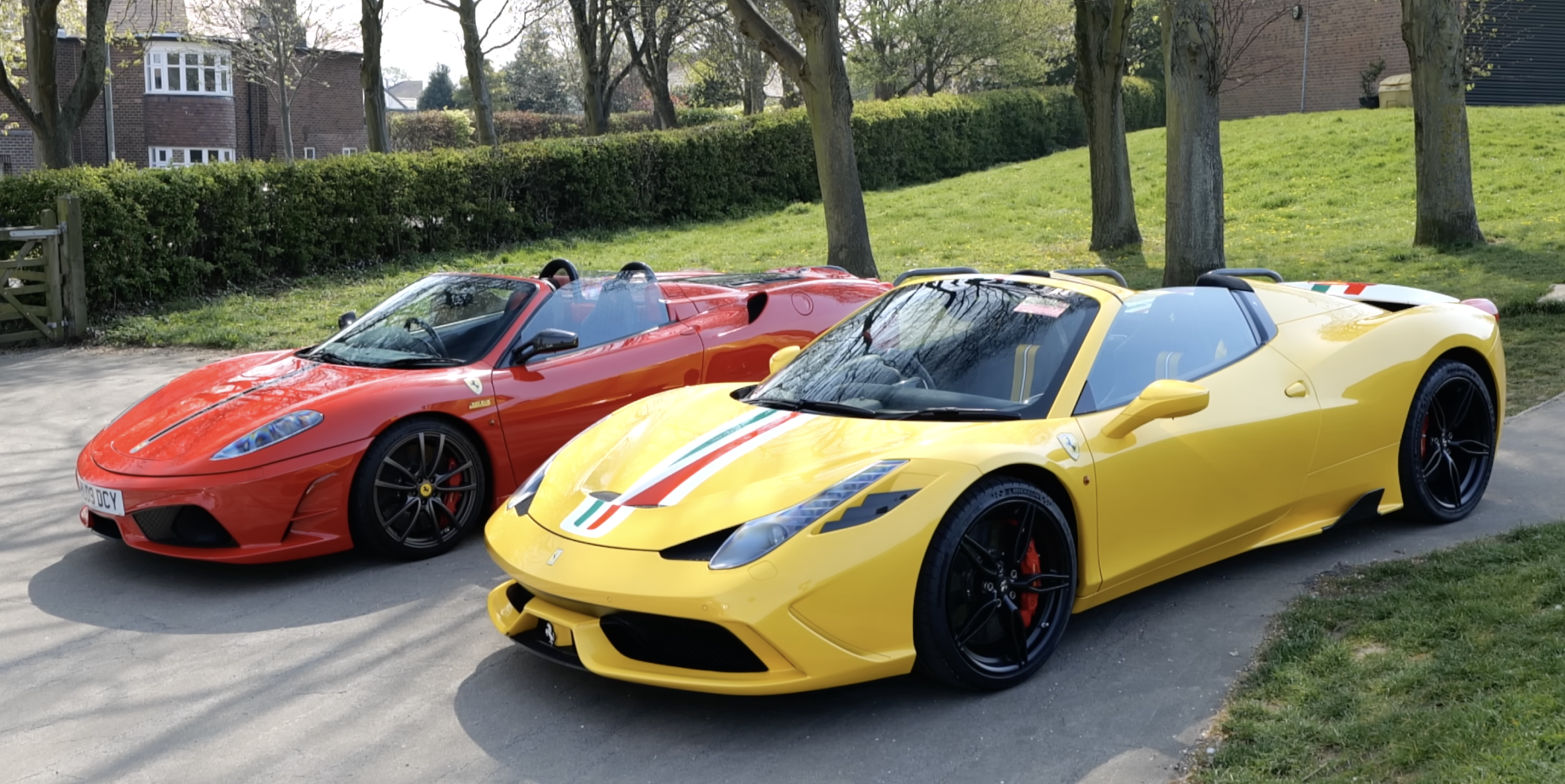

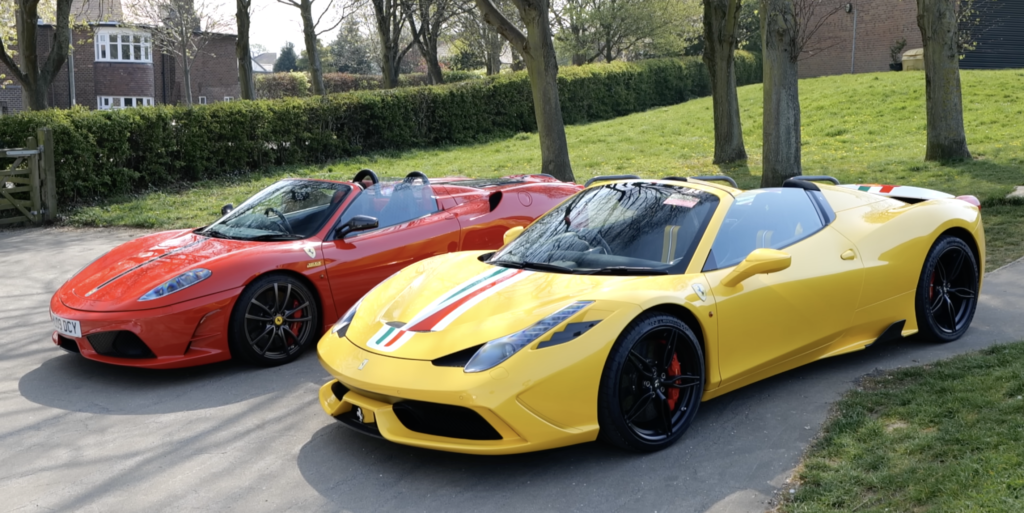
The Ferrari F430 vs Ferrari 458 comparison is really a question about where you draw the line on “modern.” These two sit back-to-back in Maranello’s junior V8 lineage — the 458 directly replaced the F430 in 2009 — but the five years between them cover more technological ground than almost any other consecutive generation in Ferrari’s history.
The F430 was the last mid-engine Ferrari V8 you could order with three pedals and a gated shifter. The 458 never offered a manual at all — not once, not even as a limited-run special. That single fact reframes almost everything else in this comparison: power, price, character, and where each car’s investment case actually comes from.
Both cars are now squarely modern-classic territory, and both get cross-shopped by buyers hunting for a naturally aspirated V8 Ferrari before the 488 brought turbocharging into the junior lineup for good. One is raw, chain-driven, and increasingly scarce in its purest form.
The other is faster, more advanced, and its ultimate version has been called one of the best driver’s cars of the past 25 years. So which one belongs in your garage? Here is our full Ferrari F430 vs Ferrari 458 breakdown.
If you’re also weighing an older option, our Ferrari F355 vs Ferrari F430 comparison covers the generation before this one.
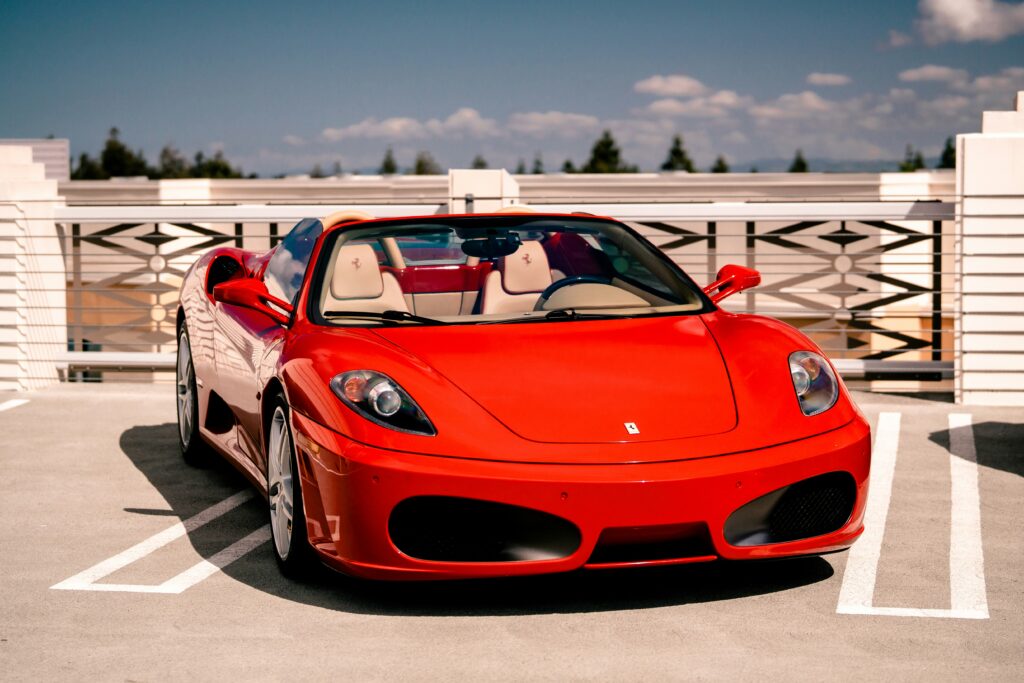
Table of Contents
Ferrari F430 vs Ferrari 458: Quick Specs Comparison
Here is a quick look at all of the basics. For this comparison, we are using the F430 Berlinetta and the 458 Italia coupe — the standard body style of each car and the most relevant configuration for the majority of buyers.
| Ferrari F430 Berlinetta | Ferrari 458 Italia | |
|---|---|---|
| Years | 2004–2009 | 2009–2015 |
| Engine | 4.3L F136 flat-plane V8, 4 valves/cyl | 4.5L F136 flat-plane V8, 4 valves/cyl |
| Power | 483 bhp @ 8,500 rpm | 562 bhp @ 9,000 rpm |
| Torque | 343 lb-ft @ 5,250 rpm | 398 lb-ft @ 6,000 rpm |
| 0–60 mph | ~4.0 sec (factory claim) | ~3.4 sec (factory claim) |
| Top Speed | 196 mph | 202 mph |
| Weight (curb) | ~3,344 lb | ~3,274 lb |
| Drive | RWD, mid-engine | RWD, mid-engine |
| Transmission | 6-speed manual / F1 single-clutch | 7-speed dual-clutch only |
| Production | ~16,750 total | ~24,500 total (est., all variants) |
| US Price (new) | ~$170,000–$190,000 | ~$225,000–$230,000 |
The Cars: What You’re Actually Buying
Here is a quick overview of what each car is and where it comes from before we get into how they compare.
Ferrari F430
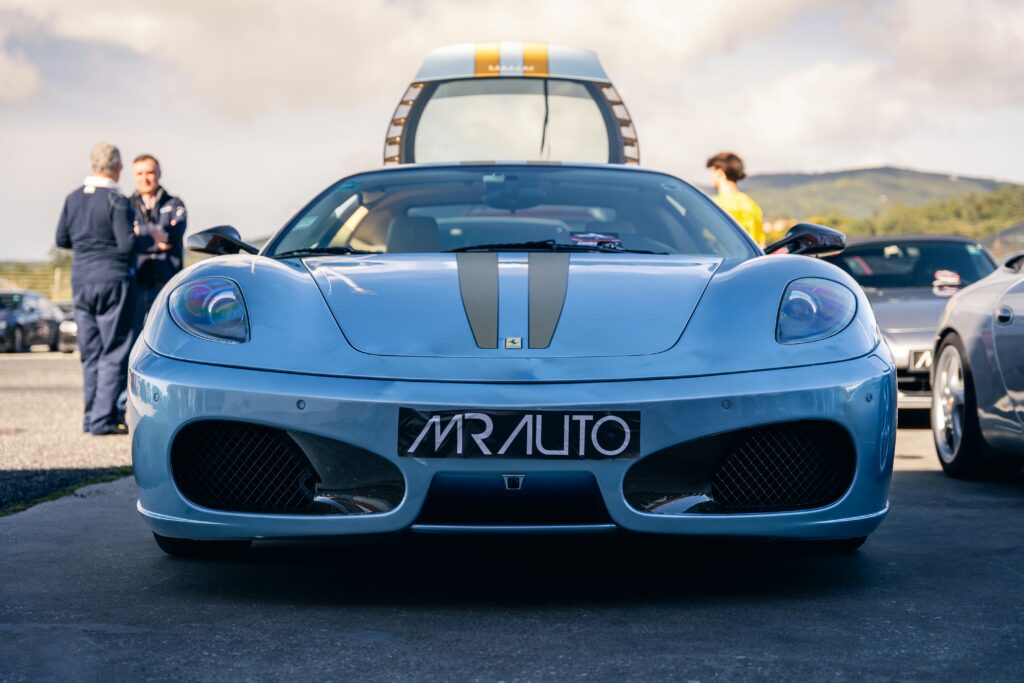
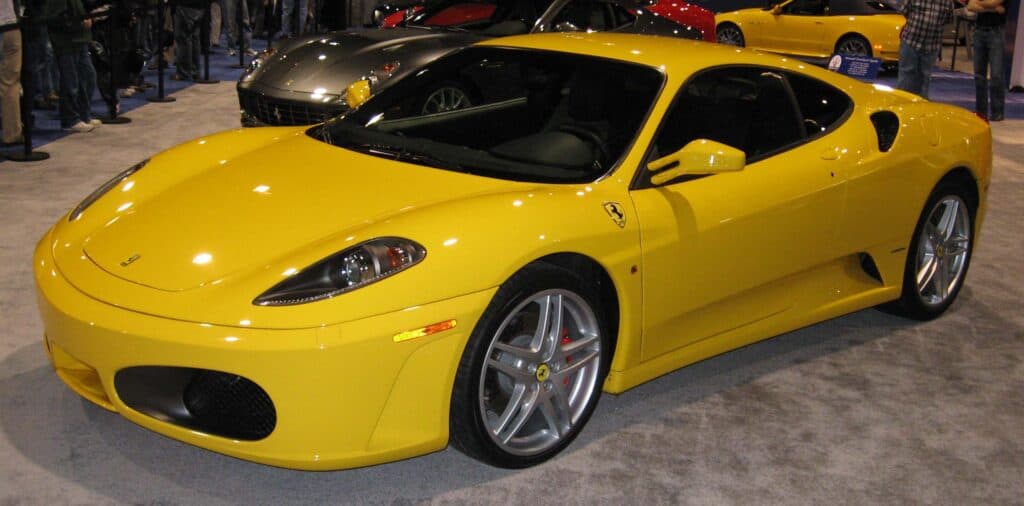
The F430 arrived at the 2004 Paris Motor Show as a replacement for the 360 Modena, and though it kept the 360’s aluminum spaceframe, doors, and glass, almost everything else was new. The centerpiece was the F136 V8, a 4.3-liter unit co-developed with Maserati that shared its basic block with the front-engined 4200 GT but ran a bespoke flat-plane crank and internals, plus variable valve timing borrowed from the Enzo’s V12.
Output landed at 483 bhp at 8,500 rpm and 343 lb-ft at 5,250 rpm — and unlike the F355 and 360 before it, the F136 is chain-driven rather than belt-driven, which removed the recurring cambelt service that had defined ownership of every mid-engine Ferrari V8 up to that point. The F430 also introduced two firsts for a road-going Ferrari: the manettino, the steering-wheel dial that lets a driver toggle stability control, suspension, and throttle response in one motion, and the E-Diff, an electronically controlled limited-slip differential reading steering angle, yaw, and individual wheel speed.
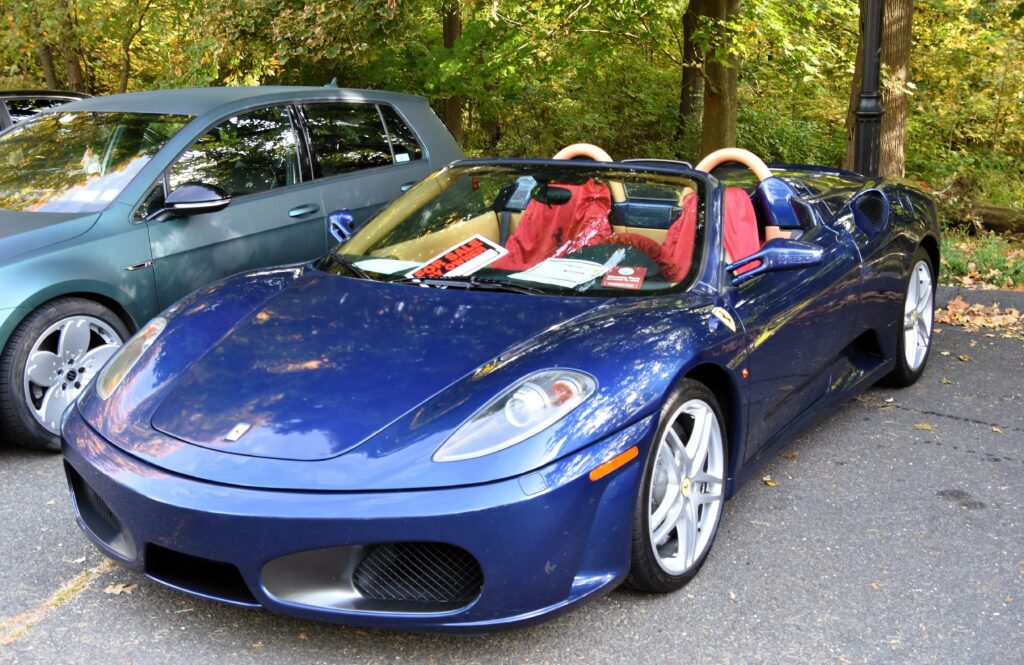
Styling drew from two different eras of the marque — the oversized front intakes reference the 156 “Sharknose” F1 car from the early 1960s, while the raised circular tail lights and exposed engine vents borrow from the Enzo, Ferrari’s contemporary flagship. Buyers could order a Berlinetta or Spider in either a six-speed gated manual or a single-clutch F1 automated manual — the F1 box was the overwhelming majority choice, with Petrolicious estimating only around 10 percent of buyers ordered the manual.
Above the standard range sat the 503 hp, Michael Schumacher-developed 430 Scuderia (2007–2009, roughly 1,800 units) and the 499-unit Scuderia Spider 16M, both offered exclusively with the F1 gearbox. Across every configuration, Ferrari built roughly 16,750 F430s between 2004 and 2009 — and crucially, it was the last mid-engine V8 Ferrari the factory ever equipped with a genuine manual gearbox.
Ferrari 458
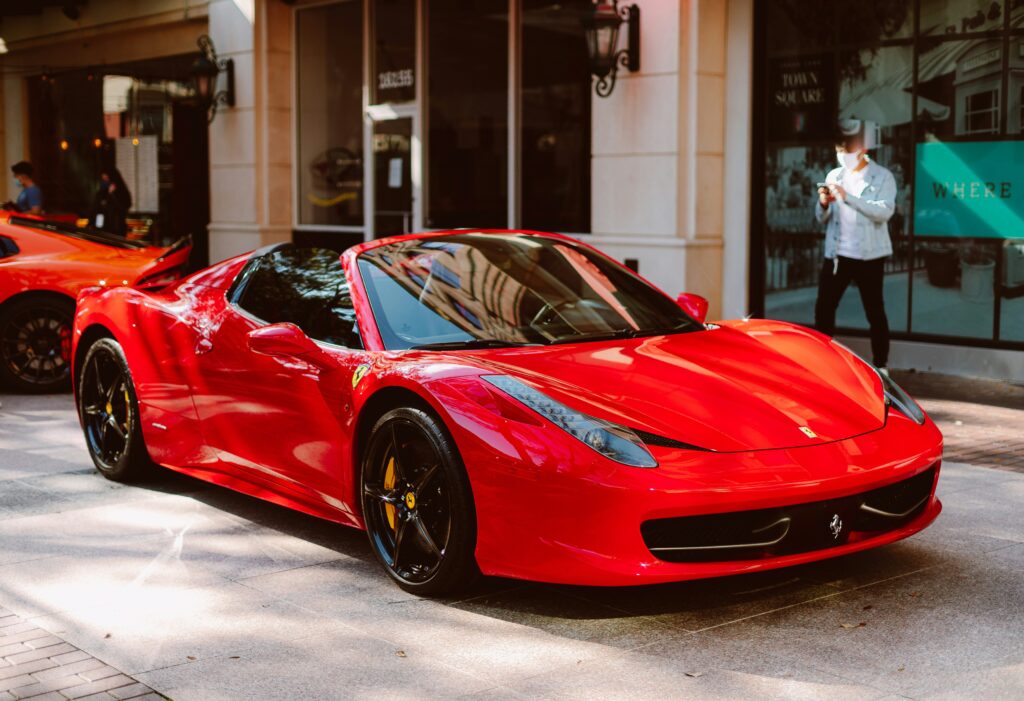
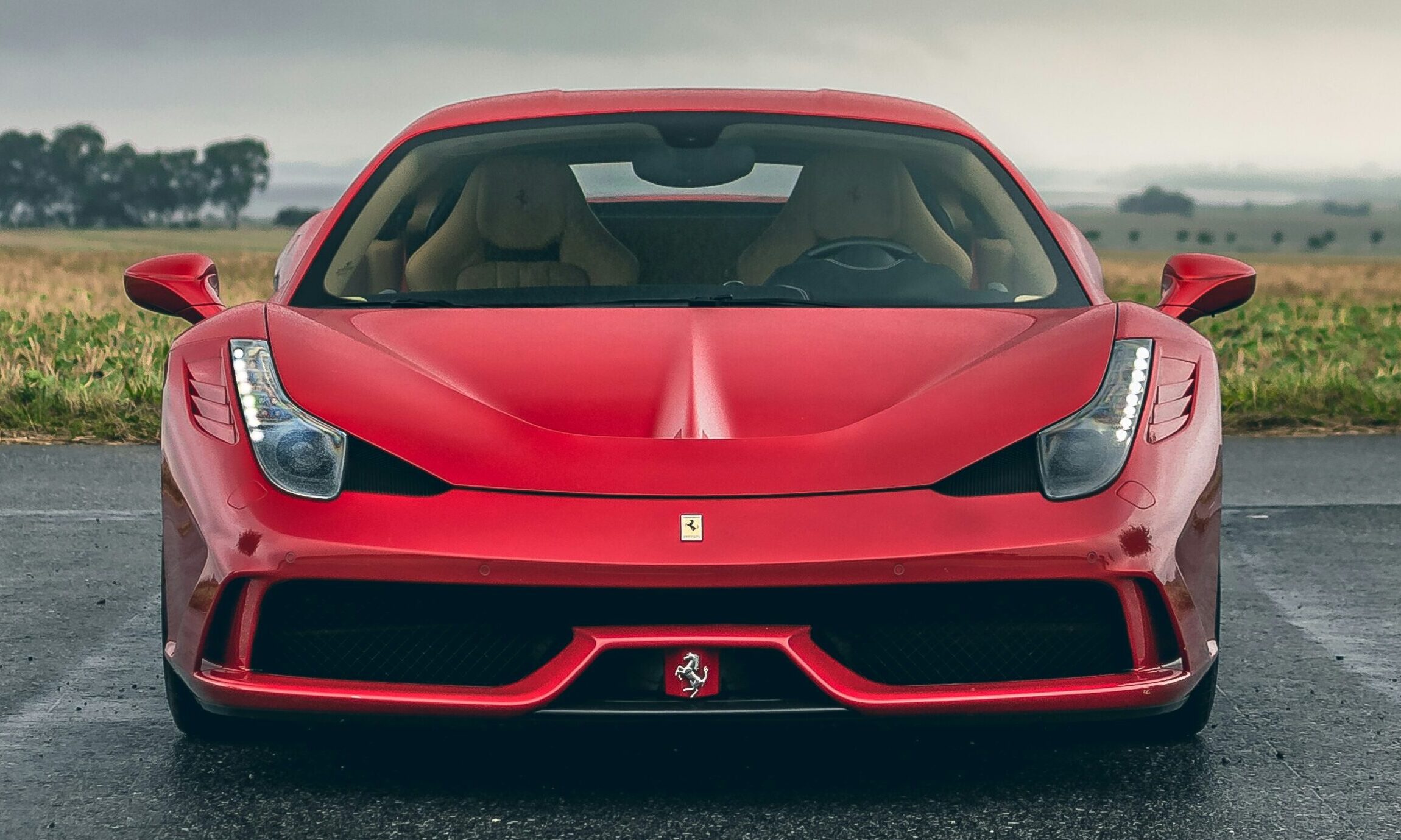
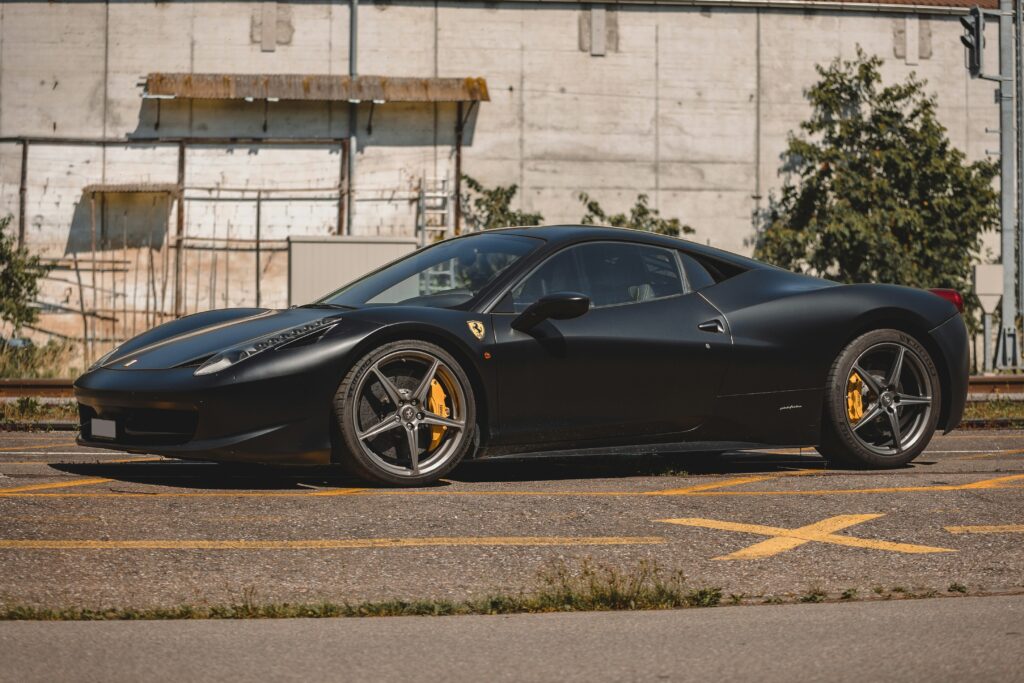
Ferrari unveiled the 458 Italia at the 2009 Frankfurt Motor Show as the F430’s replacement, and it represented a much bigger jump than the badge change suggested. The F136 V8 grew from 4.3 to 4.5 liters, with power rising to 562 bhp at 9,000 rpm and torque to 398 lb-ft at 6,000 rpm. Ferrari’s own published figures put specific output at 127 hp per liter, a record for a naturally aspirated production engine at the time, and the 458 was also the first mid-engine Ferrari road car fitted with direct fuel injection.
The manual gearbox option disappeared entirely. Every 458 left the factory with a seven-speed dual-clutch transmission that pre-selects even and odd gears on two separate input shafts, so there is zero interruption of torque to the driven wheels during a shift. The E-Diff was integrated directly into the new gearbox housing for the first time, and the styling — credited to Pininfarina and Donato Coco — was built around function first: winglets on the front bumper flex at speed to manage drag and downforce, while a flat underbody and rear diffuser do the rest of the work.
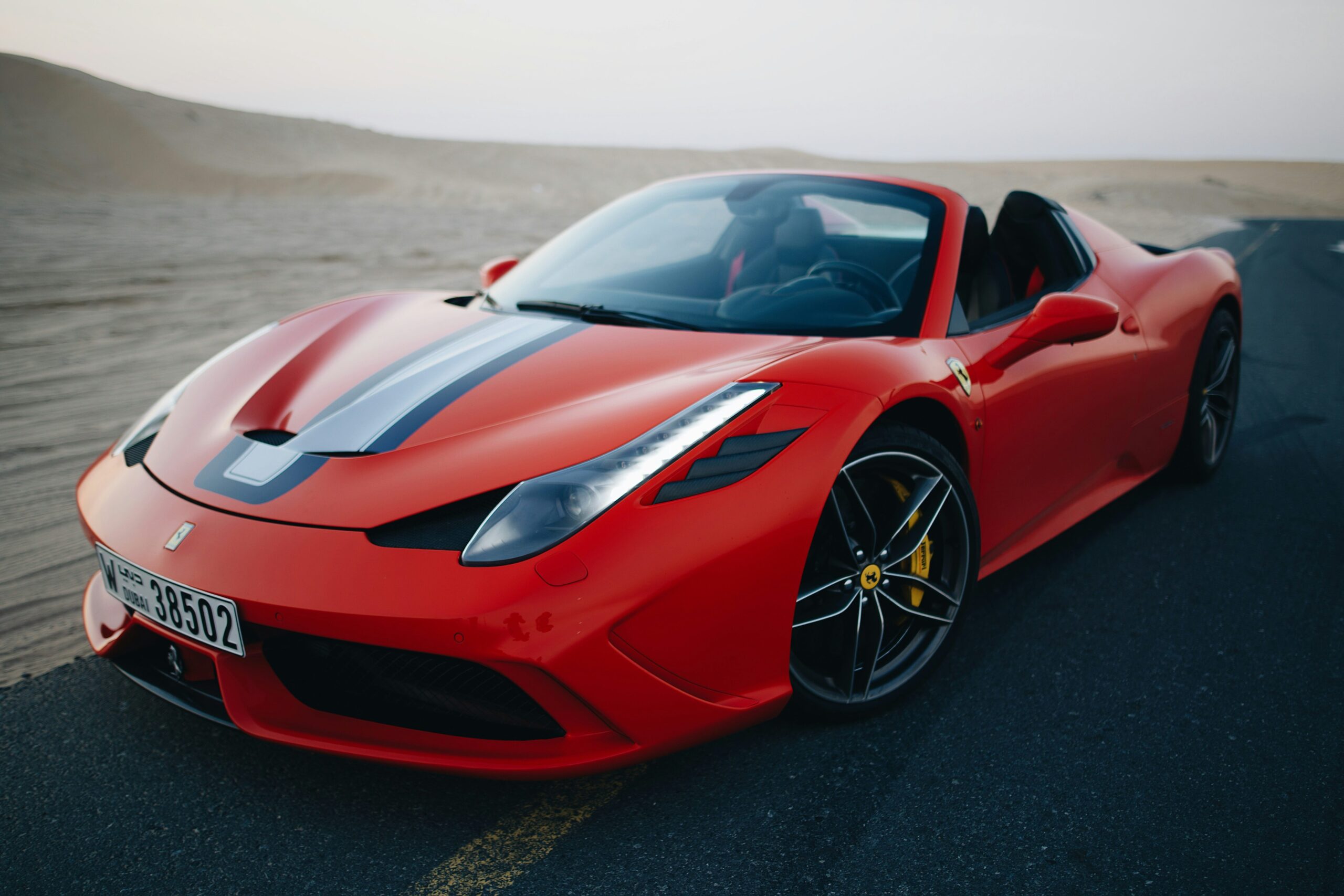
The lineup followed a familiar shape. The Italia coupe launched first, followed by the 458 Spider at the 2011 Frankfurt Motor Show with a 14-second retractable aluminum hardtop, then the harder-edged 458 Speciale in 2013 and the 499-unit Speciale A convertible at the 2014 Paris Motor Show.
Ferrari does not publish exact production figures by variant, but third-party estimates converge on roughly 24,000–25,000 units built across all four variants between 2009 and 2015, with the Italia coupe accounting for the largest share at around 15,000. The 458 was also the last naturally aspirated V8 Ferrari before the 488 brought turbocharging into the junior lineup for good in 2015.
Ferrari F430 vs Ferrari 458: The Driving Experience
Five years and one generation apart, but the gap between these two behind the wheel is bigger than the numbers alone suggest.
Engine, Performance, and Speed
On paper the gap is substantial: 79 more horsepower, 55 more lb-ft of torque, a top speed 6 mph higher, and a 0–62 mph time roughly six-tenths of a second quicker, all in the 458’s favor. Ferrari’s own factory claims put the 458 Italia at 3.4 seconds to 62 mph and 202 mph flat out, against the F430’s claimed 4.0 seconds and 196 mph.
The gearbox does as much work here as the extra displacement. The F430’s single-clutch F1 transmission shifted in around 150 milliseconds when the car launched in 2005; by the time the Scuderia arrived with revised “F1-SuperFast2” software, that figure had dropped to roughly 60 milliseconds, according to Hagerty. The 458’s dual-clutch box made the entire debate irrelevant — with no single clutch to manage, there is no interruption in torque delivery at all, on any 458, in any condition.
Top Gear put that gap in blunt terms when Jeremy Clarkson borrowed James May’s F430 to drag race a 458 for the show. Repeated hard launches, Clarkson warned, are exactly what wears out the clutch in an F1-equipped F430, while the 458’s dual-clutch system shrugged off the same treatment. His own launch in the 458 landed at 3.4 seconds to 60 mph — matching Ferrari’s factory claim almost exactly — and left him calling the car “one of the all-time greats.”
Even in ideal conditions, getting an F430 below the four-second mark is a tall order. In outright performance, the gap to the 458 is substantial, and nowhere is that more obvious than at Fiorano, where the newer car is roughly two seconds quicker around Ferrari’s own test track. The 458 moved the game forward by several notches, and the later Speciale only widened that gap.
Handling, Driving Feel, and Character
Both cars use double-wishbone front suspension and hydraulic steering, although the 458 switches to a multi-link setup at the rear. Both were among the most electronically sophisticated Ferraris of their respective moments. The F430 introduced the manettino and first-generation E-Diff alongside Skyhook adaptive dampers — a genuinely modern setup for 2004, but one the 458 comprehensively built on rather than replaced.
The 458’s E-Diff3 lives inside the gearbox casing itself, its magnetorheological dampers react to road inputs in real time, and Ferrari’s own figures for the era claimed braking distances of 106.6 feet (32.5 meters) from 62 mph (100 km/h) and 420 feet (128 meters) from 124 mph (200 km/h), aided by a Pre-Fill logic that closes the gap between pad and disc the instant a driver lifts off the throttle. The step is most obvious at the very top of each range.
The F430 corners with more drama — you feel the weight transfer build, and the rear axle is something you can lean on and adjust with the throttle. The 458 skips the drama and just goes faster: quicker steering, immediate front-end bite, and body control that stays flat and composed even when you’re pushing hard. That composure can make the 458 feel less animated from behind the wheel, leaving the F430 with the more overtly mechanical character. In other words, the 458 is the better-handling car, but not necessarily the more characterful one.
Daily Driving, Comfort, and Features
The F430 has a well-earned reputation as one of the most usable Ferraris ever built — light controls, good outward visibility, a comfortable ride even in firmer settings, and a front trunk with genuine weekend-bag space.
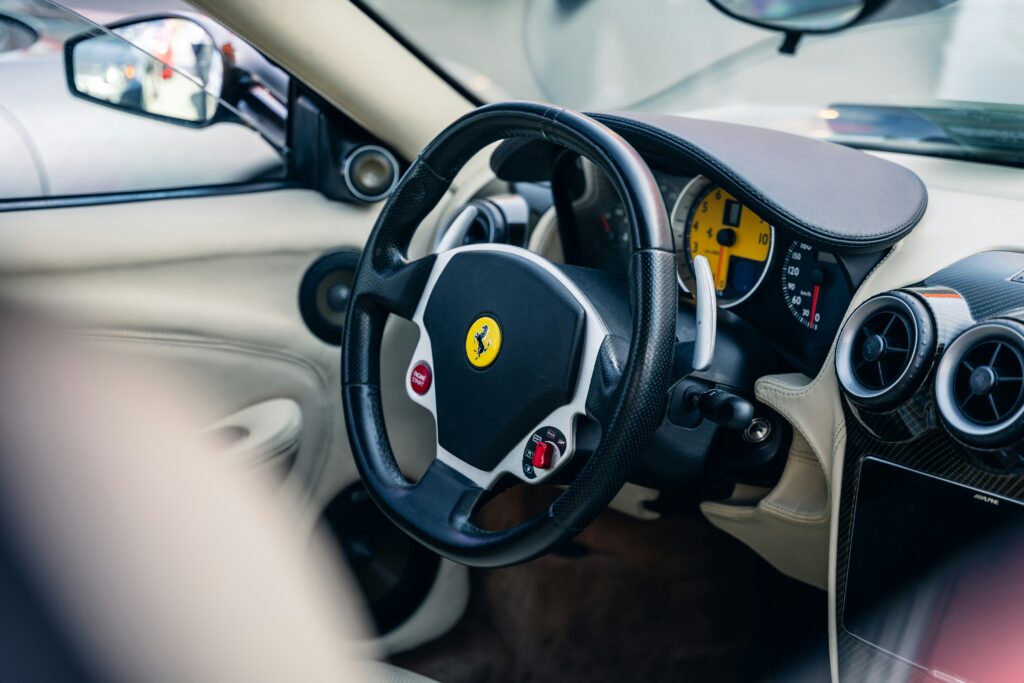
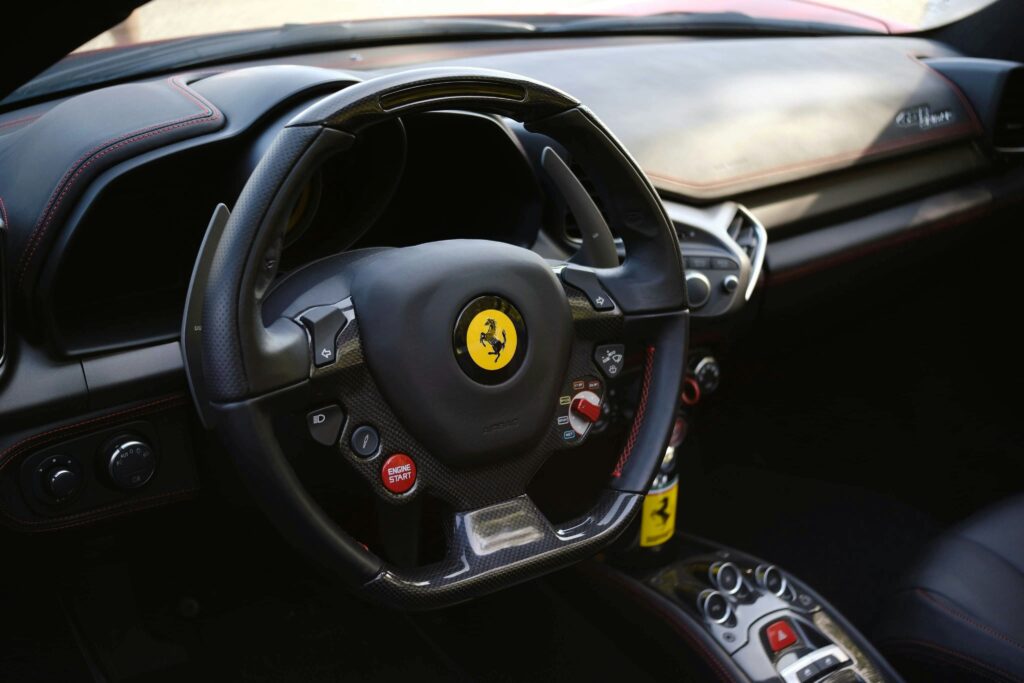
The 458 inherited that usability and mostly improved on it: the ride stays composed even in its firmest setting thanks to the adaptive dampers, and the cabin feels a full generation newer, with a wraparound steering wheel that consolidates far more functions than the F430’s simpler layout.
Ferrari F430 vs Ferrari 458 Italia: Design Language
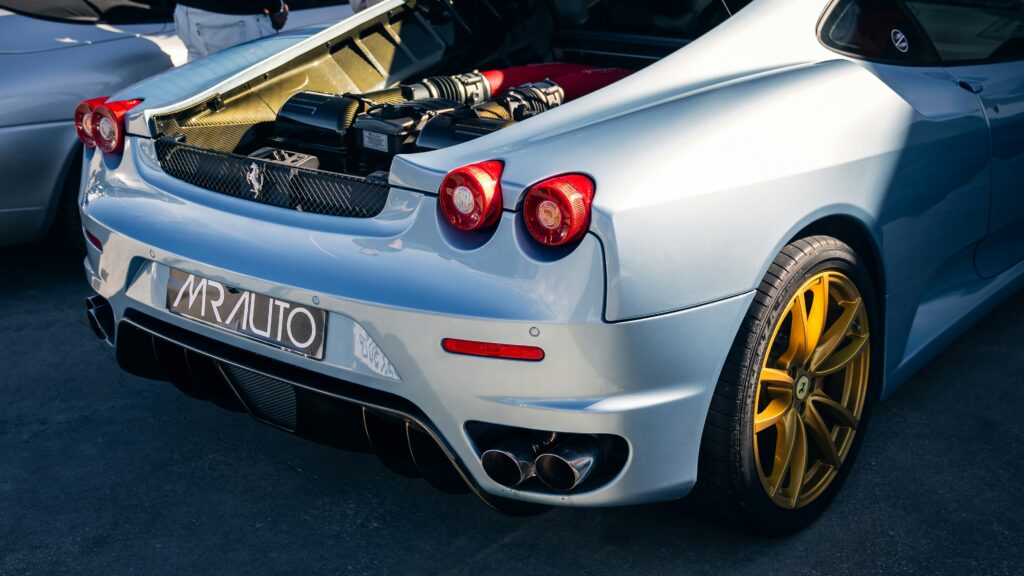
The F430’s styling is handsome rather than beautiful, and it knows it. The sharknose intakes feed cooling and downforce, the exposed circular tail lights and vented engine cover borrow from the Enzo, and the serious aerodynamic work happens underneath, where a flat floor and diffuser generate downforce without a single wing. Against the 360’s softer curves it added welcome aggression, while still reading as a relatively compact, classically proportioned mid-engine coupe.
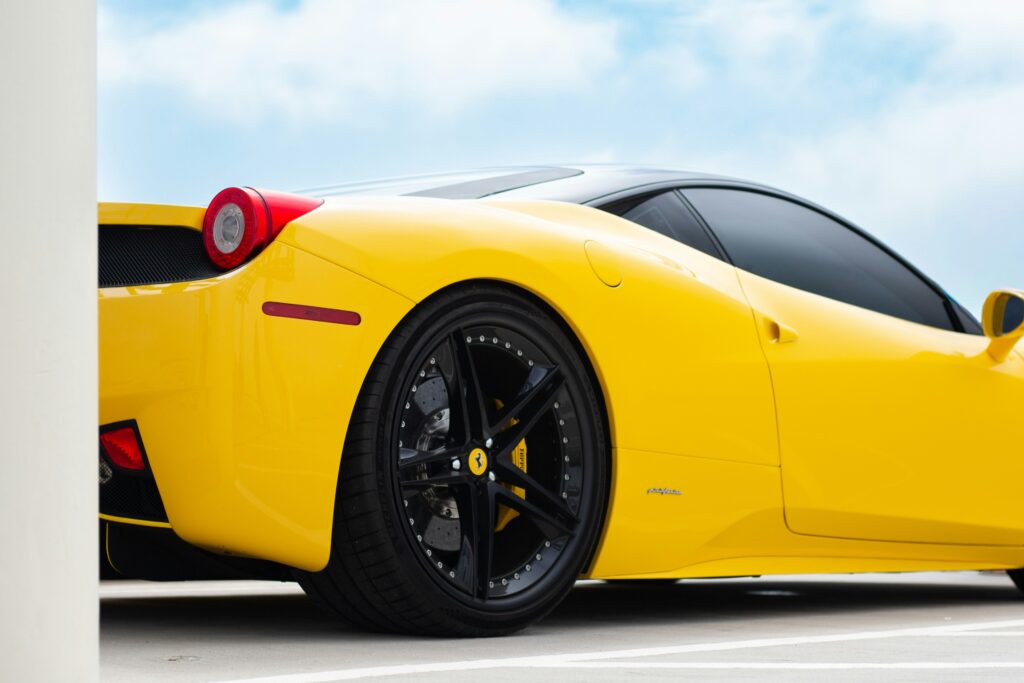
Where the F430’s aero was mostly hidden underneath, the 458 wears it on the surface — deformable winglets ahead of the front wheels, a fully sculpted rear diffuser, and bodywork that Ferrari’s own design team built around function rather than retrofitting styling onto an existing shape. Parked next to an F430, the 458 looks noticeably larger and more aggressive, a difference EVO’s Adam Towler describes at the extreme end of the lineup, where the Speciale “seems huge” and “every inch the modern supercar” next to its more compact forebears.
Inside, the F430’s cabin is simpler and more analog in its ergonomics, while the 458 brings a more dramatic, driver-focused cockpit that still holds up as one of the better-looking interiors Ferrari built in this era.
Ferrari F430 vs Ferrari 458 Italia: Reliability and Maintenance
Both cars are fundamentally well-engineered for their era, but each carries its own known issues, and each had an early-production recall tied to fire risk that is worth confirming was addressed on any car you’re considering.
The F430 eliminated one of the F355 and 360’s biggest recurring maintenance expenses by replacing their timing belts with a chain-driven system. The chains are generally inspected as mileage climbs rather than replaced at fixed intervals, with around 43,000 miles often cited as a sensible inspection point. The more familiar F430 concern is cracked exhaust manifolds, which in rare cases have contributed to engine damage; replacement can cost several thousand dollars per side if a car is still running its originals.
F1-equipped cars need their clutch checked, with typical life in the 25,000–30,000-mile range, and the hydraulic actuator that operates the F1 gearbox can develop leaks over time. Suspension ball joints are a known wear point, E-Diff solenoids can fail with age, and pre-2008 Spiders were the subject of a recall addressing a soft-top hydraulic leak with fire risk — verify the fix was completed on any Spider built before that date.
The 458 is broadly regarded as reliable by the standards of the segment. Hagerty’s recommended maintenance schedule calls for yearly or 6,000-mile oil changes alongside an eight-point check covering the carbon-ceramic brakes, transmission and differential assembly, and suspension; every 12,500 miles, technicians additionally check the electronic parking brake, re-torque the engine and transmission mounts, and inspect the brake pads.
Around the 40,000-mile mark, all of the above gets rechecked alongside a belt and spark plug change. Sticky interior buttons and a degrading leather dash are common cosmetic complaints, and a failing speedometer sensor is the most frequently reported electrical fault.
The 458’s own early-production issue was more serious: in September 2010, Ferrari recalled 1,248 Italias built before July of that year after five reported fires traced to an adhesive securing the wheel-arch liner and heat shield. Top Gear reported that under high operating temperatures, “the glue can smoke and the wheel arch liner can ignite” — Ferrari’s fix replaced the adhesive with mechanical fasteners on every affected car. The recall is now well over a decade old and the fix is straightforward, but it’s still worth confirming documentation on any early-build 458 you’re considering.
Annual running costs land in a broadly similar range for either car once serious deferred maintenance is ruled out, though spicy five-figure services — a ceramic brake replacement, an F1 gearbox actuator, a full 40,000-mile 458 service — are a real possibility on either one. Buy on documentation first for both cars, not on how clean the paint looks in photos.
Ferrari F430 vs Ferrari 458 Italia: Investment Value
According to Classic.com US auction data, the average sale price across the F430 Coupe range is $200,878 with recorded sales as low as $50,000 for a driver-grade 2005 coupe. Standard F1 Berlinettas and Spiders remain the accessible entry point into F430 ownership, while gated-manual cars occupy a separate tier entirely — even aftermarket manual conversions carry a Classic.com benchmark of near-on $200,000, below what a documented factory-original manual commands.
At the top of the range, the 430 Scuderia averages $725,867 with a $1.65 million record sale in January 2026, and the Scuderia Spider 16M carries a $751,518 benchmark against a $1.98 million record. Hagerty put the F430 on its 2026 UK Bull Market List, citing 19 percent value growth over the past five years, but considering recent numbers, the 430, at least in the U.S. market, fared even better.
The 458 Italia coupe averages $231,233 according to Classic.com — not far off the F430 Coupe range as a whole — with a recorded low of $95,000 for a 2011 example. Hagerty’s own valuation puts a condition #2 (excellent) 458 Italia at $279,000, up roughly 5 percent year-over-year. The real story is at the top of the 458 range, and it has moved fast. After holding in the $500,000–$600,000 band throughout 2025, Hagerty’s condition #2 value for the 458 Speciale jumped 57 percent year-over-year to $845,000, with clean examples now a $1,000,000 proposition.
The 499-unit Speciale A has moved even further: Hagerty put its January 2026 values between $735,000 and $1.15 million, up around 15 percent from April 2025, and by mid-2026 its top-condition value had reached $1.9 million — a 93 percent gain — with condition #2 cars up 91 percent to $1.65 million. Classic.com recorded a $3.08 million sale for a Speciale A in January 2026, against a $499,999 low from 2024.
For standard, well-kept examples, the 458 Italia still commands a premium over an F1-equipped F430 in the U.S. market. The exception is the increasingly collectible six-speed manual F430, whose values now overlap with — and can exceed — those of a standard 458.
If you want the full data on each car specifically, see our complete Ferrari F430 Investment Guide and Ferrari 458 Investment Guide.
Ferrari F430 vs Ferrari 458 Italia: Which One Should You Buy?
These two cars reward different kinds of owners, and being honest about which one you are is worth more than any spec sheet. Here are the factors that should decide it.
Buy the Ferrari F430 if:
- The gated manual matters more than anything else — it’s the last mid-engine V8 Ferrari Maranello ever built with three pedals, and the 458 never offered one at all
- You prefer first-generation electronics — the manettino and E-Diff without the extra layer of software the 458 added on top
- Budget flexibility matters — F430 F1 coupes remain one of the more accessible ways into V8 Ferrari ownership
- You can still get a clean limited-edition 430 Scuderia under a million in the U.S.
Buy the Ferrari 458 Italia if:
- You want the last and most capable naturally aspirated V8 Ferrari before the 488 brought turbocharging
- Outright pace is the priority — sub-3.5-second 0–62, 202 mph, and a dual-clutch gearbox with zero mechanical compromise
- You’re chasing the ceiling of this era — the 458 Speciale has been called one of the best driver’s cars of the past 25 years, and in the N/A F136 era, it is the king
- You want the stronger current momentum — Speciale and Speciale A values have moved further and faster than almost anything else in the modern-classic Ferrari market over the past year
Ferrari F430 vs Ferrari 458 Italia: The Verdict
Every measurable category in this comparison points the same direction. The 458 is faster, more powerful, more advanced, and — thanks to a gearbox with no mechanical compromise to manage — easier to drive quickly than the F430 ever was. Its ultimate expression, the Speciale, has been recognized by EVO as one of the best driver’s cars of the last 25 years.
And yet, put a Scuderia Spider 16M and a 458 Speciale Aperta on the same road, and the outcome isn’t always so clear-cut. In a direct back-to-back test, Seen Through Glass found the Speciale Aperta objectively better in nearly every category that can be measured — smoother, faster, more composed, easier to place on a demanding road. But by his own account, the car he kept climbing back into throughout the day was the older one: rawer, shakier over rough pavement, and asking more of the driver in return.
That’s the choice underneath this whole comparison. If you want the more complete, more modern, faster car — and the stronger investment momentum right now — buy the 458 Italia. If you want the last mid-engine Ferrari V8 you can row through a gated shifter yourself, buy the F430 and don’t look back.
The 458 is the better Ferrari by nearly every number that exists. The F430 is the one that still asks something of you.
Classic Car Gang covers the modern classics market with no editorial filters. If you found this useful, check out our other articles.

Marko Mikulic is a classic and modern classic car writer with over a decade of hands-on enthusiasm. He has published more than 10,000 automotive articles with bylines at Jalopnik, SlashGear, The Driver Advisor, and CarArac. He owns a Mercedes R129 SL — having previously owned an R107 and a BMW E30 M3. He founded Classic Car Gang to cover the cars worth buying, owning, and investing in, without editorial filters.