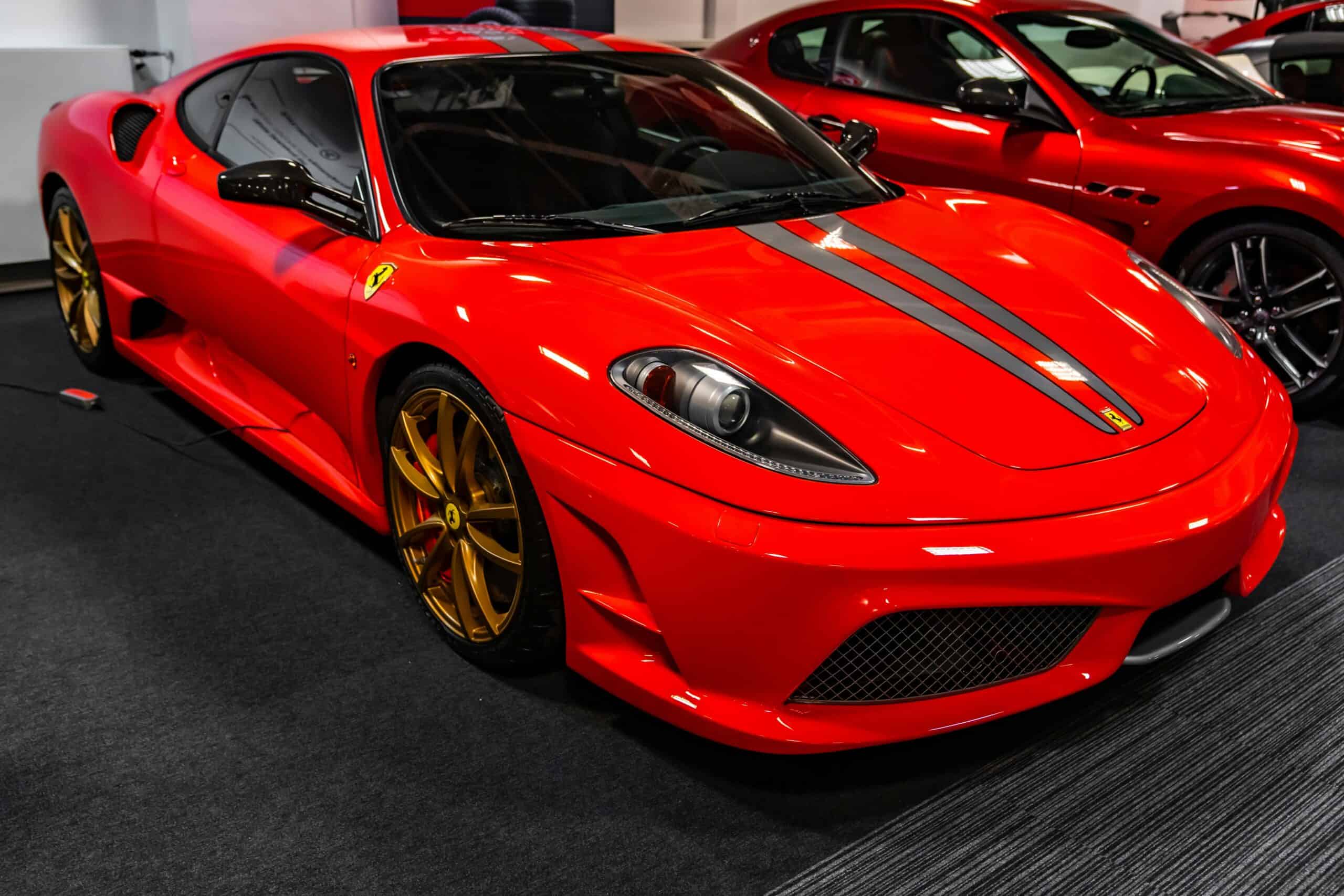

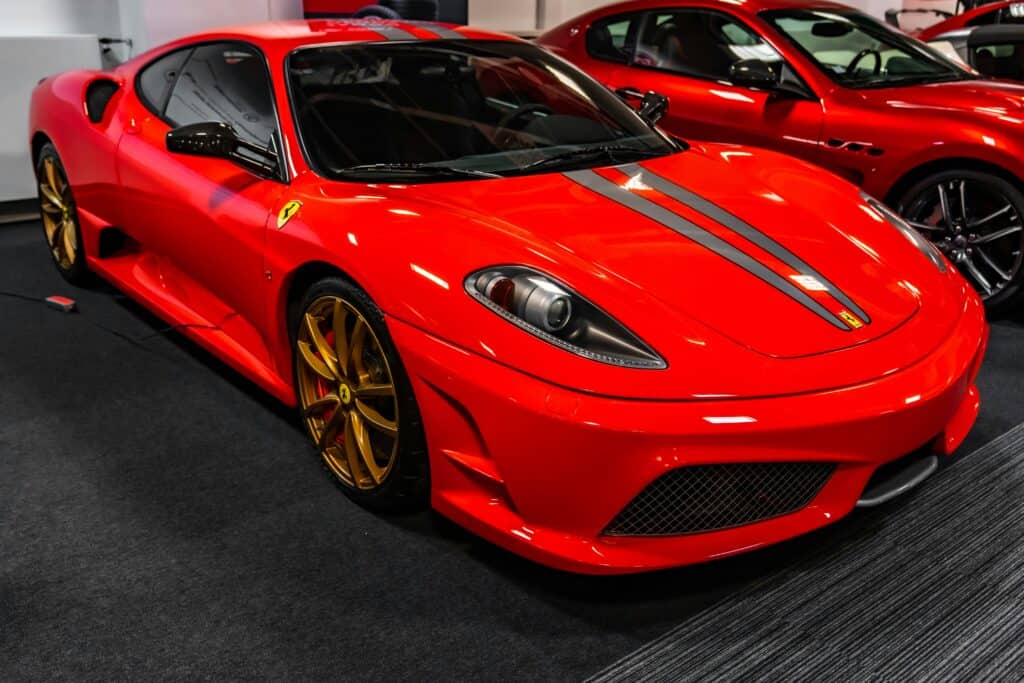
Unless you’ve been living under a rock, you’ve probably noticed how Ferrari auction prices have skyrocketed recently, especially when it comes to limited-edition Ferraris like the 430 Scuderia, the 458 Speciale, or the 360 Challenge Stradale. However, as the saying goes, “a rising tide lifts all ships,” and because of that, even the modern classic “standard” Ferraris have started moving with it.
The Ferrari F430 has spent most of the last fifteen years as the sensible Ferrari. It’s the one people bought because it wasn’t a 355 with an unresolved cambelt bill, wasn’t a 360 with a slightly soft chassis, and wasn’t a Ferrari 458 that had already traded away its manual gearbox for a dual-clutch box before anyone even had the chance to miss it. It was the car for people who wanted the exotic without the drama.
That reputation for sensibility is exactly why the F430 investment case has been so slow to develop. Nobody chases the practical Ferrari. But scarcity doesn’t care what a car was bought for — it only cares what’s left, and what’s left of the F430 in its purest configuration is getting harder to find every year.
The F430 was also the last mid-engined Ferrari that Maranello built with a genuine, factory-fitted, three-pedal gated manual gearbox. The 458 that replaced it never offered one. Neither has anything mid-engined since. That single fact is doing more to move F430 prices right now than anything else about the car, and it’s the reason this guide leans so hard on one specific configuration.
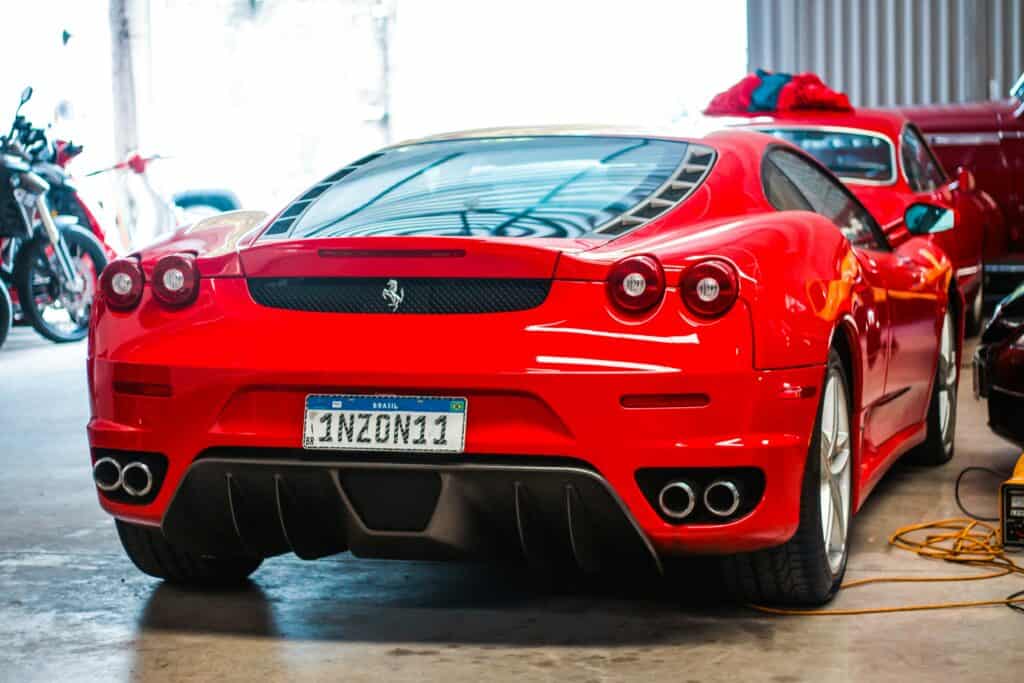
Table of Contents
Meet the Ferrari F430
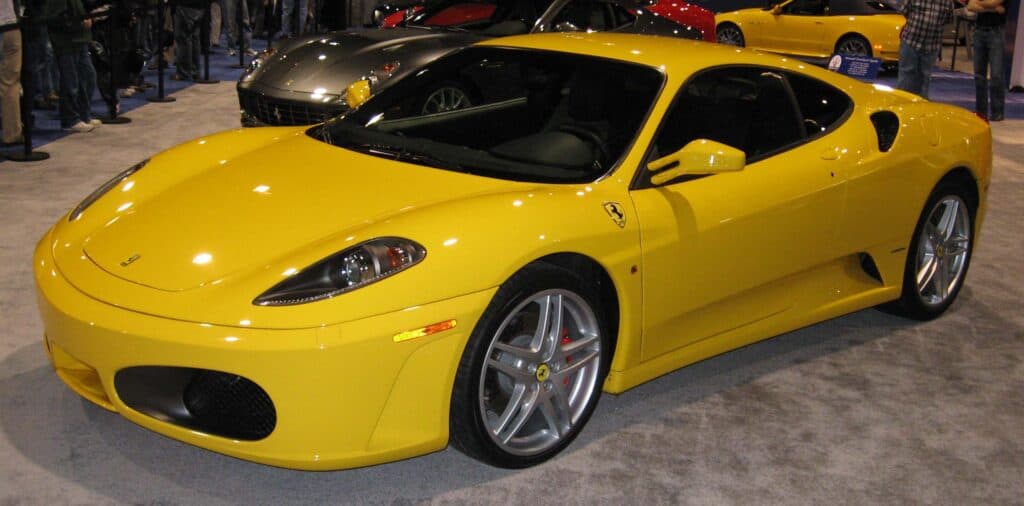
Ferrari unveiled the F430 at the Paris Motor Show in September 2004, and it went on sale for the 2005 model year as a direct replacement for the 360 Modena. On paper it looks like a facelift. On the road, and under the skin, it’s a different car entirely. Ferrari kept the 360’s aluminum spaceframe but changed almost everything bolted to it, and the result was a car that felt like a generational leap rather than a mid-cycle refresh.
The centerpiece of that leap was an entirely new engine. Ferrari co-developed the 4.3-liter V8 with Maserati, sharing the basic block with the front-engined 4200 GT coupe, but everything else — the flat-plane crankshaft, the variable valve timing borrowed directly from the Enzo’s V12, the internals — was pure Ferrari. It produced 483 hp at a screaming 8,500 rpm and 343 lb-ft of torque at 5,250 rpm, good for a factory-claimed 0-62 mph time of 4.0 seconds and a top speed north of 196 mph.
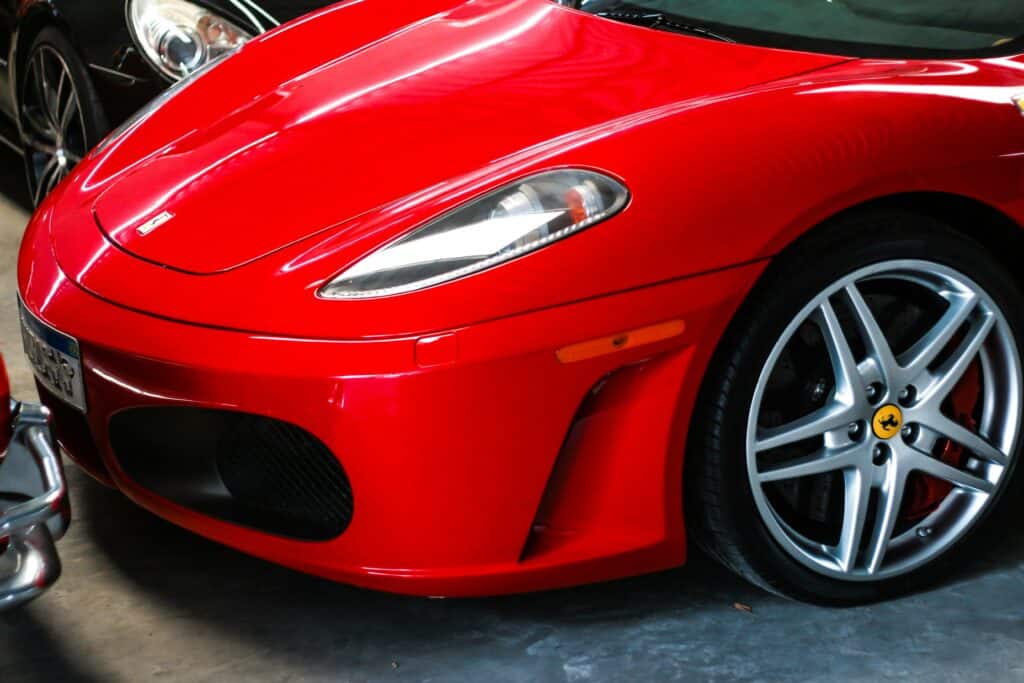
Just as important for long-term ownership, the F430’s engine is chain-driven rather than belt-driven, which means none of the recurring cambelt service bills that hang over the F355 and 360. Design-wise, Pininfarina and Frank Stephenson pulled cues from two very different eras of Ferrari history. The oversized front air intakes are a direct homage to the 156 “Sharknose” Formula 1 car from the early 1960s, while the raised, circular tail lights and exposed engine vents borrow from the Enzo, Ferrari’s contemporary flagship hypercar.
Look closely at the driver’s side mirror and you’ll find “F430” stamped into it — a quiet nod to the F40’s stamped rear wing strut. The F430 was also the first production Ferrari fitted with a fully functional rear diffuser, generating real aerodynamic downforce rather than simply looking the part.
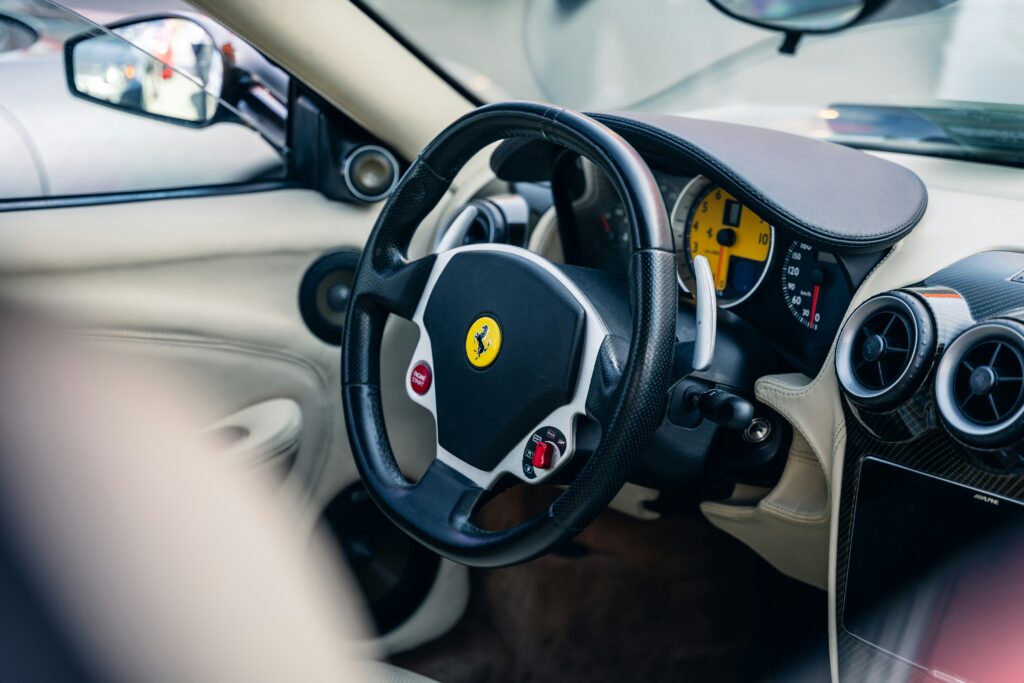
The technology transfer went well beyond styling. This was peak Schumacher-era Ferrari, coming off six consecutive Formula 1 Constructors’ Championships, and the F430 was the first road-going Ferrari fitted with the manettino — the steering-wheel-mounted dial that lets the driver toggle between Ice, Low Grip, Sport, Race, and CST-off settings for the stability control, suspension, and throttle response.
It also introduced Ferrari’s first electronically controlled limited-slip differential, the E-Diff, which reads steering angle, yaw, and individual wheel speed to distribute torque across the rear axle faster than a conventional mechanical diff ever could. None of that changes the more basic appeal of the car. Reviewers at EVO called it Modena’s V8 “baby Enzo” for a reason — it borrowed enough visual and technical DNA from the flagship to feel special, while remaining a car you could drive to dinner without a support truck following behind.
Owners consistently describe it as one of the most usable Ferraris ever built: light controls, good visibility, a comfortable ride even in its firmer settings, and a front trunk with enough room for a weekend bag or two. It’s a supercar you can actually live with, which is precisely what has always made it a harder car to romanticize — and precisely what is now starting to work in its favor.
The Full F430 Variant Lineup
Body styles:
- Berlinetta (Coupe) — Fixed-roof coupe, the first body style to launch, arriving for the 2005 model year. The purist’s choice and the version most associated with the F430 name.
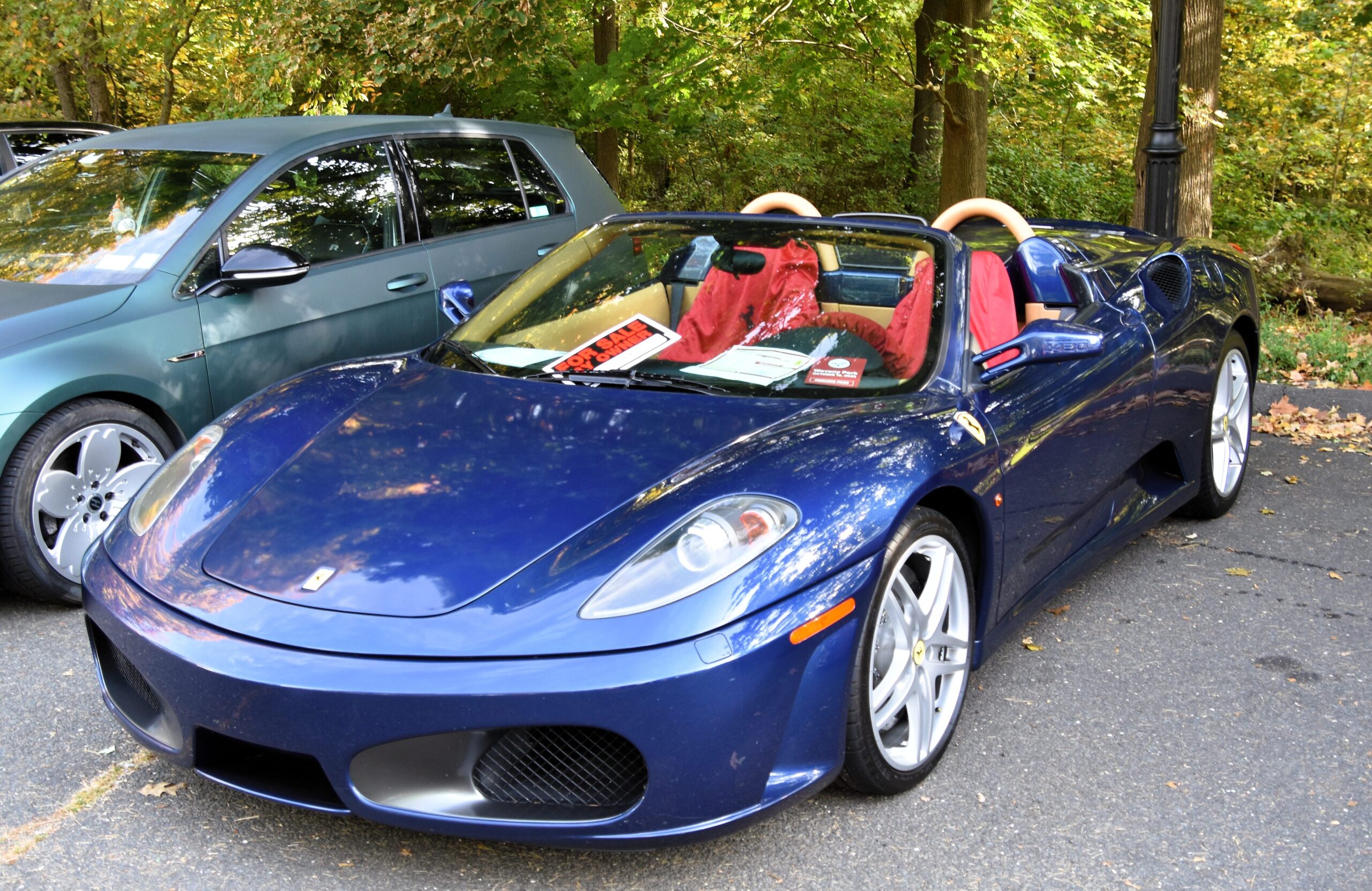
- Spider — Full convertible, introduced at Geneva in 2005, roughly five months after the coupe. The retractable canvas roof folds away into a compartment above the engine bay in a two-stage process. Mechanically identical to the coupe, with the added weight of the roof mechanism trimming a few mph off the top speed.
Transmission options:
- Six-speed manual — Open-gate, rod-actuated, available on both the Berlinetta and Spider as a factory option throughout production. Industry estimates cited by Petrolicious put manual production at around 10% of the roughly 15,000 standard coupes and Spiders built — a genuinely small slice of an already limited-production car.
- F1 automated manual — A six-speed single-clutch gearbox built by Graziano, using paddle shifters and technology first seen on the F355 and matured through the 360 Modena. This was the transmission the overwhelming majority of original buyers ordered.
Special and track-focused editions:
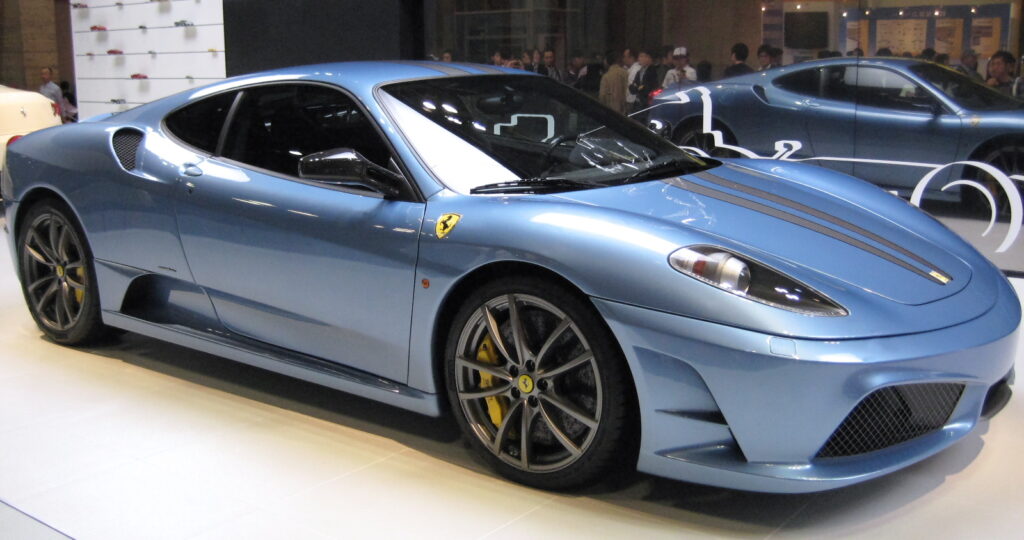
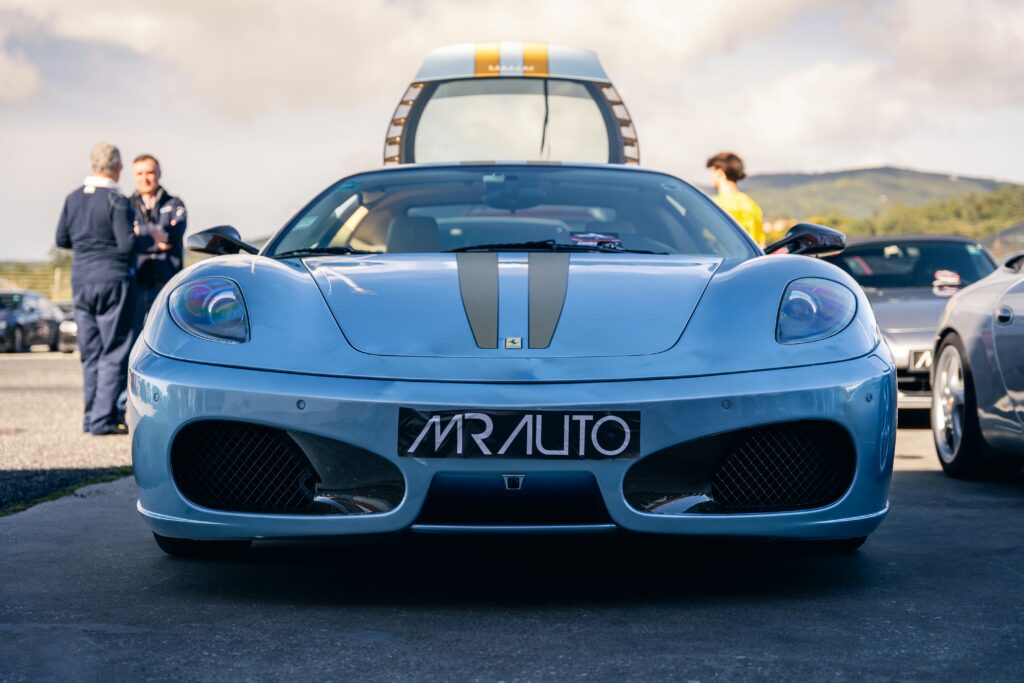
- 430 Scuderia (2007–2009) — Replaced the 360 Challenge Stradale as Ferrari’s track-focused halo variant, with direct input from Michael Schumacher during development. Power rose to 503 hp (510 PS) at 8,500 rpm, delivered through an updated “F1-SuperFast 2” software calibration for quicker shifts. Ferrari cut roughly 220 lb (100 kg) through lightweight bumpers, a Lexan rear window and engine cover, titanium coil springs, carbon-fiber door casings and mirrors, carbon-fiber racing seats, and reduced sound deadening. Approximately 1,800 units were built — and the Scuderia was never offered with a manual gearbox from the factory.
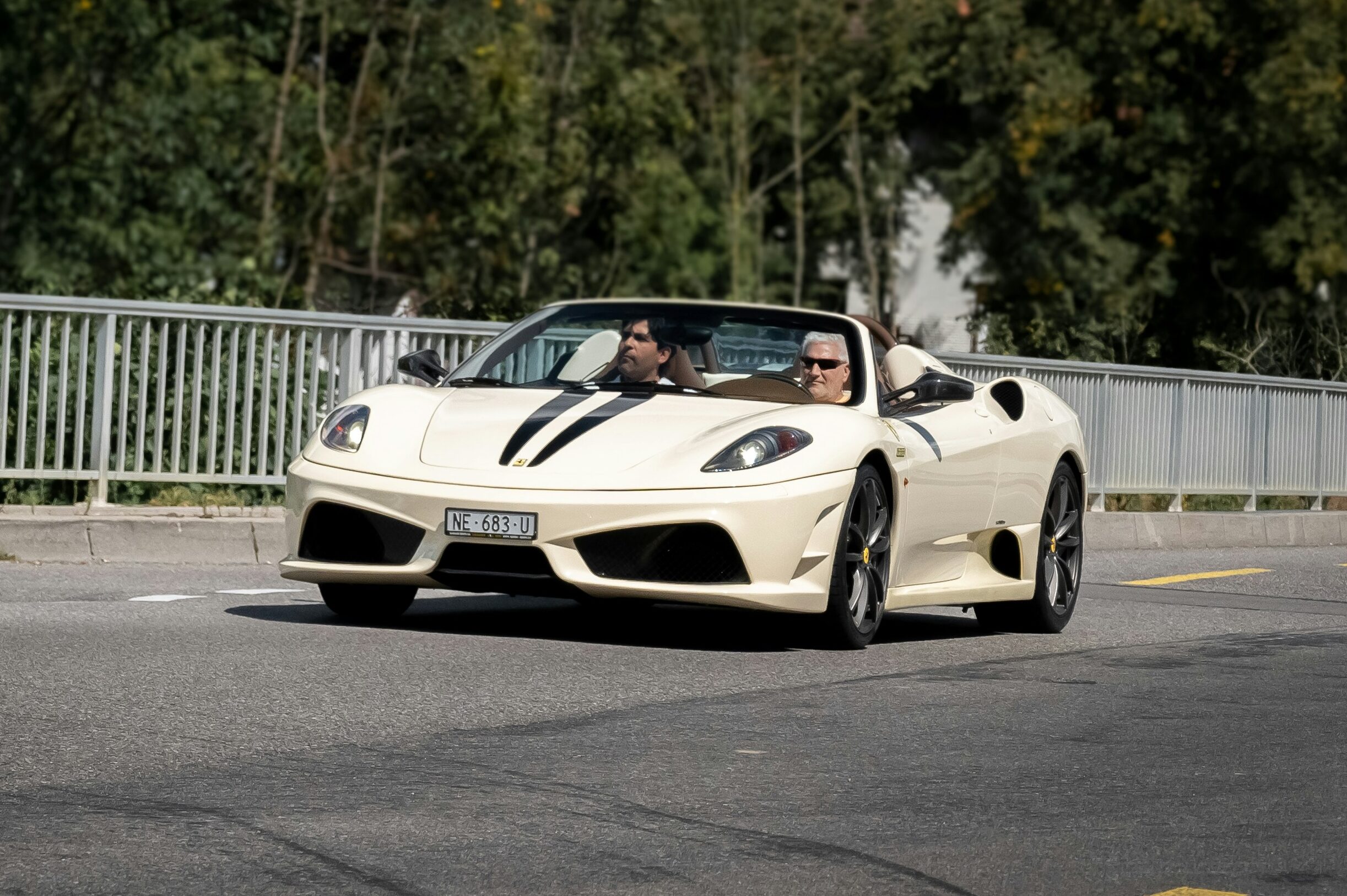
- Scuderia Spider 16M (2008–2009) — A convertible version of the Scuderia, built to celebrate Ferrari’s 16th Formula 1 Constructors’ Championship. It shares the Scuderia’s 503 hp powertrain and, like the coupe, was offered exclusively with the F1 transmission. Only 499 were built, making it the rarest F430 of all.
Across every body style and variant, Ferrari built somewhere in the neighborhood of 17,000 F430s between 2004 and 2009 — a production run that dwarfs the F355’s, but one in which the specific configuration this guide is built around represents only a tiny fraction of the whole.
The Ferrari F430 Investment Market
The F430 market divides cleanly along two lines: transmission and variant. A base coupe with the F1 gearbox is, by a wide margin, the most accessible way into F430 ownership. A manual or a 430 Scuderia occupies an entirely different price bracket, and the gap between the two ends of the market is wide and getting wider.
According to Classic.com US auction data, the average sale price across every F430 body style and variant is $313,315, with recorded sales ranging from a low of $40,000 for a 2005 coupe up to $1,980,000 for an exceptional 2009 Scuderia Spider 16M.
Broken down by configuration, the F1 coupe averages roughly $200,878 and the F1 Spider roughly $156,716 — both still within reach of a well-qualified first-time Ferrari buyer. The manual cars occupy a completely different tier. The manual coupe averages roughly $503,880, and the manual Spider — the rarest and most in-demand roadgoing configuration in the entire lineup — averages roughly $281,371, with a recorded high sale of $485,000 for a 2006 example in May 2026.
The track-focused variants sit above both. The 430 Scuderia averages roughly $725,867, while the Scuderia Spider 16M averages roughly $902,954 and has traded as high as $1,980,000 for a documented, exceptional example.
Worth flagging separately: a real secondary market has emerged for manual-converted F430s and even Scuderias, where specialist shops retrofit factory Ferrari parts to install a proper gated shifter into a car that left the factory with the F1 box. Classic.com tracks these as a distinct category, and they average roughly $190,000 — genuinely desirable, but priced well below a documented factory-original manual, because the market clearly distinguishes between the two.
Ferrari F430 Investment Value Curve
Note: prices below reflect Classic.com US auction data at time of writing and will change over time.
| Variant | Entry | Average | High end |
|---|---|---|---|
| Coupe, F1 | ~$90,000 | ~$160,000 | $250,000+ |
| Coupe, manual | ~$200,000 | ~$500,000 | $750,000+ |
| Spider, F1 | ~$100,000 | ~$150,000 | $350,000+ |
| Spider, manual | ~$180,000 | ~$350,000 | $450,000+ |
| 430 Scuderia | ~$200,000 | ~$725,000 | $1,700,000+ |
| Scuderia Spider 16M | ~$450,000 | ~$900,000 | $2,000,000+ |
Why It’s Going Up
The F430 made Hagerty’s 2026 UK Bull Market List, with the manual Spider specifically singled out as the aspirational pick of the ten cars named. Hagerty puts a low-mileage, manual, well-specified Spider at around £95,400 in “excellent” condition — a figure that has climbed 19% over the past five years. Hagerty’s Collectability Algorithm, which scores every car in its price guide against over 20 weighted factors, places the F430 in the 74th percentile, and 65% of Hagerty’s F430 insurance quotes come from Gen X and Millennial buyers — a notably young demographic for a car at this price point.
That youth-driven demand shows up elsewhere in Hagerty’s own numbers too. The F430 accounts for roughly 10% of all Ferrari insurance quotes Hagerty receives, making it the third most-quoted Ferrari model behind only the 458 and the 488 — both of which are newer, more expensive, and built in comparable or larger numbers. For a nearly twenty-year-old car to still command that share of interest is a meaningful signal about where the demand is actually concentrated.
The manual transmission is the story underneath all of this, and it’s not a subtle one. The F430 is the last mid-engined Ferrari that Maranello ever built with a genuine three-pedal option. The 458 Italia that replaced it launched exclusively with a dual-clutch gearbox and never offered anything else. No mid-engined Ferrari has offered a manual gearbox since. The final manual Ferrari of any kind was a special-order California GT — a front-engined grand tourer, not a supercar — that left the factory in 2012, closing out manual Ferrari production for good. That makes the manual F430 a genuine hard stop in Ferrari’s history, not just a fading option.
Scarcity compounds this. Only around 10% of the roughly 15,000 standard coupes and Spiders were built with the manual, and every year a portion of that already-small pool gets crashed, tracked hard, or converted into a track car and permanently exits the collectible population. That process has been running for two decades and shows no sign of reversing.
The rise of the aftermarket manual-conversion market is itself a useful signal, not a threat to the factory car’s value. Owners and shops have increasingly been swapping F430s — and even the occasional 430 Scuderia, which never left the factory with a manual — from the F1 box to a genuine six-speed manual, sourcing the gearset and linkage from Ferrari’s own parts catalog.
Enthusiast reviewers have consistently pointed to the same reasons: the F1 gearbox feels dated and occasionally clunky by modern standards, factory manual cars have historically cost close to double what an equivalent F1 car does, and the demand for a proper mechanical shift experience simply hasn’t gone away.
The fact that a specialist conversion industry exists at all is confirmation of exactly how much buyers want the manual experience — and the data backs up which one the market actually values more highly. A converted car currently averages around $190,000. A documented, factory-original manual coupe averages roughly $500,000. Buyers are willing to pay a real premium for provenance, not just for the gear lever.
The 430 Scuderia and 16M pull their value from a different but related place. Both were F1-only from the factory, both were developed with direct input from Michael Schumacher at the height of his F1 dominance, and both represent the last naturally aspirated, non-hybrid track-focused V8 Ferraris built before turbocharging took over the range entirely with the 488. CAR Magazine, reviewing the Scuderia at launch, called it “quite simply the best road-legal, track-friendly supercar on sale today” — and that reputation has only calcified with time, not faded.
Finally, there’s the engineering case that has nothing to do with sentiment. The F430 was the first Ferrari V8 to move to a chain-driven engine, eliminating the recurring cambelt service that has weighed on F355 and 360 values for years. Buyers who have been priced out of, or scared off by, older Ferraris with belt-driven engines find the F430 a materially lower-anxiety way into naturally aspirated V8 ownership — and that’s a demand driver that isn’t going away as those older cars keep aging.
Common Ferrari F430 Problems
The F430 has a well-earned reputation as one of the more mechanically robust Ferraris of its era. That doesn’t mean it’s without issues — it means the issues are well understood, well documented, and generally addressable if you know what to check.
- Exhaust manifolds. The single most commonly cited F430 issue. Manifolds can develop hairline cracks, and in a small number of documented cases a cracked manifold has caused engine damage by allowing debris to be drawn back into the engine. A specialist at Graypaul Nottingham told evo the only recurring problem they’d seen on the model was manifold cracking. A single new manifold runs over £2,750 in parts alone, with total replacement — including labor — easily clearing £4,000. If a car is still on its original manifolds, budget for this as a near-term expense rather than a hypothetical one.
- F1 clutch wear. On F1-equipped cars, clutch life averages 25,000–30,000 miles according to specialist estimates, though some owners report getting more. A new clutch alone runs around £2,500; add a release bearing and flywheel and the bill climbs toward £4,500. Ask for a documented clutch-wear percentage — anything under 50% is considered a healthy sign.
- F1 gearbox actuator leaks. The hydraulic actuator that operates the F1 gearbox can develop fluid leaks over time. A full inspection should include removing the undertrays to check for seepage; a replacement actuator runs around £5,000. Note that a factory oil overflow pipe in the right rear corner is normal and not itself a sign of a problem.
- Timing chain service. Ferrari’s own recommendation is to check the timing chains at 43,000 miles. A dealer-performed check and service runs around £4,000; an independent specialist may charge less. This is the F430’s closest equivalent to the F355’s cambelt service, though the interval is far longer and the job itself is less invasive since there’s no need to remove the engine.
- Ball joints. The main suspension weak point, according to specialist feedback reported by evo. Listen for clonks or rattles over bumps, and check whether the steering fails to self-center — a sign the joints are beginning to seize. Dealers can now replace the individual joints rather than the entire wishbone, which has brought the typical repair cost down to around £600.
- E-Diff solenoids. The electronic differential is a first for Ferrari on this generation, and its solenoids can fail with age. Replacement isn’t considered a major expense, but functionality should be specifically verified during any test drive or inspection, since a failing E-Diff won’t always announce itself obviously.
- Carbon-ceramic brake wear. Many F430s were optioned with carbon-ceramic (CCM) discs — a roughly $17,000 factory option when new, standard equipment from around 2008 onward. If the discs need replacing, budget around £10,000, though in practice this is usually only an issue on cars that have seen serious track use. The standard iron-disc setup is more than sufficient for road driving and shouldn’t be treated as a lesser specification.
- Rear light and headlight issues. The tabs securing the rear light units can break and cause a rattle; replacement units run into four figures. Headlights can develop internal hazing over time — replacement runs around £6,000 if it becomes bothersome enough to address.
- Instrument cluster frosting. The inner surface of the gauge cluster can develop frosting with age. The only real fix is replacing the cluster, which isn’t cheap.
- Body and paint. Corrosion isn’t a widespread issue on the F430, and any that does turn up is usually traceable to an untreated stone chip rather than a structural problem. That said, any car showing bodywork issues beyond minor stone-chip damage warrants closer scrutiny of its accident history.
What to Look for in a Good F430 Investment Car
There’s no guaranteed formula for picking a winner in any collector market, but a few things consistently separate the F430s that will hold and grow value from the ones that won’t.
Service History
A complete, documented service history — clutch condition, timing chain check, manifold status, any E-Diff work — is the difference between buying a known quantity and buying a guess. On a car this mechanically sorted overall, gaps in the paperwork stand out more than they would on a more failure-prone Ferrari, and they should be treated with real suspicion rather than waved off.
Gearbox
Buy the manual if you possibly can. This isn’t a matter of taste — it’s the single biggest lever on both driving experience and long-term value. Manual coupes trade at roughly double the average price of an equivalent F1 coupe, and manual Spiders command an even larger premium over their F1 counterparts. With only around 10% of standard F430 production built with the manual, and the F1 cars vastly more common and considerably cheaper, the investment logic is about as clear as it gets in this market. If a genuine factory manual is out of reach, a documented, professionally executed conversion using factory Ferrari parts is a legitimate — if lower-tier — alternative, and the market prices that distinction accurately.
Colors
Rosso Corsa over Crema remains the default “safe” specification, and it’s popular for a reason — it consistently draws strong bidding and appeals to the broadest pool of future buyers. But it’s the less common colors that tend to pull the strongest individual results: Giallo Modena, Blu Nart, and Grigio Silverstone have all achieved standout prices at auction in recent years, particularly when paired with a contrasting interior. A rare factory color on a manual car is about as strong a combination as this market offers.
Factory Options
Look for cars with documented factory options rather than aftermarket dress-up parts that only mimic them. Scuderia shield badges on the front wings, the carbon-fiber Driver Zone and lower-zone trim, extended leather with Daytona-style seat stitching, and carbon-ceramic brakes were all genuine factory options — and all add real value when they’re confirmed on the car’s original build sheet, rather than added later by an owner or dealer trying to dress up a lesser-specified car.
Condition Integrity
Originality matters as much as mechanical condition on a car at this price point. Confirm the original toolkit, owner’s books, and spare wheel or tire-repair kit are present — they’re frequently sold off separately and are expensive to source individually. If a car carries carbon-fiber trim, Scuderia badging, or ceramic brakes, verify those options against the factory build sheet rather than taking a seller’s word for it; Ferrari’s own Classiche department can authenticate specification and matching-numbers status for buyers who want that level of certainty before committing serious money.
Pre-Purchase Inspection
Have any prospective F430 inspected by a specialist who works on these cars regularly, not a generalist shop. A proper inspection should include a borescope look at the exhaust manifolds, a documented clutch-wear check on F1 cars, verification of E-Diff function, an undertray inspection for gearbox actuator leaks, a check of ball-joint play and steering self-centering, and confirmation of carbon-ceramic disc and pad life if the car is so equipped. This isn’t a car to buy sight unseen off a set of photographs.
Best Ferrari F430 Investment Tiers
Tier 1
Scuderia Spider 16M — 499 units, F1-only, the rarest F430 built
The 16M sits alone at the top of the F430 market. Built to celebrate Ferrari’s 16th Formula 1 Constructors’ Championship and limited to 499 examples worldwide, it combines the Scuderia’s 503 hp powertrain and Schumacher-tuned dynamics with open-top motoring. It was never offered with a manual gearbox, but its rarity, motorsport pedigree, and status as the last naturally aspirated manual open-top Ferrari special series place it in its own collector category entirely. These are already firmly institutional-collector territory, and the window on a relative bargain closed years ago.
Tier 2
430 Scuderia — approximately 1,800 units, F1-only, the definitive road-legal track F430
Slightly more attainable than the 16M but built in similarly small numbers, the Scuderia represents the purest expression of what the F430 platform could do once weight and sound deadening were stripped away. With direct Schumacher development input, a genuine 220 lb weight reduction, and a reputation as one of the best-handling Ferraris of its generation, the Scuderia occupies a strong, largely uncontested position as the final naturally aspirated Ferrari V8 special series equipped with a single-clutch automated-manual transmission before the dual-clutch 458 Speciale.
Tier 3
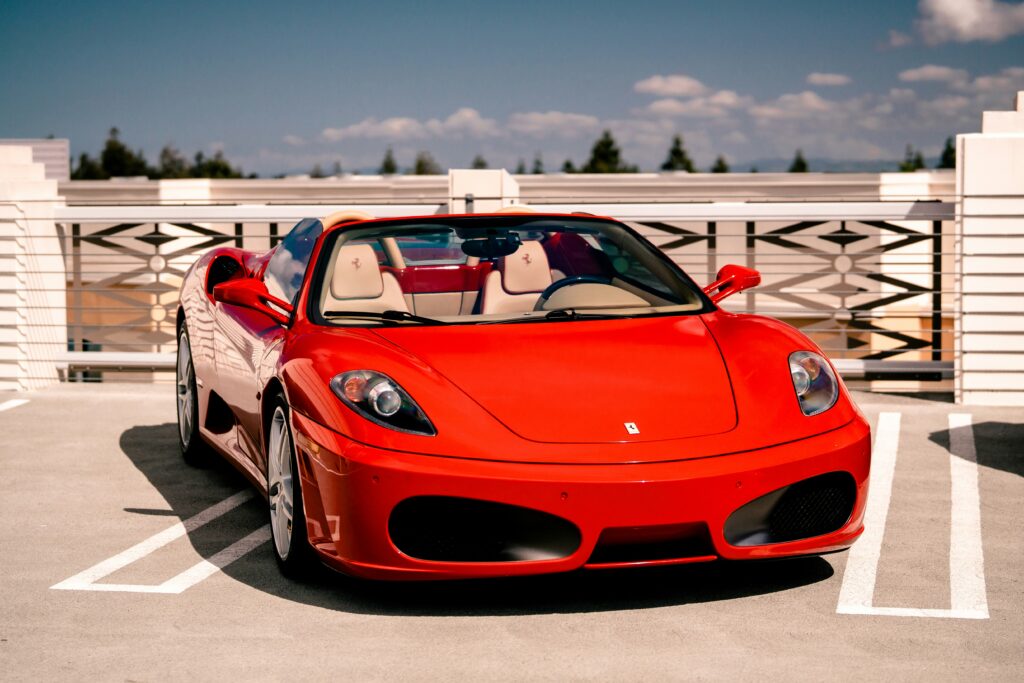
Manual Spider — the rarest roadgoing configuration, open-top plus three pedals
Combining the manual gearbox with the Spider body produces the single most in-demand standard-production configuration in the entire F430 lineup, and the market data backs that up clearly — manual Spiders currently outsell manual coupes on a dollar-for-dollar basis. Finding one in genuinely good condition with a full service history takes patience, but the combination of scarcity, open-top appeal, and the last-manual-mid-engine-Ferrari narrative gives it a strong long-term case.
Tier 4
Manual Berlinetta, good documented condition — the strongest accessible entry point
A well-maintained manual coupe with a verifiable service history is the clearest way into genuine factory-manual F430 ownership without stretching into Scuderia territory. It carries the same scarcity story as the manual Spider at a meaningfully lower price point, and it appeals to the widest pool of future buyers — anyone chasing a manual F430 will consider a coupe. Verify the clutch, confirm the timing chain service, and buy the best-documented example available.
Avoid
F1-equipped cars with unknown or incomplete service history regardless of how clean they look in photos, cars with unaddressed exhaust manifold or clutch-wear concerns, heavily modified examples that have moved away from factory specification, and manual conversions sold or priced as though they were factory-original — the market already prices that distinction, and buying at parity with a genuine factory car is simply overpaying.
The Ferrari F430 Investment Verdict
The F430 investment case rests on a fact that’s easy to state and hard to argue with: this is the last mid-engined Ferrari Maranello ever built with a genuine manual gearbox, and that door closed permanently once the 458 arrived. Everything else about the car’s investment story — the chain-driven engine that sidesteps the cambelt anxiety hanging over older Ferraris, the youthful and growing Hagerty demographic, the Bull Market List placement, the widening gap between manual and F1 pricing — reinforces the same underlying scarcity rather than competing with it.
The F1 cars remain the sensible way to own an F430, and there’s nothing wrong with that — they’re mechanically excellent, genuinely usable, and priced within reach of a much broader range of buyers. But the F1 cars are also not where the investment case lives. That case belongs to the manual coupe, the manual Spider, and the Scuderia variants that were never offered any other way.
Buy the manual if the budget allows it. Verify the clutch and the timing chain service. Confirm any factory options against the build sheet rather than taking them on faith. Find the documented history. The F430 spent most of its life as the practical Ferrari — the one nobody felt compelled to romanticize. That’s exactly the position the Ferrari F355 was in a decade ago, and exactly the position the market has since corrected.
Classic Car Gang covers the modern classics market with no editorial filters. If you found this useful, check out our other articles.

Marko Mikulic is a classic and modern classic car writer with over a decade of hands-on enthusiasm. He has published more than 10,000 automotive articles with bylines at Jalopnik, SlashGear, The Driver Advisor, and CarArac. He owns a Mercedes R129 SL — having previously owned an R107 and a BMW E30 M3. He founded Classic Car Gang to cover the cars worth buying, owning, and investing in, without editorial filters.