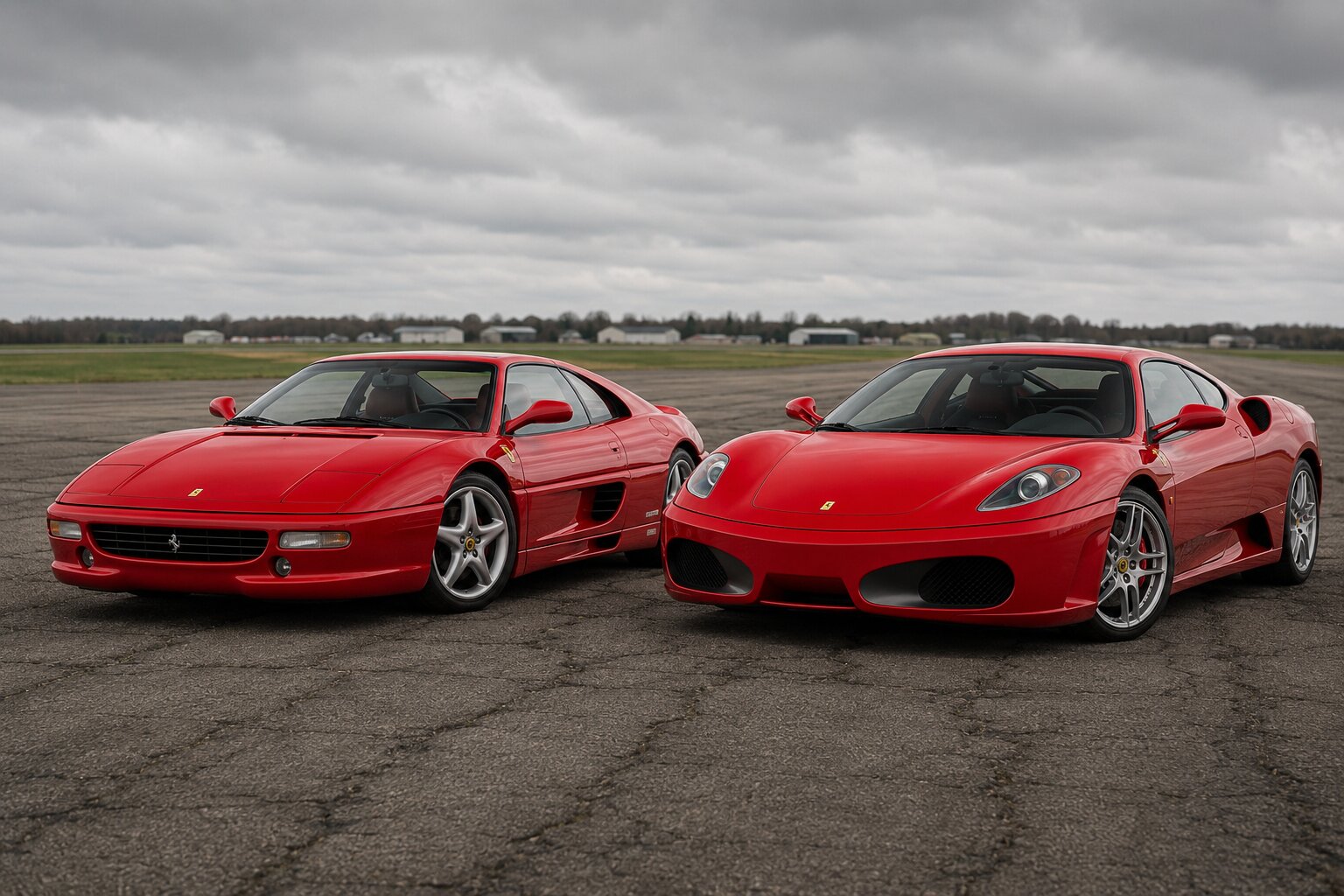

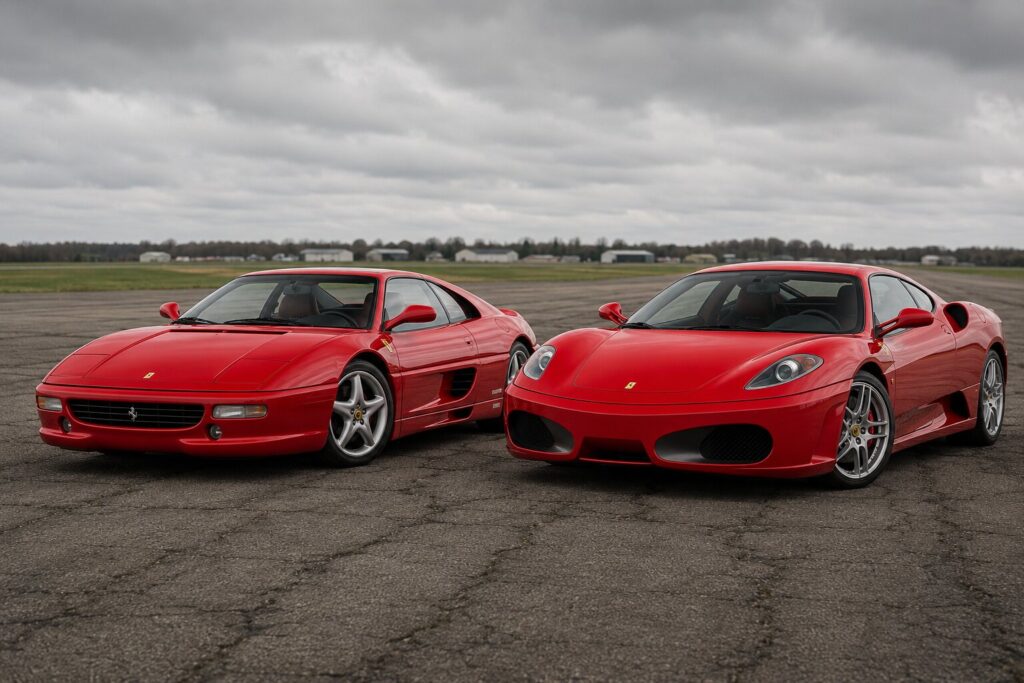
The Ferrari F355 vs Ferrari F430 is a comparison Ferrari itself never intended you to make. These cars are two generations apart — the 360 Modena sits between them — and when the F430 launched, the F355 was a decade-old used car, not a rival.
The market has since collapsed that distance. Today, a good manual F355 and a good F430 trade within the same six-figure window, chase the same buyer, and answer the same brief: a naturally aspirated, mid-engine V8 Ferrari from the era before turbocharging and dual-clutch gearboxes rewrote the formula.
One is the last of the old-school Ferraris — pop-up headlights, cam belts, an engine that punishes laziness and rewards commitment. The other is the first of the modern ones — timing chain, E-Diff, manettino, and pace that still keeps up with new metal twenty years on. So which one belongs in your garage? Here is our full Ferrari F355 vs Ferrari F430 breakdown.
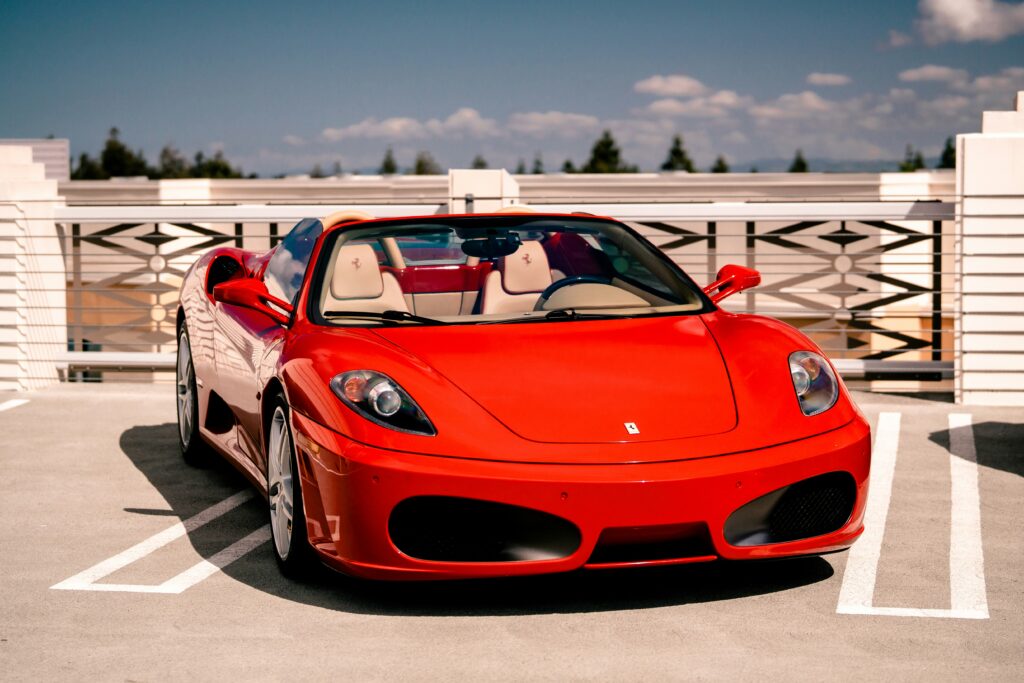
Table of Contents
Ferrari F355 vs Ferrari F430: Quick Specs Comparison
Here is a quick look at all of the basics. For this comparison, we are using the F355 Berlinetta and the F430 Berlinetta — the coupe body style of each car and the most relevant configuration for the majority of buyers.
| Ferrari F355 Berlinetta | Ferrari F430 Berlinetta | |
|---|---|---|
| Years | 1994–1999 | 2004–2009 |
| Engine | 3.5L flat-plane V8, 5 valves/cyl | 4.3L F136 flat-plane V8, 4 valves/cyl |
| Power | 375 bhp @ 8,250 rpm | 483 bhp @ 8,500 rpm |
| Torque | 268 lb-ft @ 6,000 rpm | 343 lb-ft @ 5,250 rpm |
| 0–60 mph | ~4.5 sec (C/D tested, manual) | ~3.9 sec (factory claim) |
| Top Speed | 183 mph | 196 mph |
| Weight (curb) | ~3,300 lb | ~3,344 lb |
| Drive | RWD, mid-engine | RWD, mid-engine |
| Transmission | 6-speed manual / F1 paddle | 6-speed manual / F1 paddle |
| Production | ~11,500 total | ~16,750 total |
| US Price (new) | ~$130,000–$140,000 | ~$170,000–$190,000 |
The Cars: What You’re Actually Buying
Here is a quick overview of what each car is and where it comes from before we get into how they compare.
Ferrari F355
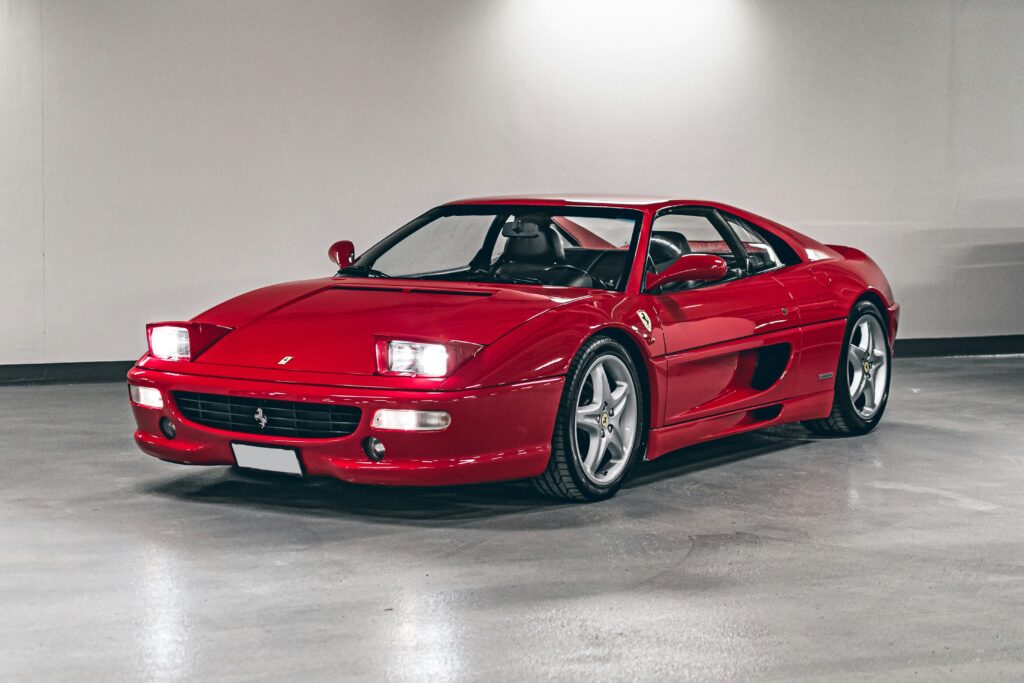
The F355 exists partly because the Honda NSX humiliated the Ferrari 348. When the NSX arrived in 1990, it proved a mid-engine exotic could be fast, precise, and dependable all at once — and suddenly Maranello’s V8 flagship looked crude by comparison. The F355, launched in May 1994, was Ferrari’s counterpunch, and it was thorough.
The name decodes the hardware: 3.5 liters, five valves per cylinder. The new F129 V8 used titanium connecting rods and a lightened crankshaft to spin to 8,500 rpm, producing 375 bhp at 8,250 rpm — at launch, Hagerty notes, the highest specific output of any naturally aspirated production engine at 109 hp per liter.
The shift linkage swapped the 348’s cables for rods, the gearbox gained an oil heat exchanger to cure Ferrari’s traditionally stubborn cold shifts, and a flat undertray brought genuine Formula 1-derived aerodynamics to the class for the first time.
Three body styles were offered — Berlinetta, targa-roofed GTS, and the full-convertible Spider from 1995 — plus the track-only Challenge and the 104-unit Serie Fiorano send-off in 1999. In 1997, the F355 became the first production road car with an F1-style paddle-shift gearbox, though roughly three out of four buyers stuck with the gated six-speed manual. Around 11,500 cars were built in total before the 360 Modena took over.
Ferrari F430
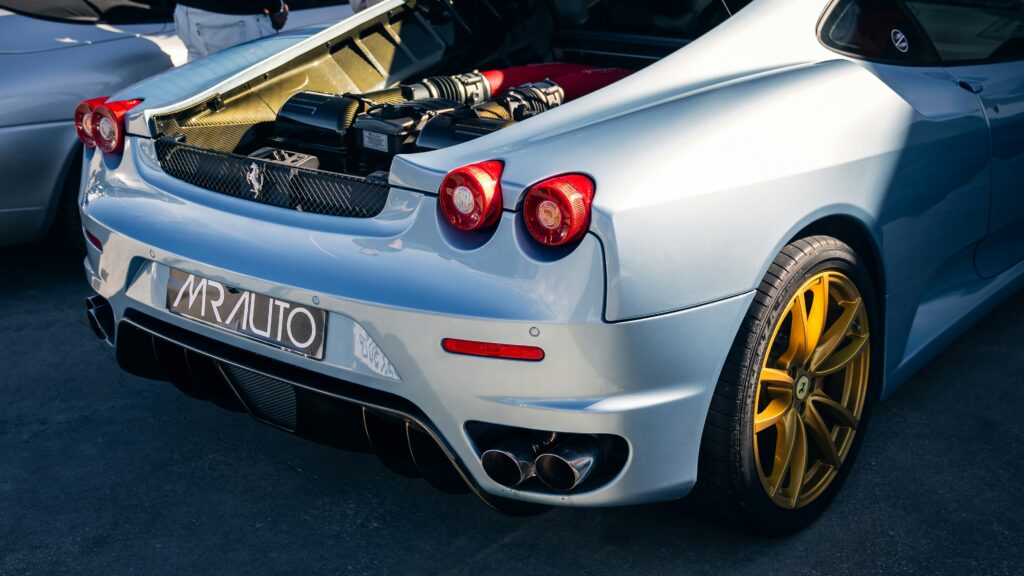
The F430 arrived at the 2004 Paris Motor Show wearing the 360’s aluminum spaceframe, doors, and glass — and almost nothing else carried over. The headline was the engine: the all-new F136 V8, a 4.3-liter unit whose block came from the Ferrari-Maserati joint program but whose flat-plane crank and internals were bespoke, with variable valve timing lifted from the Enzo’s V12.
EVO quotes Ferrari specialist Graypaul Nottingham describing the F136 as “basically the Enzo engine with fewer cylinders.” Output jumped to 483 bhp at 8,500 rpm and 343 lb-ft of torque — 23 percent more power and 25 percent more torque than the 360.
The hardware around the engine was just as significant. The F430 was Ferrari’s first road car with the E-Diff, an electronically controlled limited-slip differential reading steering angle, yaw, and individual wheel speeds, and the first with the manettino — the steering-wheel dial that let the driver dial stability control, damping, and throttle response up or down.
EVO put it on the cover of issue 074 as Ferrari’s “baby Enzo,” and the styling backed the billing: Enzo-derived tail lights, F1 “sharknose” front intakes referencing the 1961 156, and the model name stamped into the driver’s mirror as an F40 homage.
An estimated 16,750 were built across the Berlinetta, Spider, track-focused 430 Scuderia, and 499-unit Scuderia Spider 16M before the 458 Italia — and the dual-clutch era — replaced it in 2009. Crucially for today’s buyer, the F430 was the final mid-engine V8 Ferrari offered with a gated manual, and Petrolicious estimates only around 10 percent of buyers ordered one.
Ferrari F355 vs Ferrari F430: The Driving Experience
A decade separates these cars, and you feel every year of it — sometimes in the F430’s favor, sometimes not.
Engine, Performance, and Speed
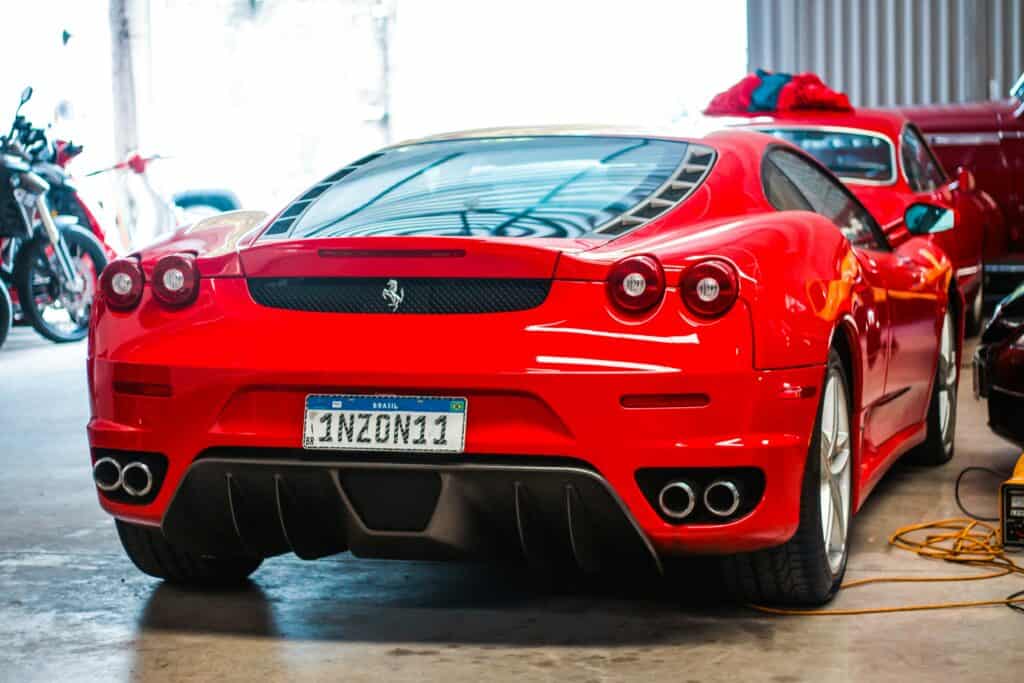
The F355’s engine is a high-wire act. There is very little happening below 4,000 rpm, a swelling urgency through the mid-range, and then a genuine frenzy as the tach sweeps toward 8,500 — peak torque doesn’t even arrive until 6,000 rpm, a figure that reads like a typo for a road car. The V8 is the star of the show for most owners, a motor that soars to redline accompanied by a sound that positively encouraged such use.
Car and Driver‘s period testing put a manual Berlinetta at 4.5 seconds to 60 mph and through the quarter mile in 13.0 at 110 mph — quick in 1995, merely brisk today. The F430 doesn’t need the caveat. Ferrari claimed 0–62 mph in 4.0 seconds and a top speed just shy of 196 mph, and the F136 delivers real thrust from 3,000 rpm while still screaming to the same 8,500-rpm ceiling.
It is the difference between an engine with one personality and an engine with two: the F430 will lug around town in high gears like a GT, then detonate when extended. Notably, when Car and Driver later lined the F430 up against a 911 Turbo and a Corvette Z06, it was the slowest of the three by the numbers — and still won the comparison on the strength of the total package.
On outright pace, this isn’t close. The F430 is more than a half-second quicker to 60, thirteen mph faster flat out, and dramatically stronger everywhere in between. What the F355 offers instead is the theater of earning it — the sensation that every fast mile was extracted rather than dispensed.
Handling, Driving Feel, and Character
Both cars use double-wishbone suspension at each corner and hydraulic steering, and both are genuinely communicative by modern standards. The difference is philosophy. The F355 has essentially no electronic safety net — no stability control, no adaptive logic beyond its two-mode dampers — so its limits are yours to find and yours to manage.
Hagerty describes the chassis as more supple than its reputation suggests, tracking cleanly over broken pavement while the hydraulic rack feeds back everything the front tires are doing. The F430 layered a decade of electronics on top of a similar mechanical foundation — E-Diff, CST stability control, Skyhook adaptive dampers — and the remarkable part is how invisible it all feels.
The F430 is a car that is docile and compliant in normal driving, then transforms into something preposterously rapid without ever feeling artificial. This was the era when Ferrari had finally fused old-school emotion with state-of-the-art engineering. Jeremy Clarkson’s Top Gear review of the F430 amounted to the word “brilliant” on loop, and when he later drove the Scuderia — which lapped the Top Gear track just 0.7 seconds off an Enzo — he called it “the first proper and brilliant Ferrari” in years.
Then there’s the gearbox question. Both cars offer a gated manual and a single-clutch F1 automated manual, and in both cases the manual is the one to have — for the experience and, as we’ll get to, for the money. The F355’s open aluminum gate, rod linkage, and drilled pedals remain one of the great tactile experiences in motoring. The F430’s manual is mechanically similar but far rarer, and its F1 gearbox — shifting in 150 milliseconds, with a bigger and more durable clutch than earlier F1 cars — is the first of Ferrari’s automated boxes that doesn’t demand apologies.
Daily Driving, Comfort, and Features
The F355 was praised in period for being the first genuinely usable small Ferrari — modern engine management killed the temperament in traffic, and the cabin is more logically arranged than anything Maranello had built before.
By today’s standards, though, it’s still an event every time: a big four-spoke wheel angled awkwardly, offset pedals, sticky-coated switchgear, and an engine that gives you nothing until you commit. It’s a weekend car, and most surviving examples are treated exactly that way.
The F430 is a different proposition entirely. In evo’s long-term owner interviews, the recurring theme is that it’s one of the most usable Ferraris ever made — light controls, excellent visibility, real luggage space, comfortable over distance, and forgiving when you’re not at the top of your game.
The driving position is spot-on where the F355’s is compromised, the gauges are legible where the F355’s are cluttered, and features like the manettino, available carbon-ceramic brakes, and (on 2005-on cars) modern climate and audio systems make it feel like a car from this era rather than a relic of the last one.
If you plan to actually rack up miles — road trips, weekly drives, the occasional commute — the F430 wins this category without breaking a sweat.
Ferrari F355 vs Ferrari F430: Design Language
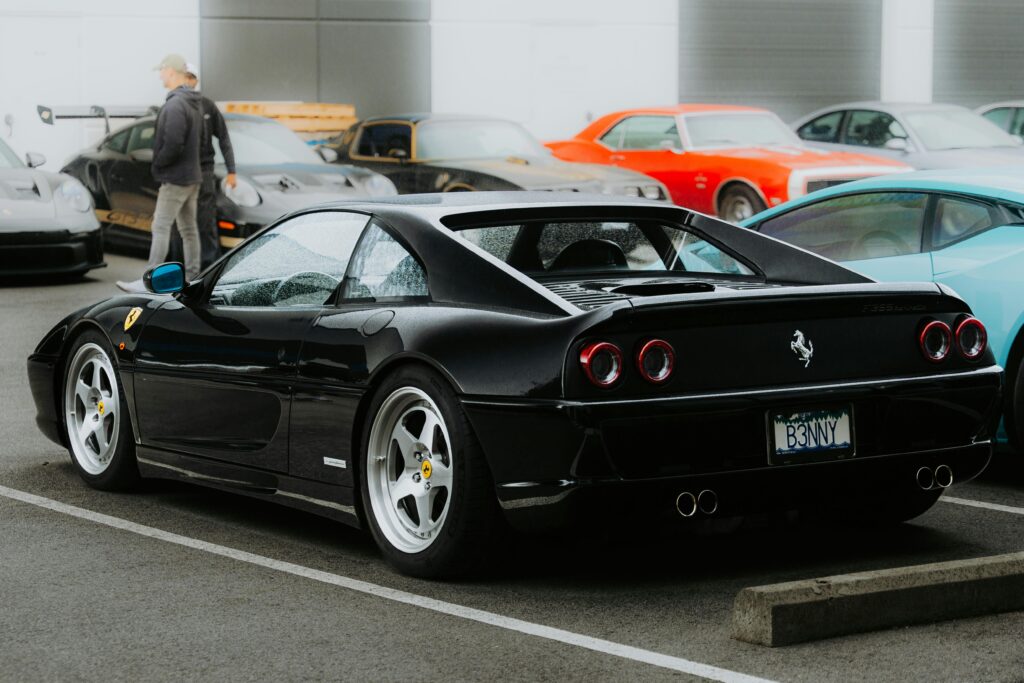
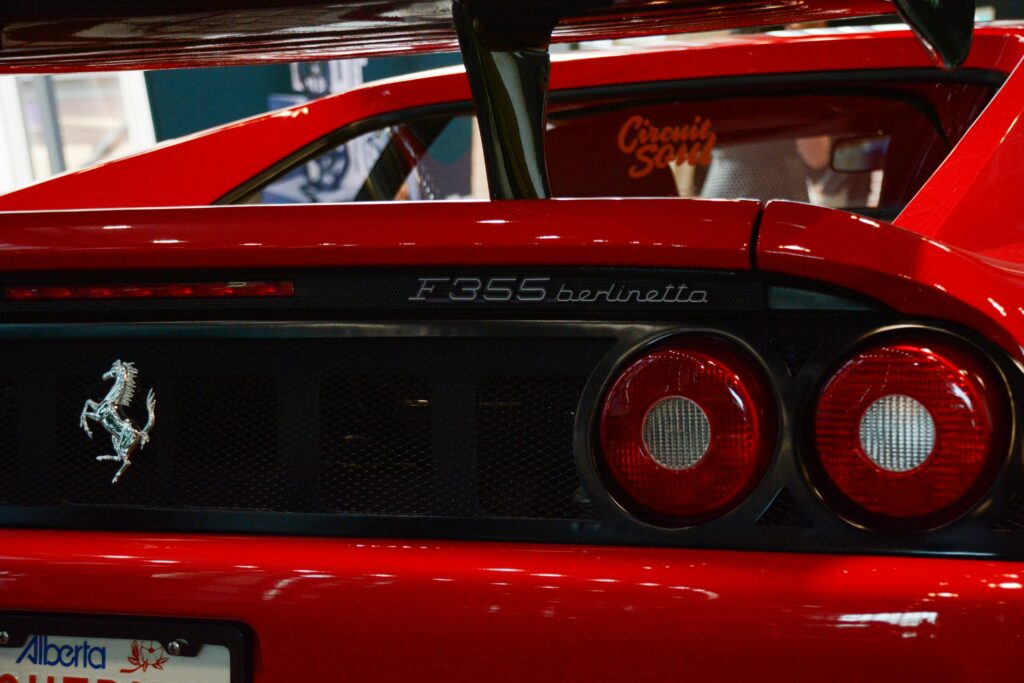
The F355 is the reason this comparison exists at all. Penned at Pininfarina by Maurizio Corbi, it took the 348’s proportions and resolved every awkward line into something close to consensus-perfect: pop-up headlights, curved intake scoops replacing the Testarossa-era strakes, a flat rear deck, and the flying-buttress roofline that traces its lineage back to the 1965 Dino 206 GT — the F355 was the last mid-engine Ferrari to wear it.
Square Mile notes the design reads as the final, fully-evolved statement of a bloodline running through the 308, 328, and 348. Most enthusiasts rank it among the most beautiful Ferraris of the modern era, full stop.
The F430 is handsome rather than beautiful, and it knows it. The design brief was function: the sharknose intakes feed cooling and downforce, the exposed circular tail lights and vented engine cover come from the Enzo, and the serious aerodynamic work happens underneath, where a flat floor and diffuser generate downforce without a single wing.
Against the 360’s soft curves it added welcome aggression — but parked next to an F355, it looks like what it is: a machine styled by the wind tunnel, from the era when Ferrari stopped drawing cars and started engineering them. If design is your deciding factor, the F355 takes this category. It isn’t particularly close.
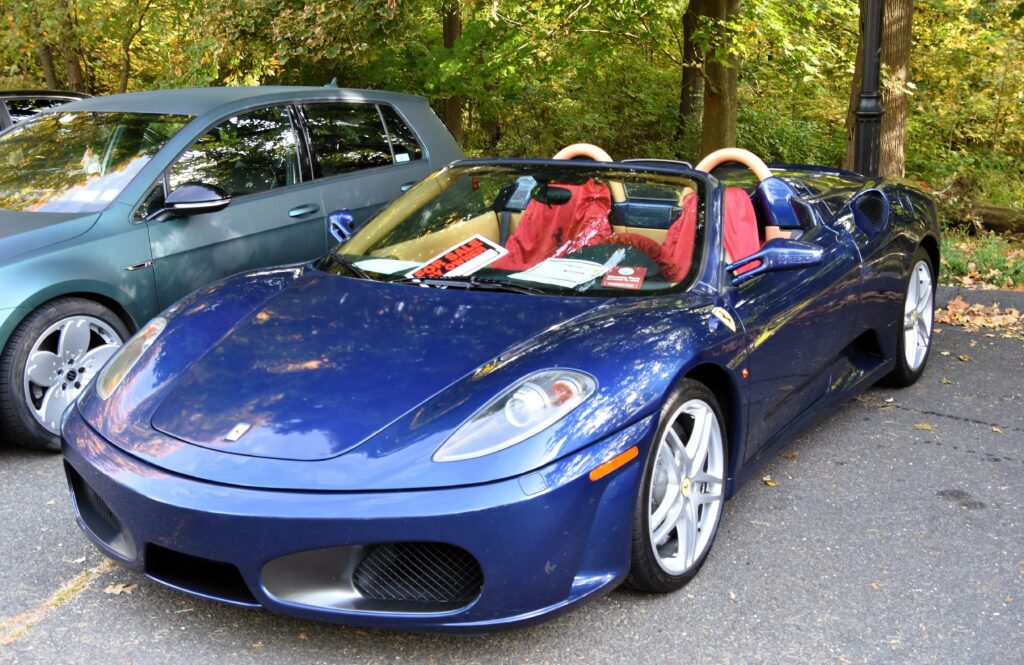
Ferrari F355 vs Ferrari F430: Reliability and Maintenance
This is the section that separates the dreamers from the owners, and it’s where the decade between these cars matters most.
The F355’s defining cost is the cam belt service. The belts are due every three to five years regardless of mileage, and while an in-situ change is technically possible, Hagerty notes most specialists prefer to pull the engine — which is how a scheduled service becomes a $5,000–$12,000 event.
Beyond the belts, the model’s rap sheet is well documented: cracked exhaust manifolds that can overheat and burn exhaust valves, premature valve-guide wear on earlier cars, sticky interior coatings, shrinking dash leather, a corrosion-prone engine cradle, and clutches that last 15,000–20,000 miles. F1-equipped cars add a hydraulic shift pump that is expensive when it fails. None of this is a reason to avoid the car — it is a reason to buy documentation first and paint second.
The F430 deleted the F355’s biggest bill outright. The F136 uses timing chains, inspected around 43,000 miles rather than replaced on a countdown, and evo’s specialist sources describe the engine as fundamentally robust. The one serious known issue is shared family DNA: exhaust manifolds crack here too, and Graypaul has seen failed manifolds destroy engines by feeding weld debris back through the intake — figure roughly $3,500 to $5,000 plus per side to replace, and treat original manifolds on a high-mile car as a line item in your offer.
Beyond that, the checklist is manageable: suspension ball joints wear, F1 clutches last a healthier 25,000–30,000 miles, carbon-ceramic discs are five figures to replace but rarely need it outside track use, and pre-2007 Spiders were recalled for a soft-top hydraulic leak with fire risk — verify the work was done.
Annual running costs in an uneventful year land in a similar $3,000–$5,000 band for either car. Averaged over an ownership cycle, the F355 costs meaningfully more, and the gap is entirely the belt service. The F430 is, by a comfortable margin, the first junior Ferrari you can own on a budget you can actually predict.
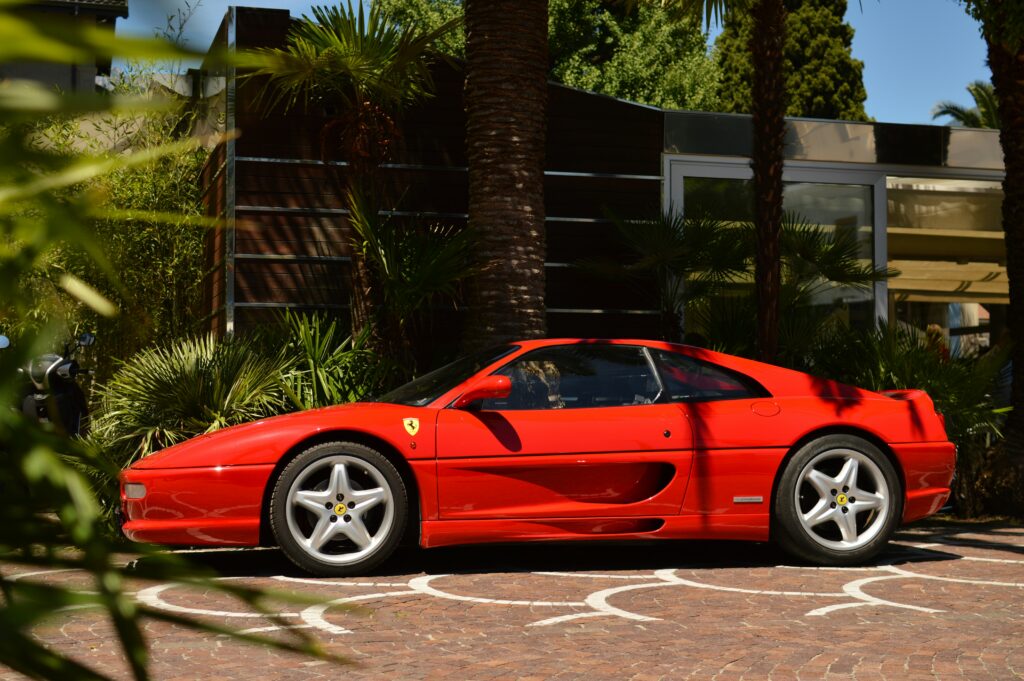
Ferrari F355 vs Ferrari F430: Investment Value
According to Classic.com US auction data, the average sale price across all F355 variants is $148,904, with the manual Berlinetta averaging $151,485 and the F1 Spider — the value entry point — at $97,416. The trajectory behind those numbers is the story: Hagerty’s median #2-condition value has climbed 338 percent over the past decade
Hagerty currently pegs an excellent manual coupe at $202,000, a GTS at $218,000, and a Spider at $152,000, with F1 cars trading around 25 percent behind their manual equivalents. Hagerty named the F355 its Gold Index Pick for 2025 and placed it on the Bull Market List, with its Collectability Algorithm ranking the car in the 83rd percentile.
According to Classic.com data, the average sale price across the F430 range is $196,773 — but that number needs unpacking, because the Scuderia variants drag it upward. Standard F1 Berlinettas and Spiders remain the accessible entry, with recorded sales as low as $40,000 for a driver-grade 2005 car, while gated-manual F430s occupy a separate market entirely: with so few built, manual cars now command enormous premiums, and even aftermarket manual conversions carry a Classic.com benchmark of $178,885.
At the top, the 430 Scuderia averages $295,617 with a $1.65 million record sale in January 2026, and the Scuderia Spider 16M carries a $693,344 benchmark with a $1.98 million record. Hagerty’s UK arm put the F430 on its 2026 Bull Market List, citing 19 percent growth over five years.
The two investment cases are different shapes. The F355’s appreciation is broad — the whole model line has been pulled upward by collector demand for analog-era Ferraris, and the manual coupe and GTS are the blue chips. The F430’s appreciation is concentrated — standard F1 cars have been solid rather than spectacular, while the factory manuals and the Scuderias have gone vertical.
For the buyer of a standard, well-specified car, the F355 has the stronger and more proven appreciation story. For the buyer hunting a factory manual F430 or a Scuderia, the F430 range contains the bigger upside — at a much bigger buy-in.
Either way, if you want more insight into the F355 or the F430 as standalone investments, be sure to check out our full Ferrari F355 Investment Guide and Ferrari F430 Investment Guide.
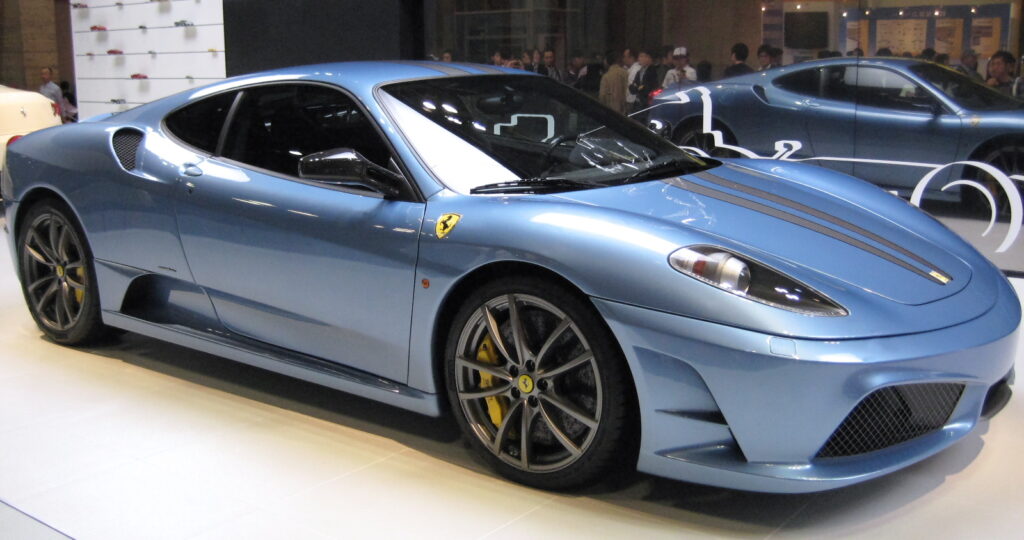
Ferrari F355 vs Ferrari F430: Which One Should You Buy?
These two cars reward different kinds of owners, and being honest about which one you are is worth more than any spec sheet. Here are the factors that should decide it.
Buy the Ferrari F355 if:
- The analog experience is the point — pop-up headlights, no stability control, a gated shifter, and an engine that only sings when you make it
- Design matters as much as driving — you want the car widely considered the most beautiful V8 Ferrari of the modern era
- You have a fixed-schedule maintenance mindset and can absorb an engine-out belt service every few years without resentment
- You’re buying the collector-market blue chip — a documented manual Berlinetta or GTS with strong history is the proven appreciator here
- Your annual mileage is modest and the car will be an occasion, not a tool
Buy the Ferrari F430 if:
- You want to drive a Ferrari, often — this is the usable one, comfortable over distance and forgiving when you’re not on your game
- Predictable running costs matter — timing chains instead of belts removes the F355’s biggest recurring bill
- You want genuinely modern performance — sub-4-second thrust, E-Diff, manettino, and pace that still holds up today
- You’re playing the manual-scarcity angle — a factory gated F430 is one of the strongest appreciation stories in the modern Ferrari market
- You’d rather have the last of something — the final mid-engine V8 Ferrari offered with three pedals
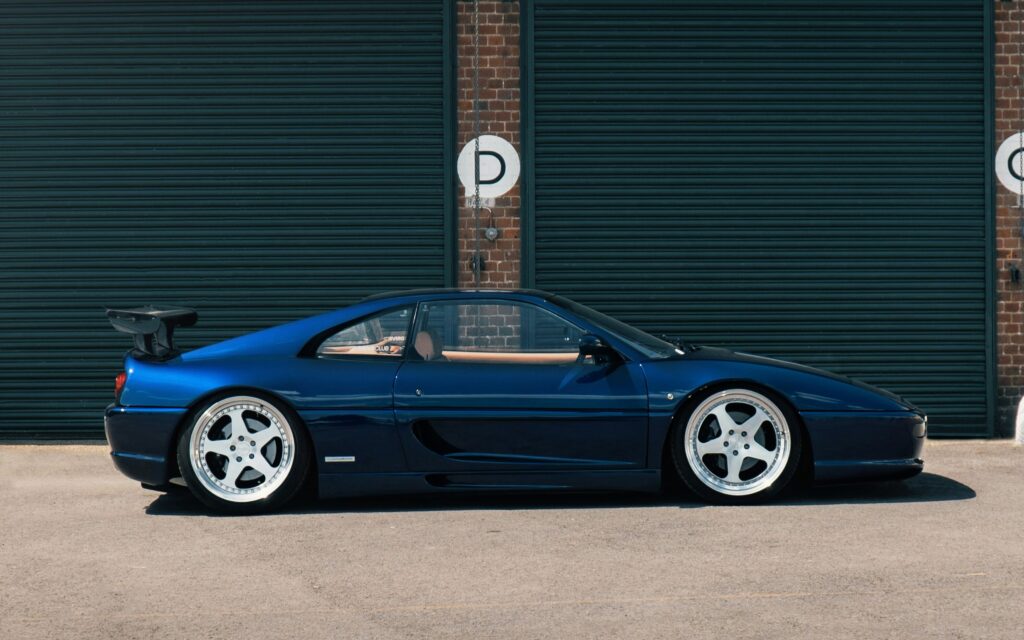
Ferrari F355 vs Ferrari F430: The Verdict
Judged as machines, the F430 wins almost every category that can be measured. It is far faster, far more usable, cheaper and more predictable to keep, and engineered to a standard the F355 simply predates. As one long-term owner told Forza magazine after years with his F430: “these things are bulletproof” — a sentence no honest person has ever said about an F355.
But the F355 wins the categories that can’t be measured, and in this corner of the market, those tend to be the ones that decide purchases. It is the better-looking car by broad consensus, it carries the more romantic engine, and it represents the last moment before electronics entered the cockpit — the final fully analog mid-engine Ferrari. Its decade of relentless appreciation says the market has already ruled on how much that’s worth.
So the honest answer splits along a single question: is your Ferrari for driving or for having? If it’s for driving — regularly, confidently, without a service anxiety spreadsheet — buy the F430 and never look back. If it’s for having — the one you walk out to the garage to stare at, the one that marks the end of an era — the F355 is the car, and the market agrees with you.
The F430 is the better Ferrari. The F355 is the more special one. Twenty years of price charts suggest “special” is the harder thing to buy.
Classic Car Gang covers the modern classics market with no editorial filters. If you found this useful, check out our other articles.

Marko Mikulic is a classic and modern classic car writer with over a decade of hands-on enthusiasm. He has published more than 10,000 automotive articles with bylines at Jalopnik, SlashGear, The Driver Advisor, and CarArac. He owns a Mercedes R129 SL — having previously owned an R107 and a BMW E30 M3. He founded Classic Car Gang to cover the cars worth buying, owning, and investing in, without editorial filters.