
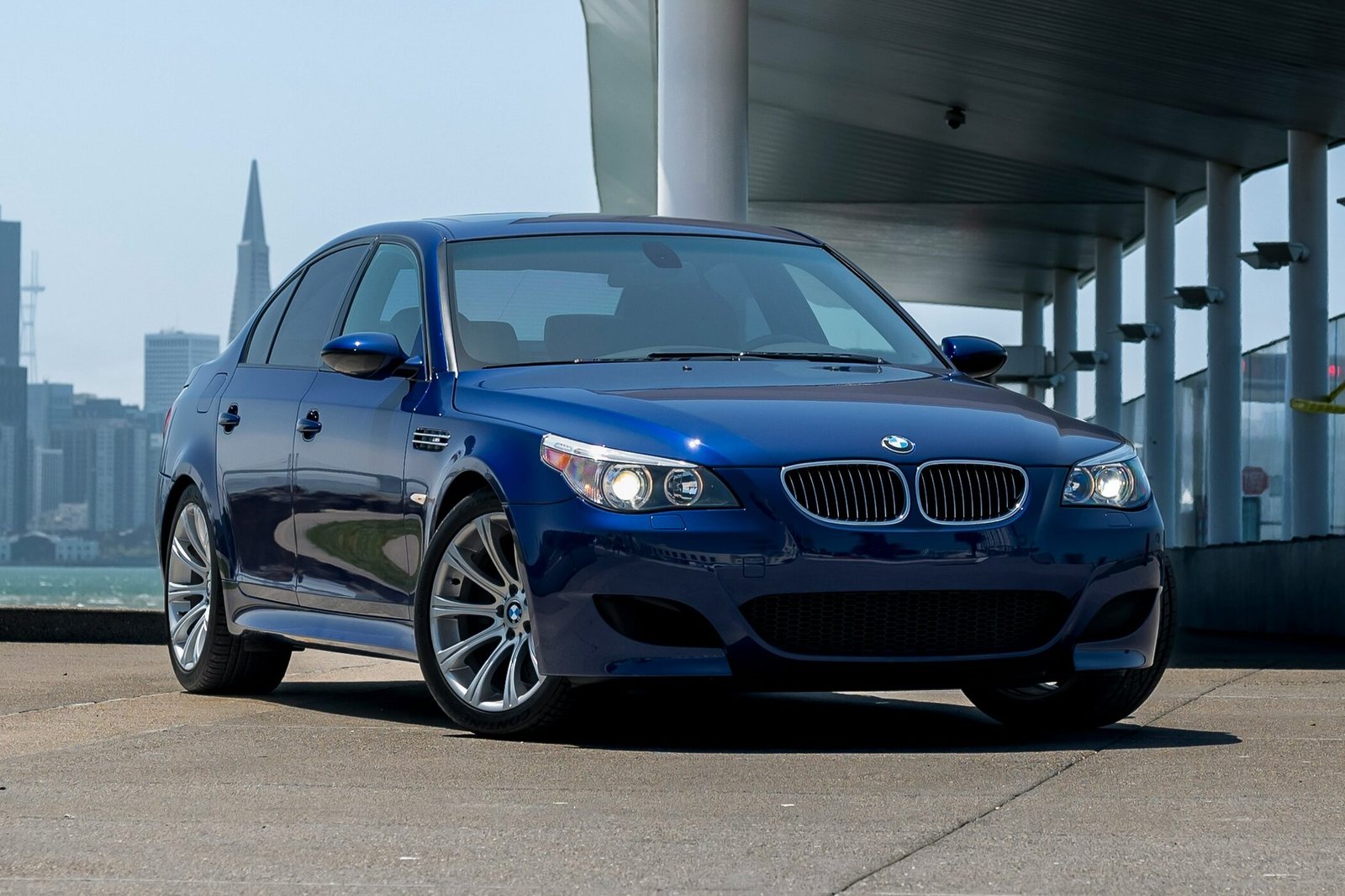
For the first few minutes of his 2005 Top Gear review, Jeremy Clarkson tore the BMW E60 M5 apart. He went after the Bangle styling, the iDrive, the headlight delay you could set to the exact second, a sat-nav voice he could not switch off, and a gearbox that was jerky in town and rolled back on hills. He even argued that a car this expensive should arrive ready to drive, not with a manual full of settings to work through.
Then he pressed the M button. The head-up display lit up, the seat bolsters tightened, and the V10 unlocked its full output. Moments later, the man who had been fighting with the radio was calling the M5 “a world of motoring perfection.” By the end of the segment, he was comparing its sound to a Ferrari F430. That review is the E60 M5 in a nutshell. It is a car with two personalities, and only one of them matters.
It is also the product of a very specific moment in German car history, one that will not come back. In the mid-2000s, German engineers were allowed to build things no finance department would sign off on today. Volkswagen put a W12 in its Phaeton luxury sedan and sold the Touareg SUV with a V10 diesel. By late 2008, Audi had a Q7 with a V12 diesel rated at 500 hp and 738 lb-ft of torque.
BMW took its executive sedan and put a 5.0-liter V10 with an 8,250 rpm redline under the hood. No turbos. No superchargers. Just ten cylinders and a Formula 1 connection. This guide breaks down where the BMW E60 M5 investment market stands today, what these cars really cost to keep alive, which ones to buy, and why the only V10 M5 ever built is finally being taken seriously.
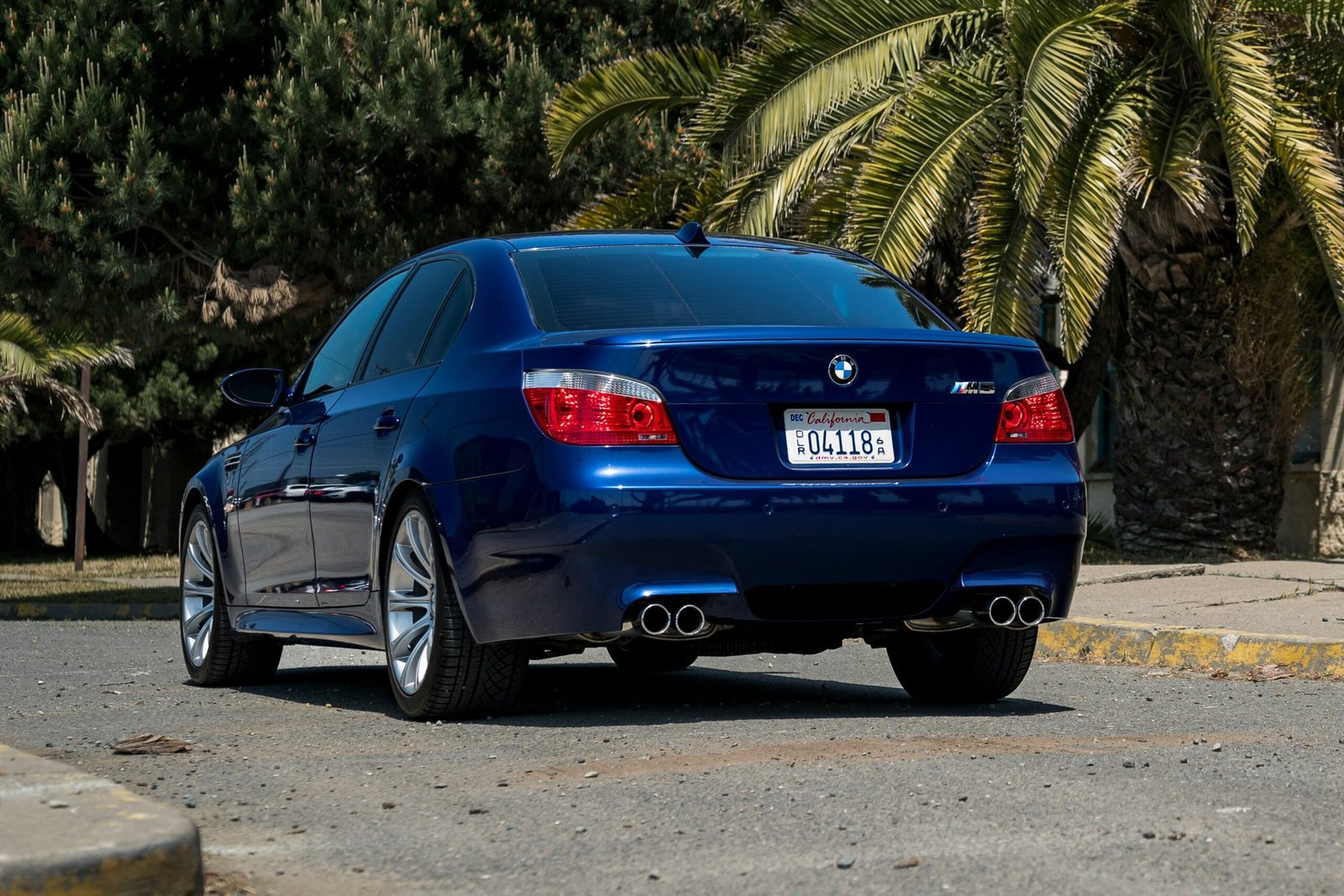
Table of Contents
Meet the BMW E60 M5
Paris, September 2004: BMW pulled the cover off the production E60 M5. Geneva had already seen it in concept form that March. North America waited another year, with US-spec production starting in September 2005 for the 2006 model year. A 2006 M5 started at $81,200. The heart of the car is the S85. It is a 4,999 cc, 90-degree V10 with a 92 mm bore, a 75.2 mm stroke, and a 12.0:1 compression ratio.
In European trim, it makes 507 PS at 7,750 rpm. In the US, it is rated at 500 hp, with 383 lb-ft of torque at 6,100 rpm. The redline sits at 8,250 rpm. What makes the S85 special is that it had no donor engine. The E39 M5’s S62 V8, for example, was developed from the 540i’s V8. The S85’s blocks came out of the same Landshut foundry as the blocks for BMW’s F1 engines, and BMW M says this “was the only connection to the Formula 1 engine.”
The thinking behind the layout, however, was straight from racing. BMW set a 500 hp target for the US, and a naturally aspirated engine needed five liters to get there reliably. BMW split those five liters across ten cylinders, the layout its own F1 program was using at the time. The S85’s knock detection runs through the spark plugs themselves. Between firings, BMW puts 400 volts across each plug and reads the current that comes back.
A spike tells the engine management that combustion is getting out of control. The S85 won International Engine of the Year in both 2005 and 2006. Every E60 M5 starts in P400 mode, with 400 hp. The full output only arrives in P500. P500 Sport adds a sharper throttle and quicker shifts on top. The S85 also gave BMW the blueprint for the S65 V8 in the BMW E92 M3 we also covered in a guide.
Power goes to the rear wheels through a seven-speed SMG III automated manual. No manufacturer had put a seven-speed sequential gearbox into production before it. It offers 11 shift programs, six manual and five automatic, and sends power through an M Variable Differential Lock. Electronic Damper Control (EDC) offers Comfort, Normal, and Sport settings.
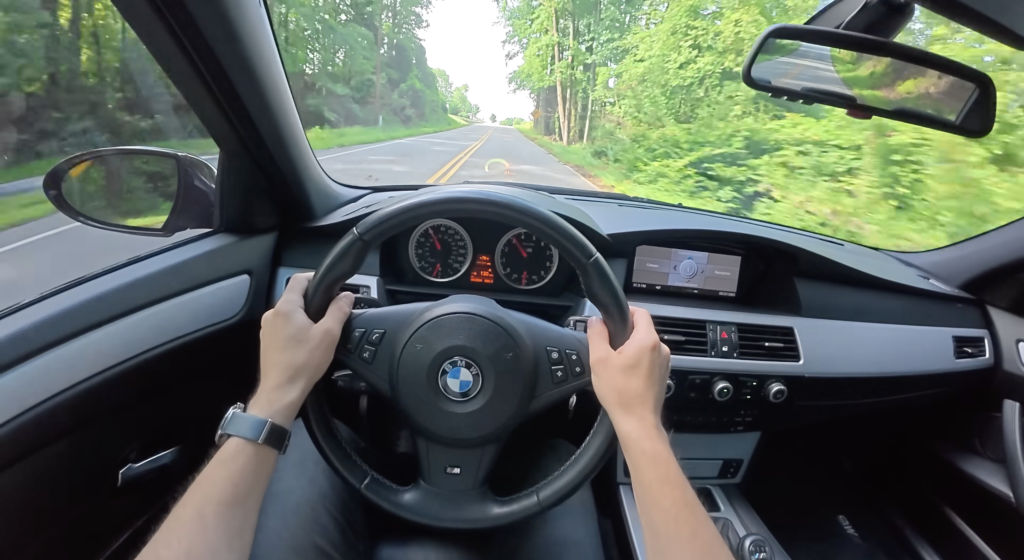
The MDrive button on the steering wheel stores your preferred engine, gearbox, damper, stability control, and steering settings and recalls them all with one press. BMW quotes 0-62 mph in 4.7 seconds and 0-124 mph in 13.9 seconds. Top speed is limited to 155 mph, or 190 mph with the optional M Driver’s Package. Curb weight is about 4,035 pounds.
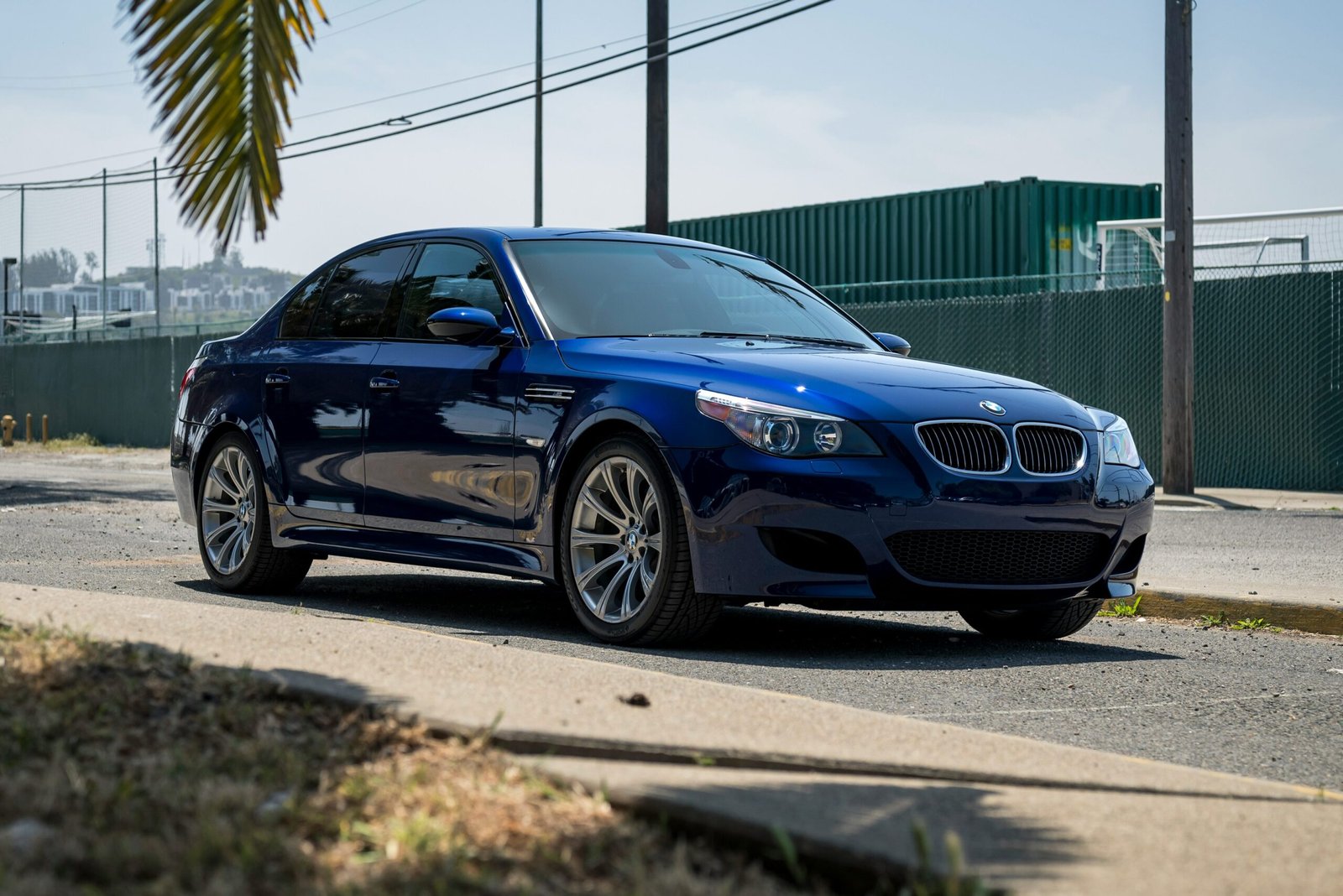
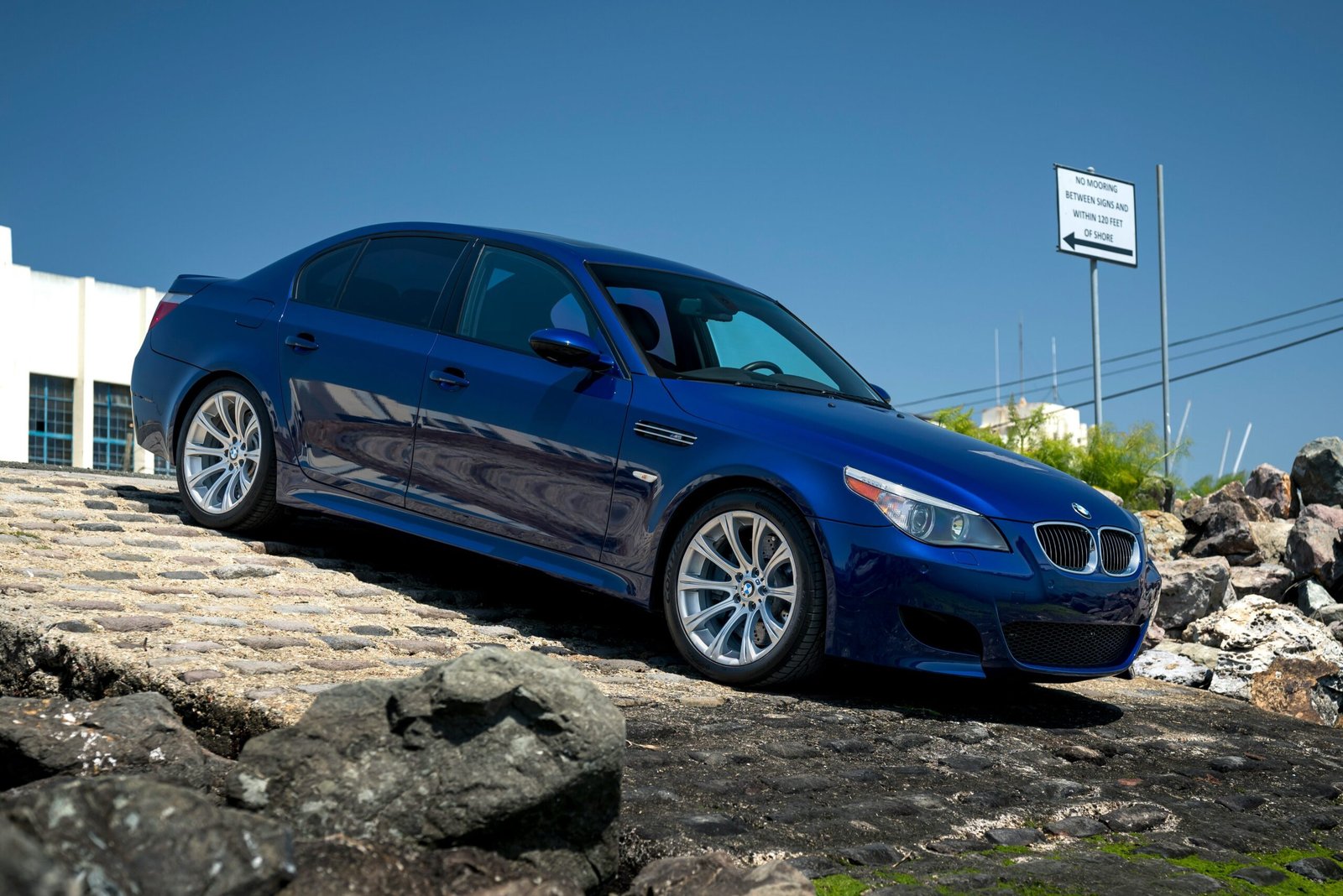
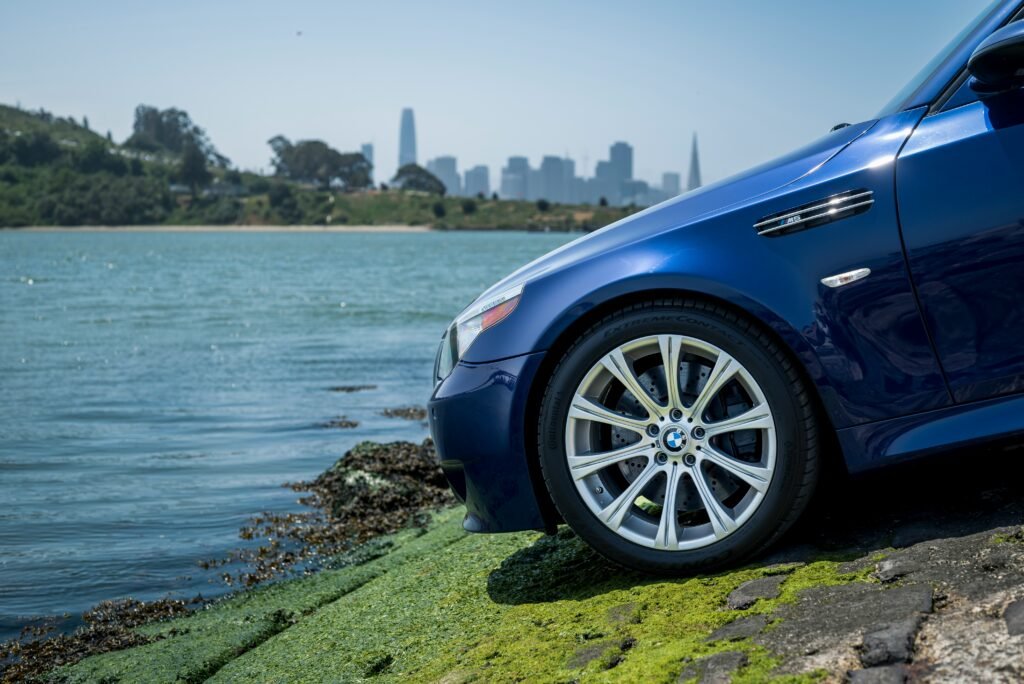
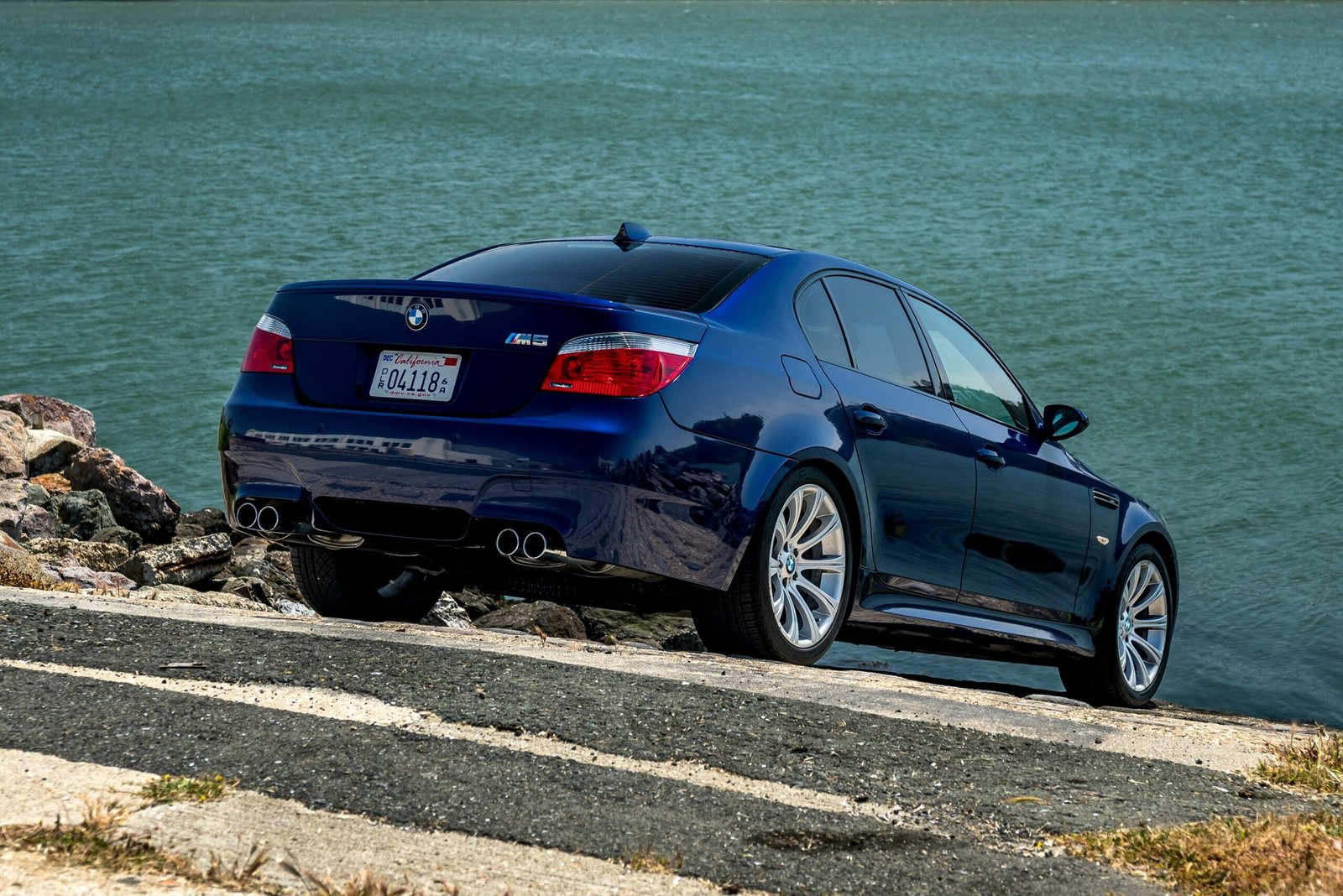
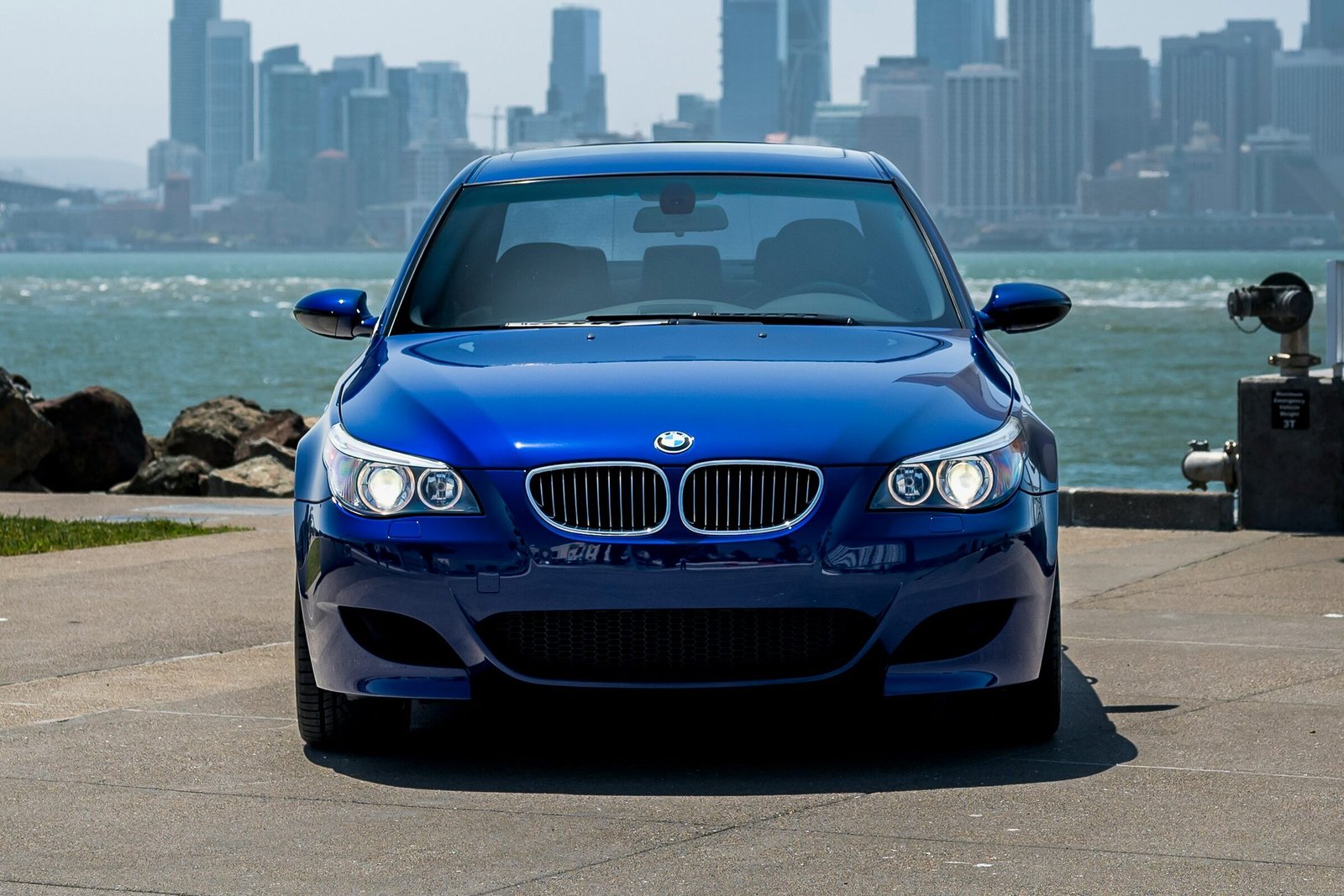
Visually, the M5 is a restrained Bangle-era 5 Series with intent. The front fenders are about an inch wider, cooling gills sit behind the front wheels, and the rear bumper carries four 3.1-inch (80 mm) tailpipes. The engine does the rest of the talking.
The Full BMW E60 M5 Variant Lineup
Body styles:
- E60 Sedan (2006–2010 model years in the US) — The core car. BMW built 19,523 sedans worldwide. North American production ran from September 2005 to December 2009 and totaled 9,491 cars.
- E61 Touring (2007–2010, Europe only) — The V10 wagon. Only 1,025 were built, 222 of them in right-hand drive. It was never sold in the US. Under the 25-year import rule, the earliest Tourings (built from March 2007) will not be eligible for US import until 2032.
Engine:
- S85 5.0-liter naturally aspirated V10 — One engine for every E60 M5. 500 hp (US rating) at 7,750 rpm, 383 lb-ft at 6,100 rpm, 8,250 rpm redline. Shared only with the E63/E64 M6 and never offered in any other BMW.
Transmission options:
- Seven-speed SMG III — Standard in every market and the only gearbox outside North America. The vast majority of E60 M5s have it.
- Six-speed manual (North America only) — Added for the 2007 model year. It uses the ZF Type G gearbox from the 550i, with the M5’s own 3.62:1 final drive. Just 1,366 were built (six of them pre-production cars). BMW made DSC fully switchable on manual cars from the 2008 model year.
Special variants:
- M5 25th Anniversary Edition (2009) — Built in November and December 2009 to mark 25 years since the E28 M5. Mechanically standard, but finished in matte Frozen Grey from BMW Individual, with anniversary sill plates and a choice of two exclusive Merino leather combinations. Production is believed at 27 cars: 24 sedans and three Tourings. That makes it the rarest E60 M5 variant ever sold to customers.
- M5 CSL prototype (one-off) — BMW M also built a single M5 CSL for the model’s 25th anniversary. It was never sold, so it is a footnote rather than something you can buy.
- Manual conversions (aftermarket) — Specialists such as E39 Source convert SMG cars to six-speed manuals. These are legitimate cars, but they are not factory manuals, and the collector market treats them differently.
The BMW E60 M5 Investment Market
For most of its life, the E60 M5 was the M5 nobody wanted. That has changed. In December 2025, Hagerty named the 2006–2010 M5 to its 2026 Bull Market List, with a value of $36,000. Hagerty also found that 58% of interest in this generation comes from enthusiasts under 40. Classic Driver puts the rise in market values at roughly one third between 2020 and 2024.
The transmission is now the single biggest factor in price. The Classic.com market benchmark for an SMG sedan is $28,384. For a manual sedan, it is $51,089. That puts the manual roughly 80% ahead of the SMG car. At the top, the manual market has already broken into six figures. A 13,000-mile 2008 M5 with the six-speed sold for $156,800 at RM Sotheby’s Monterey auction in August 2026.
Two months earlier, an 11,000-mile 2008 manual sold for $132,000 on Bring a Trailer. More typical manual cars with 50,000 to 80,000 miles have traded between roughly $39,750 and $55,000. The SMG market is far wider. In August 2026, a 24,000-mile 2010 SMG car sold for $47,500 on Bring a Trailer. Less than a month later, a 161,000-mile 2007 SMG car sold for $11,000 on Cars & Bids. That $36,500 gap shows how much condition, mileage, and service history matter on this car.
BMW E60 M5 Investment Value Table
Note: prices below reflect US market data at the time of writing and will change over time.
| Variant | Low | Average | High |
|---|---|---|---|
| E60 M5 – SMG | $11,000 | $29,000 | $47,500 |
| E60 M5 – Manual | $22,725 | $51,000 | $156,800 |
Source: Classic.com
Why It’s Going Up
The BMW E60 M5 investment case starts with the engine, and the engine is a closed chapter. The S85 only ever went into the M5 and M6, and BMW never built another V10. The F10 M5 that followed switched to a twin-turbo V8, and today’s M5 is a plug-in hybrid. The E60 is the last naturally aspirated M5 and the only one with ten cylinders.
The manual is the second pillar. A naturally aspirated V10, a six-speed stick, rear-wheel drive, and four doors is a combination no other factory ever sold. Only 1,366 such cars were built, all for North America. That makes the US the home market for the most collectible version of this car, and it is why the stick benchmark sits above the SMG.
Younger buyers are also driving demand, as Hagerty’s under-40 figure shows. This is the same pattern that pushed the BMW E39 M5 up first. Yet today, the Classic.com benchmark for an E39 M5 is $36,301, while the E60 SMG average is around $29,000. The newer, faster, rarer car still costs less than the one it replaced.
Attrition will do the rest. A spun rod bearing can end an S85, and the repair bill can easily exceed the value of a tired SMG car. It is fair to assume a meaningful share of the cheapest, worst-documented cars will not survive their next big failure. Every one that disappears makes the clean, documented survivors more valuable.
And then there is the sound, and the sheer fact that this car exists at all. As Rush Magazine put it, “The E60 M5 is a car that the world will never see again,” and this can mean a lot in the future. Moreover, the E60 M5 also represents the old-school BMW look including normal-sized kidneys, angel eyes, a relatively understated look, clean quad pipes, and a ton of orange backlit in the interior.
Sound is also a huge part of what makes performance cars so amazing, and few M5s, if any, can match one of these at high rpm. The E60 M5 also represents an era when BMW prioritized high-revving, motorsport-inspired engineering over turbocharging and efficiency.
The BMW E60 M5 is special because it captures a moment in automotive history that will never return, and that kind of nostalgia can do wonders for a car’s long-term value. That is, of course, assuming the car itself manages to last that long. Which brings us neatly to its rather serious mechanical problems.
Common BMW E60 M5 Problems
The E60 M5’s reputation for unreliability is partly deserved and partly misunderstood. The S85 is not fragile when it is maintained properly. It is extremely unforgiving when it is not. The costs are real, but they are predictable, and most of the horror stories trace back to deferred maintenance.
- Rod bearings — The big one. Classic Driver puts the S85’s rod bearing clearance at roughly half the industry norm. Pair that with thick 10W-60 oil, which is slow to flow when cold, and the margin for error is small. The replacement interval to plan around is 50,000 to 62,000 miles. BMWBlog has reported failures on engines with fewer than 60,000 miles. Skip the job, and an engine failure can cost more than twice as much as the preventive work.
- Oil level — Running low on oil is one of the fastest ways to damage the bearings, and the S85 does burn oil between changes. Check the level often. A single oil change takes nearly 10 liters, or about 10.5 quarts, of specialized oil.
- Throttle actuators — The ten individual throttle bodies are driven by just two electric actuators, each with plastic gears inside. Once those gears wear, limp mode follows, and the actuator’s circuit board is often damaged along the way.
- VANOS — The S85’s VANOS runs at high oil pressure, and its weak points are the solenoids, the high-pressure lines, and the pump gears. Expect a four-figure bill for an overhaul. More importantly, a VANOS fault code is not always a VANOS problem. Low oil pressure from worn rod bearings can set one too, so treat any VANOS code as a reason to check the bearings.
- SMG hydraulic pump — BMW fitted a more durable SMG pump from 2006, and plenty of earlier cars got the new pump under warranty. US production started in September 2005, so early 2006 model year US cars are the ones to check.
- Clutch and release bearing — SMG clutch life ranges from about 30,000 miles (mostly city driving) to 90,000 miles (mostly highway). Before paying for a clutch, have the release bearing checked. A failing one can feel just like a worn clutch on hard launches.
- Battery — Random SMG and DSC warnings? Test the battery first. A tired battery on this car can look a lot like a failing gearbox.
- Suspension and differential — Steering shimmy under braking usually points to the bushings in the front tension struts. Low-speed chatter from the rear means the M differential needs fresh fluid with the correct friction modifier, while clunks point to worn differential bushings. EDC dampers and M5-specific brakes are both expensive to replace.
- Sunroof drains — Several control modules sit low in the trunk area. If the sunroof drains clog, that is where the water ends up.
- Interior and electronics — Expect peeling soft-touch coating on the steering wheel and switches. Active seat compressors can fail. Cars built before late 2008 use the older CCC iDrive, which is prone to reboot loops and complete failure.
- Accident repairs — The front structure is aluminum, joined to a steel passenger cell with adhesive and rivets. That makes crash repair a specialist job, and a poor one can lead to galvanic corrosion or a weakened structure. Rust is otherwise rarely a concern.
What It Really Costs: One Owner, 111,000 Miles
Forum horror stories are easy to find. Real numbers are not. That is why YouTuber Kennan Rolsen‘s ownership cost breakdown is so valuable. It covers a 2006 E60 M5 owned by Gary and maintained alongside Ryan of E39 Source, a BMW specialist in Southern California. Gary bought the car in 2013 with about 18,000 miles, drove it more than 110,000 miles, and used it as a daily driver for years before retiring it from daily use. Conveniently, every service is logged in a spreadsheet for us to have a gander at.
| Item | Year | Cost |
|---|---|---|
| Throttle actuators, thermostat, coolant and hardware (dealer) | 2016 | $5,286.27 |
| Oil cooler replacement (parts and labor, independent shop) | 2017 | $1,600 |
| Preventive rod bearings, VANOS high-pressure oil line, oil pump guide rail and more | 2018 | $3,262.40 |
| SMG clutch replacement and driveline refresh | 2019 | $2,700 |
| Spark plugs and ignition coils, 10 of each (parts only) | 2019 | $830.81 |
| Total for the most expensive year, excluding accident repairs | 2022 | $15,856.97 |
| Total maintenance, excluding purchase price, accident repairs and manual conversion | 2013–2026 | $57,213.76 |
That total works out to about 52 cents per mile in maintenance alone, before fuel and insurance. Averaged across roughly 13 years of ownership, it is around $4,400 per year. The next two most expensive years came to $10,520.79 in 2019 and $8,784.65 in 2017.
Two things stand out. First, the preventive rod bearing job was not the budget-breaker people fear. Compared with a replacement engine, $3,262.40 is cheap insurance, although Kennan notes that parts and labor have both become more expensive since 2018.
Second, this car was kept to a perfectionist standard by owners willing to spend whatever it took. Your costs could be lower. They could also be far higher if you buy a car carrying years of deferred work. Kennan’s own summary of the car is fair: “It’s as much as an exotic, but it is a really exotic car.”
What to Look for in a Good BMW E60 M5 Investment Car
The market always moves unpredictably, and nobody can promise where prices are heading. Still, there are clear factors that separate a good E60 M5 investment from an expensive mistake.
Service History
No rod bearing receipts, no deal. The paperwork should ideally show preventive bearing replacement around the 50,000 to 62,000-mile mark, alongside frequent oil changes. Oil analysis reports are a nice bonus, suggesting the previous owner took engine health seriously. You’ll also want records of throttle actuator replacements, VANOS repairs, and, for SMG-equipped cars, any hydraulic pump, clutch, or release bearing work.
A complete service history is especially important with the E60 M5 because even seemingly minor issues can come with eye-watering repair bills. Look for detailed invoices from reputable BMW specialists rather than just stamps in a service book. These should help establish when major repairs were carried out and whether the car has been maintained consistently.
A higher-mileage M5 with a well-documented history can be a much better buy than a low-mileage example with questionable maintenance. After all, the last thing you want is to save a few thousand on the purchase price, only to spend twice that fixing the previous owner’s neglect.
Mileage
Low miles are good, but only when the car has been used and serviced properly. An S85 that sat for years, was started cold and shut off again, or skipped oil changes can be a worse buy than a higher-mileage car with a thick service file. Under 30,000 miles puts a car in collector territory. Between 50,000 and 90,000 miles with documented bearings is where most sensible investment cars sit.
Transmission
The factory six-speed manual is the investment choice. It is the rarest configuration, it is exclusive to North America, and it already carries a large premium over SMG cars. The SMG is not a car to dismiss, though. It is how the vast majority of E60 M5s were built and how BMW intended the car to be driven. Rush Magazine‘s reviewer found that with the shift speed set to maximum, a small lift of the throttle on upshifts and a blip on downshifts, the SMG becomes genuinely rewarding.
SMG cars are the accessible way into the V10 experience. Manual conversions are a separate category. A well-documented conversion from a known specialist can make a fantastic driver’s car. Just do not pay factory-manual money for one.
Color
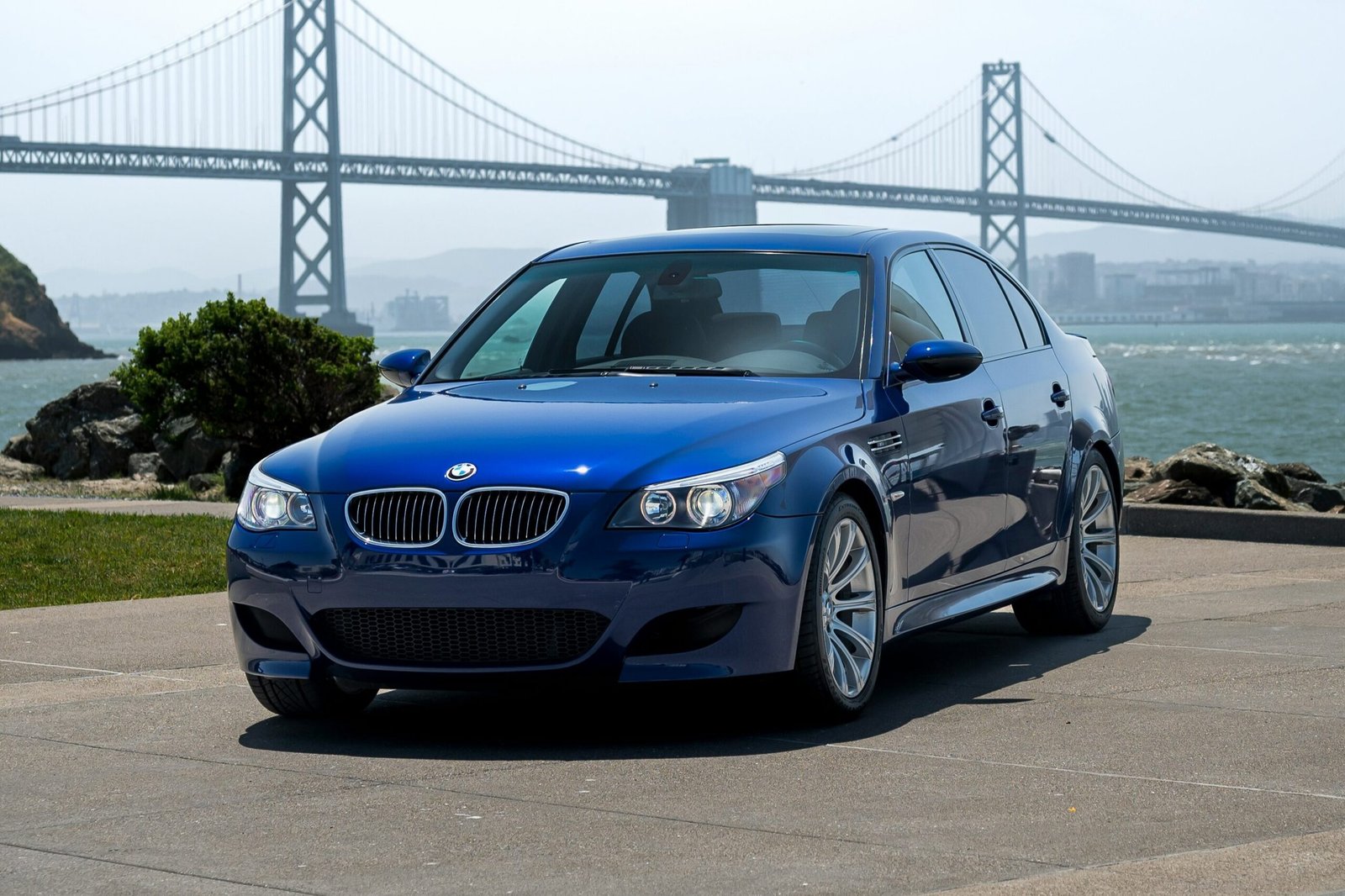
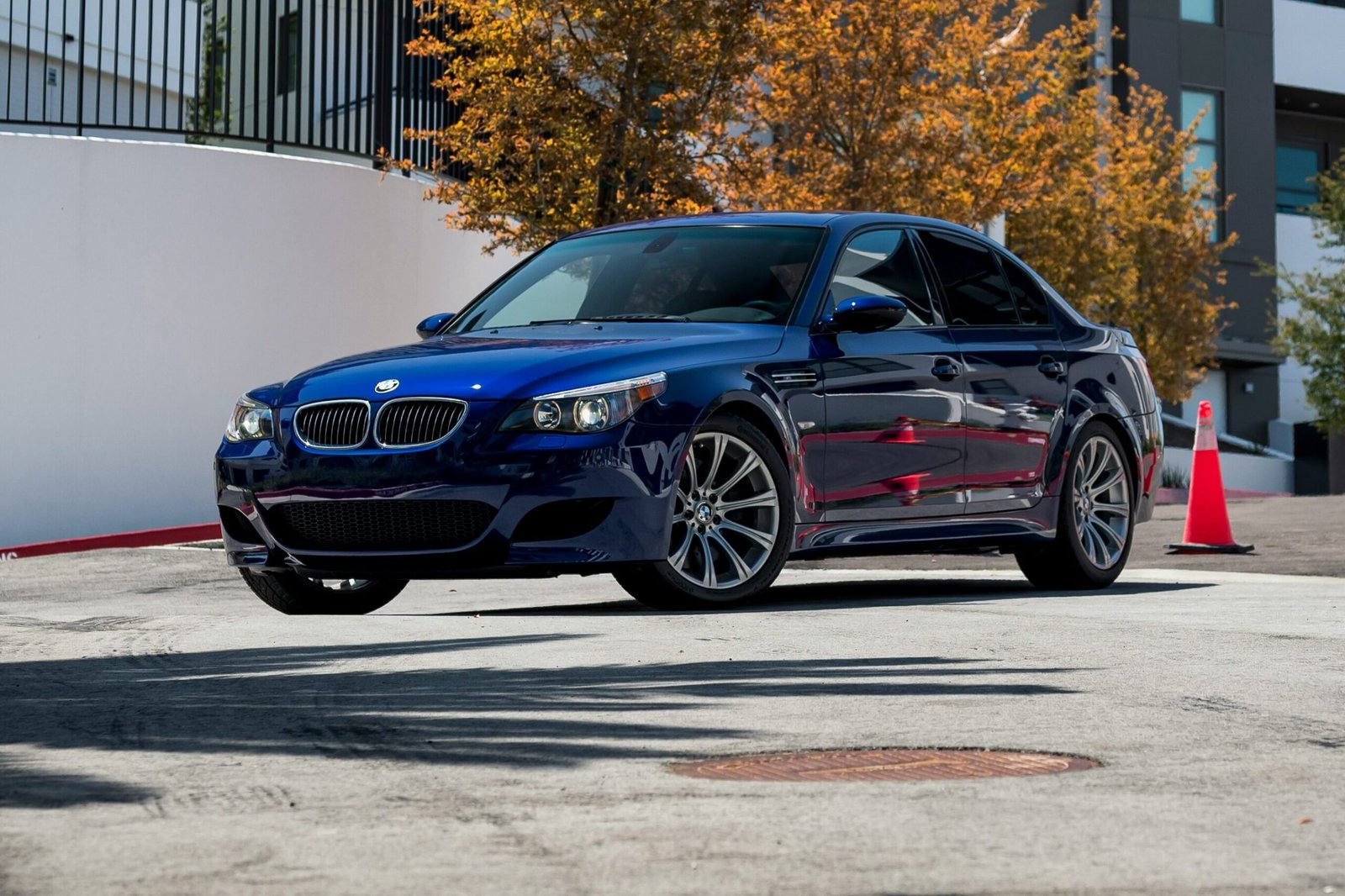
The E60 M5 does not have one hero color the way the BMW E46 M3 has Laguna Seca Blue. The 25th Anniversary Edition’s matte Frozen Grey is the most collectible finish, but only 27 cars were produced in that special edition. Beyond that, rarer factory and BMW Individual colors, along with full Merino leather and more distinctive interior combinations, stand out against the sea of silver and black cars. Original paint is generally preferable to a respray.
On the other hand, if you can find an E60 M5 in Sepang Bronze with a matching Sepang Bronze interior, Indianapolis Red over Portland Brown, or Interlagos Blue over Silverstone leather, you’ve got something particularly interesting. BMW Individual specifications, especially unusual shades like Moonstone paired with Amarone leather, are also worth seeking out. These combinations give the M5 a character that more conventional specifications lack, and their relative scarcity could make them increasingly appealing to collectors.
Originality and Tuner Specials
The E60 M5 attracted plenty of tuners, including Dinan, G-Power, AC Schnitzer, Hamann, and Hartge. While originality generally appeals to the broadest pool of collectors, complete, well-documented conversions from these established tuners can be collectible in their own right, especially rarer period-correct builds.
However, there’s a big difference between a genuine G-Power Hurricane and an M5 with an aftermarket exhaust, ECU tune, and lowered suspension. Random modifications can hurt resale value, particularly if the original parts are missing. For the best long-term prospects, stick to an unmodified example or a properly documented tuner special with a recognizable pedigree.
Pre-Purchase Inspection
A full inspection by an S85 specialist is non-negotiable. Ask for a cold start, a scan of all fault codes (including VANOS codes), an oil sample if possible, and a check of the SMG pump, clutch wear, and throttle actuators. Check the sunroof drains and the trunk area for water, and look closely for signs of crash repair on the aluminum front structure. This is a very important step when buying an E60 M5, and if the seller is reluctant, well, you live to fight another day.
Best BMW E60 M5 Investment Tiers
Every E60 M5 has the same engine, and that engine is the reason to own one. Still, the market already treats some cars very differently from others.
Tier 1 — Collector Grade
Six-speed manual, under 30,000 miles, original, fully documented, maintained
This is the top of the E60 M5 market. A low-mileage factory manual with original paint, an unmodified engine, and a complete service history is the blue-chip version of this car. Recent results show where these cars now sit: $132,000 for an 11,000-mile 2008 manual and $156,800 for a 13,000-mile 2008 manual, both in 2026. With only 1,366 factory manuals built, the number of truly low-mileage examples left is very small.
Tier 2 — Investment Grade
Factory six-speed manual, 30,000 to 90,000 miles, documented rod bearings
This is the tier where the appreciation story plays out. A factory manual with documented bearing work, a clean history, and original specification is still attainable. Recent sales of manual cars in this mileage range have mostly landed between about $38,000 and $70,000. Buy the best history you can find, keep the bearings on schedule, keep the car original, and hold.
Tier 3 — Driver Grade
SMG sedan, under 90,000 miles, full history, documented bearings
A well-kept SMG car is the most affordable way into a V10 M5. Recent SMG sales in this mileage range have mostly landed between $21,000 and $35,000, with exceptional low-mileage cars going higher. SMG cars will likely appreciate too, but more slowly than manuals. Budget for maintenance from day one, because the purchase price is only the entry fee.
Avoid
Unknown rod bearing history, cheap high-mileage SMG cars, poorly repaired accident damage, and questionable modifications.
When buying a BMW E60 M5, the biggest mistake is chasing the cheapest example. An $11,000 SMG car might seem like a bargain, but years of deferred maintenance can quickly turn it into one of the most expensive M5s you could own. Be particularly cautious of cars with no documented rod bearing work, unresolved engine or SMG faults, poorly repaired accident damage, or undocumented modifications.
Low mileage isn’t necessarily a guarantee of a good car, either. An M5 that has spent years sitting unused without proper servicing could be hiding some expensive surprises. And remember, there is no completely trouble-free model year. Ultimately, a complete history, documented repairs, and a thorough pre-purchase inspection by an experienced S85 specialist matter far more than a tempting asking price.
The Verdict
The BMW E60 M5 investment case is not as safe as a garage-queen Porsche might be. It costs real money to run, it punishes neglect, and the cheapest cars are often the worst buys. Kennan’s data shows that a well-maintained example can cost around $4,400 a year to keep perfect, and that is before fuel.
Still, the investment case is likely there, and it is getting stronger. It is the only V10 M5 ever. Its engine was designed from scratch and never used outside the M5 and M6. It is the last naturally aspirated M5. And in North America, 1,366 buyers got something nobody else in the world could order: a ten-cylinder sedan with a manual gearbox.
The market has noticed. Hagerty put the car on its Bull Market List, manual cars have crossed six figures at auction, and an SMG E60 still costs less than the E39 it replaced. That gap will not last forever.
Clarkson needed a few minutes and one button press to change his mind about the E60 M5. The collector market took about 20 years. Buy the best-documented car you can afford, keep the service fresh, and enjoy the noise.
That V10 is why this car will matter for decades.
Classic Car Gang covers the modern classics market with no editorial filters. If you found this useful, check out our other articles!
Get notified when we publish new articles. No spam.

Marko Mikulic is a classic and modern classic car writer with over a decade of hands-on enthusiasm. He has published more than 10,000 automotive articles with bylines at Jalopnik, SlashGear, The Driver Advisor, and CarArac. He owns a Mercedes R129 SL — having previously owned an R107 and a BMW E30 M3. He founded Classic Car Gang to cover the cars worth buying, owning, and investing in, without editorial filters.