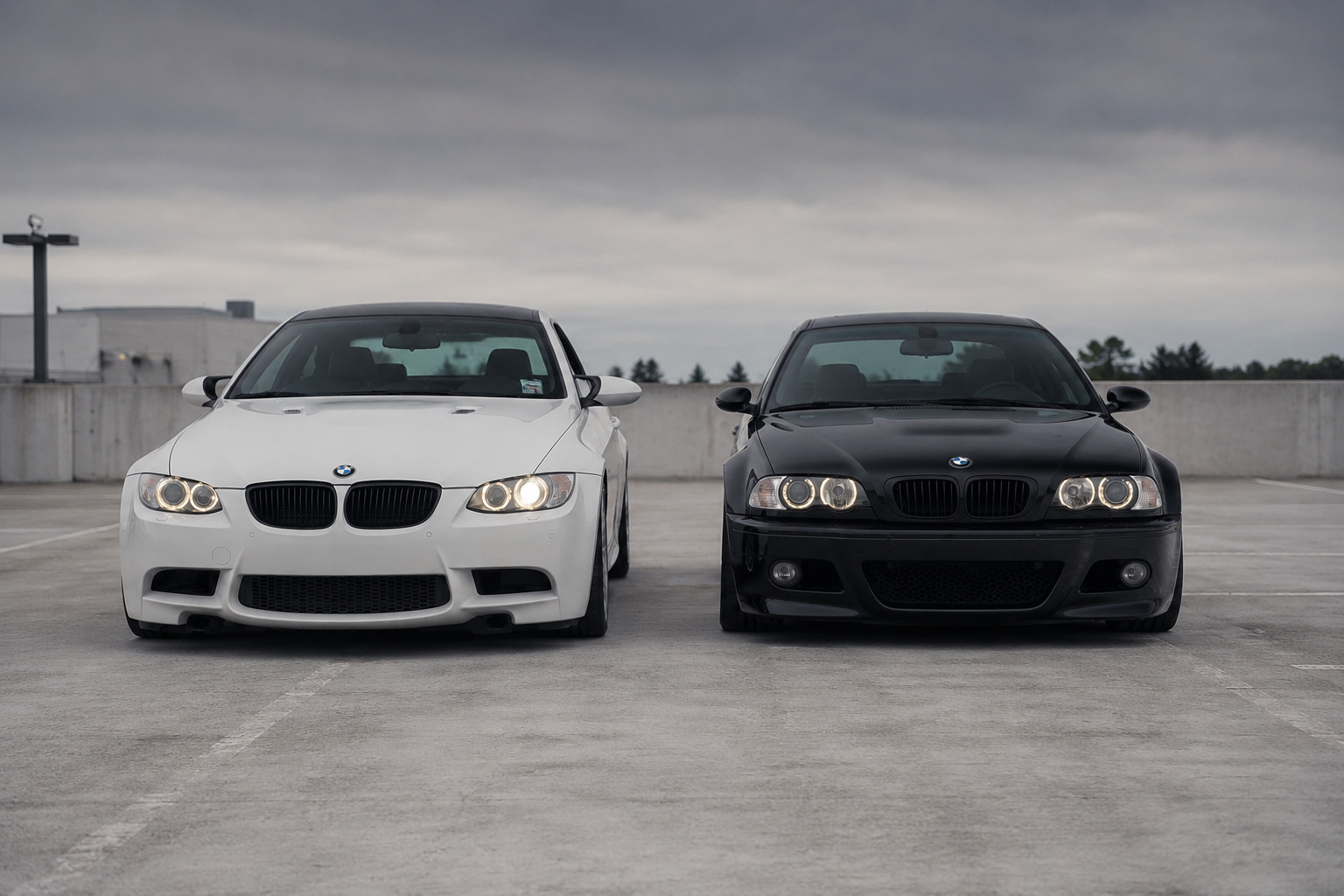

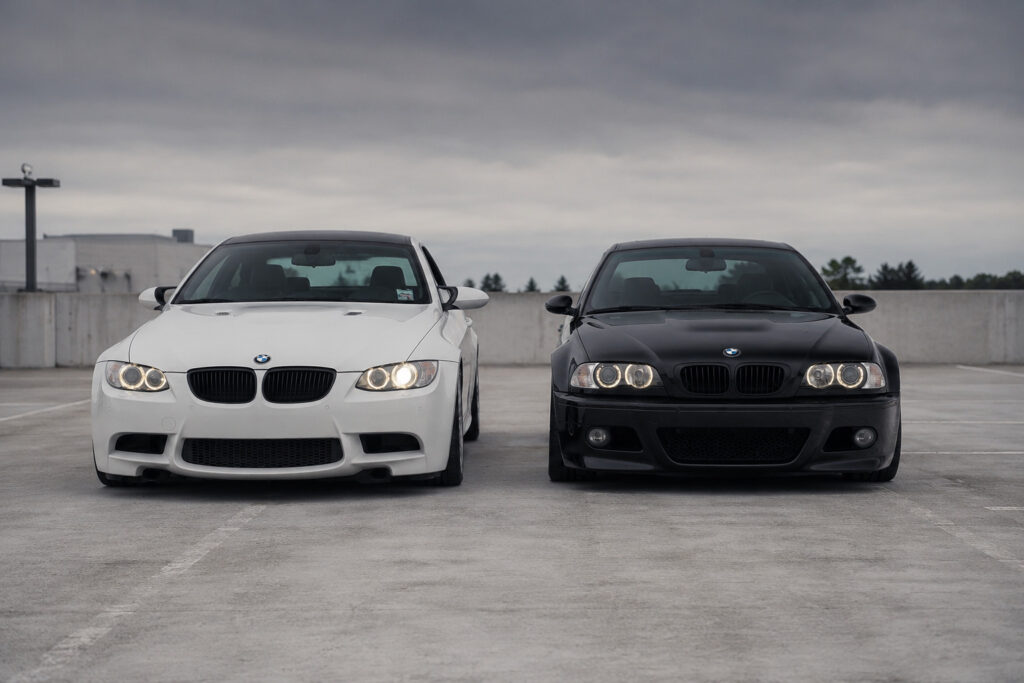
When it comes to performance car legacies, few names carry as much weight as BMW’s M. At the heart of that legacy sits the M3 — a model that has spent decades defining what a truly usable driver’s car should be.
The BMW E46 M3 and BMW E92 M3 each represent an era when BMW understood that restraint could be just as important as performance. Both feel purposeful, engaging, and refreshingly free from complexity.
These are the qualities that make them every bit as compelling today as they were when new, despite the arrival of faster and more sophisticated successors. In this BMW E46 M3 vs BMW E92 M3 comparison, we’ll explore what sets these two icons apart.
Their engines, driving character, reliability, ownership experience, and long-term collectibility. Because while they share the same legendary badge and are rooted in the same M-car philosophy, they deliver that philosophy in two distinctly different ways.
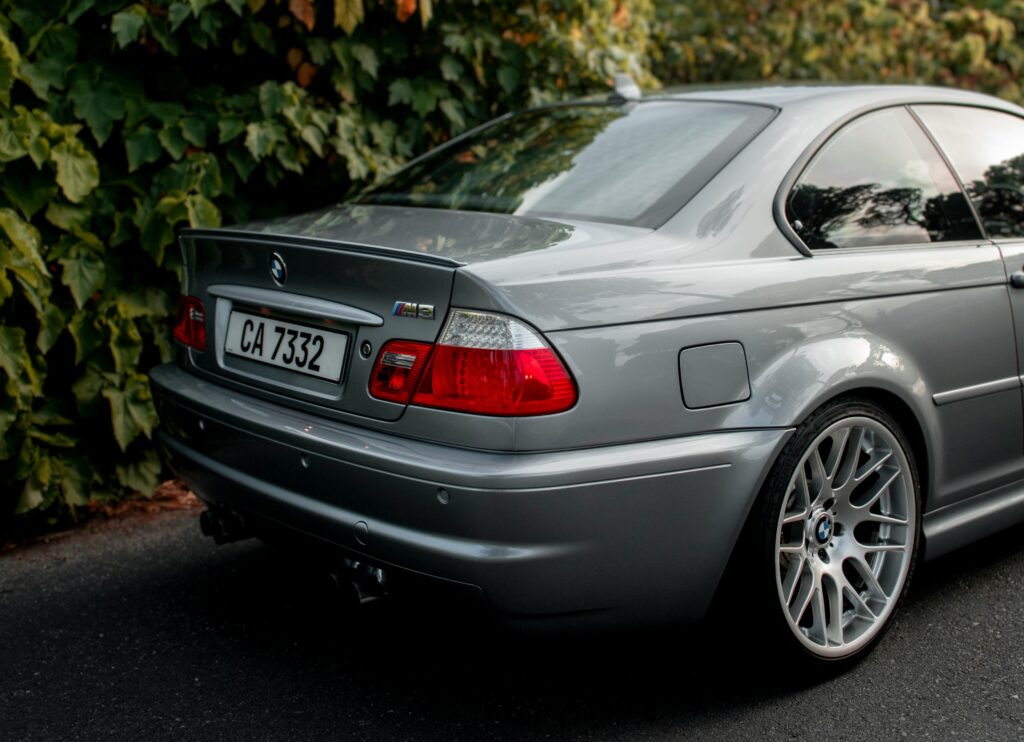
Table of Contents
BMW E46 M3 vs BMW E92 M3: Quick Specs Comparison
All figures are for manual transmission coupes.
| BMW E46 M3 | BMW E92 M3 | |
|---|---|---|
| Years | 2001–2006 | 2008–2013 |
| Engine | 3.2L NA inline-six (S54) | 4.0L NA V8 (S65) |
| Power | 333 hp @ 7,900 rpm (US) | 414 hp @ 8,300 rpm |
| Torque | 262 lb-ft @ 4,900 rpm (US) | 295 lb-ft @ 3,900 rpm |
| 0–60 mph | ~4.8 sec | ~4.6 sec |
| Top Speed | 155 mph (limited) | 155 mph (limited) |
| Weight (kerb) | ~3,415 lb | ~3,704 lb |
| Transmission | 6-speed manual / SMG II | 6-speed manual / 7-speed DCT |
| Production | ~56,133 coupes | ~40,000+ coupes |
| US Price (new) | ~$45,000–$50,000 | ~$54,000–$62,000 |
The Cars: What You’re Actually Buying
BMW E46 M3
The BMW E46 M3 is the halo car of the M3 lineage. It is the generation that truly cemented what the M3 was supposed to be — not just a fast 3 Series, but a genuine driver’s car with no meaningful compromises. Introduced in 2001 and based on the E46 3 Series coupe, it paired a compact footprint, hydraulic steering, and near-perfect 50:50 weight distribution with the legendary naturally aspirated 3.2-liter S54 inline-six.
In U.S. specification the S54 produces 333 horsepower, revving to 8,000 rpm. The transmission choice was either a six-speed manual or the SMG II automated manual — the manual is the correct choice, the one the car was built around, and the one the market has always rewarded.
As Motor1‘s Jeff Perez put it after driving the E46 back-to-back with the two other M3 generations at Amelia Island, it is “an absolute joy to drive, even slowly — it’s not back-breakingly stiff like the current M3, nor overly powerful or too shouty.” That restraint is the whole point.
The E46 M3 is the car that every subsequent M3 has been measured against because it struck a perfect balance of looks, performance, handling, and usable power. With where the current market is heading, the E46 is likely to remain the definitive M3 for a long time, at least for old-school BMW enthusiasts.
BMW E92 M3
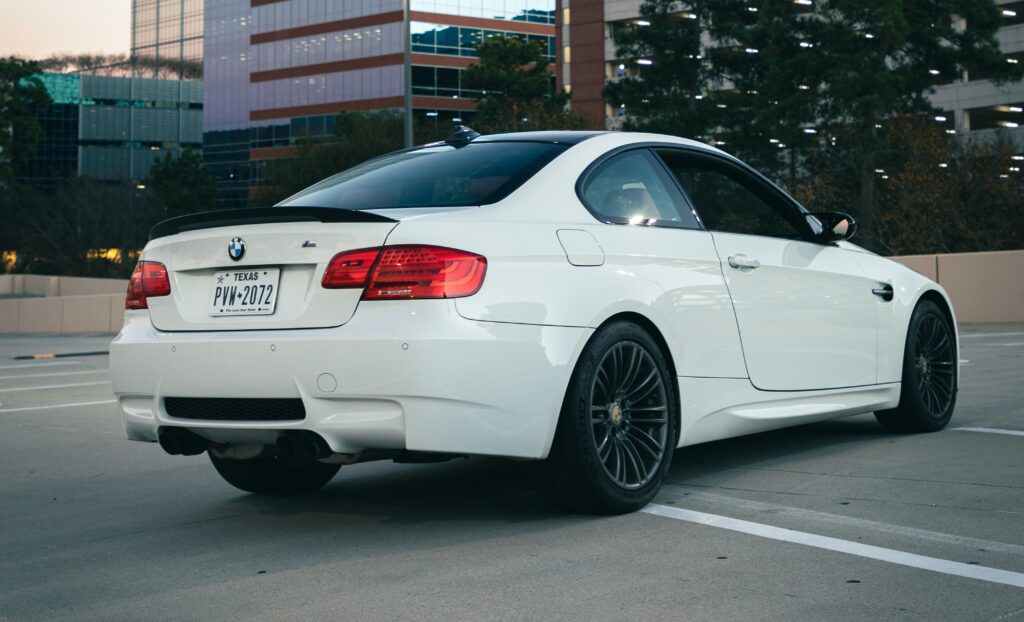
Now, if there ever was an M3 that can truly rival the E46, it is the E92 M3, and that is because the E92 M3 was something no one expected at the time. The BMW E92 M3 was launched at the 2007 Geneva Motor Show and immediately rewrote expectations for what an M3 could be.
Where the E46 used an inline-six, the E92 arrived with the S65 — a 4.0-liter naturally aspirated V8 producing 414 hp at 8,300 rpm and 295 lb-ft of torque at 3,900 rpm, with an 8,400 rpm redline that remains the highest of any road-going BMW engine ever built. It is the only naturally aspirated V8 ever fitted to a production M3, and the last naturally aspirated engine BMW M has ever put in any M3.
As Top Gear wrote in their original 2007 review, “this is an engine that Ferrari would be proud of.” The S65 was derived from the S85 V10 in the E60 M5 — two cylinders removed, with individual throttle bodies per cylinder and a block produced at the same Landshut foundry where BMW cast its Formula 1 engines.
The E92 is available with a very good DCT transmission or a six-speed manual, both of which are a joy to use. Still, Doug DeMuro called the manual gearbox in the E92 “up there with like a good E30” — about as high a compliment as a BMW manual can get. Overall, hardly anyone would argue that the E92 M3 was not a worthy successor to the E46, and in the eyes of many BMW enthusiasts, it is actually the better car.
BMW E46 M3 vs BMW E92 M3: The Driving Experience
Engine, Performance, and Speed
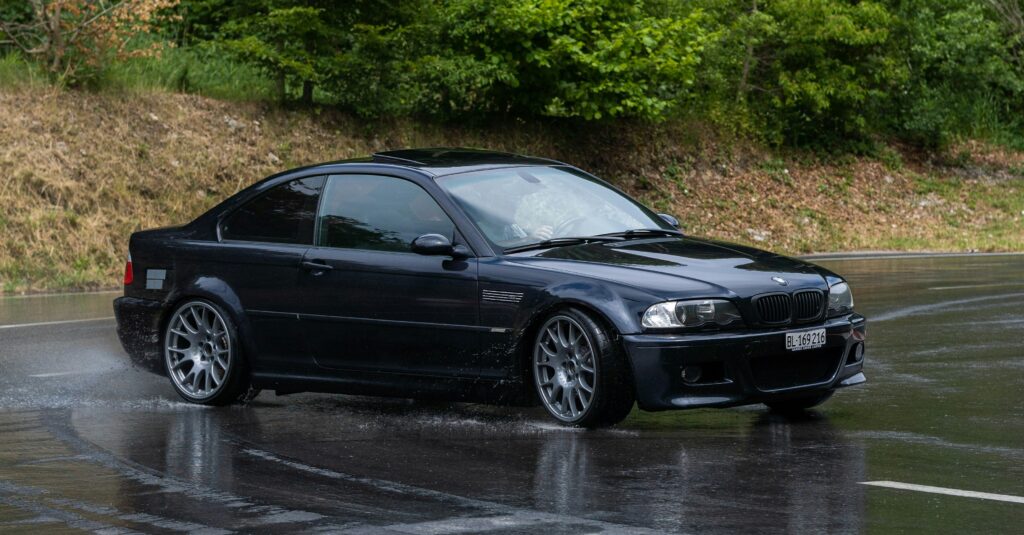
The E46 M3’s S54 produces 333 hp at 7,900 rpm in U.S. trim, with the redline sitting at 8,000 rpm. Below 6,000 rpm, the car is composed, unremarkable, and not too different from something like a 330i. Above 6,000 rpm, the S54 transforms.
The induction note sharpens, throttle response becomes immediate, and the pull toward redline is unlike anything BMW currently builds. It feels mechanical, raspy, and unmistakably old-school. BMW inline-six engines have always had a unique sound and feel profile, and the E46 M3’s S54 is a prime example.
The E92 took a completely different path. The S65 produces 414 hp at 8,300 rpm and 295 lb-ft of torque at 3,900 rpm, with individual throttle bodies for each of the eight cylinders and an 8,400 rpm redline. It is a very peaky engine, it is also very linear, but even at 5,000 rpm, it feels more like a sense of occasion because it is a V8.
On paper the E92 wins clearly — 414 hp against 333, 0–60 in roughly 4.6 seconds against 4.8. A Bimmerpost user who owned both put the V8’s appeal plainly: “Nothing competes with the 8400 RPM wail for that bespoke V8 engine.” Although the S54 is an amazing engine, the E92’s V8 is in a totally different ballpark.
Handling, Driving Feel, and Character
The E46 was built around a 50:50 weight distribution, hydraulic steering, and a rear end tuned for throttle adjustability. At roughly 3,415 lb it is noticeably lighter than the E92, and that difference is felt constantly. It changes direction eagerly and communicates through the chassis at every input.
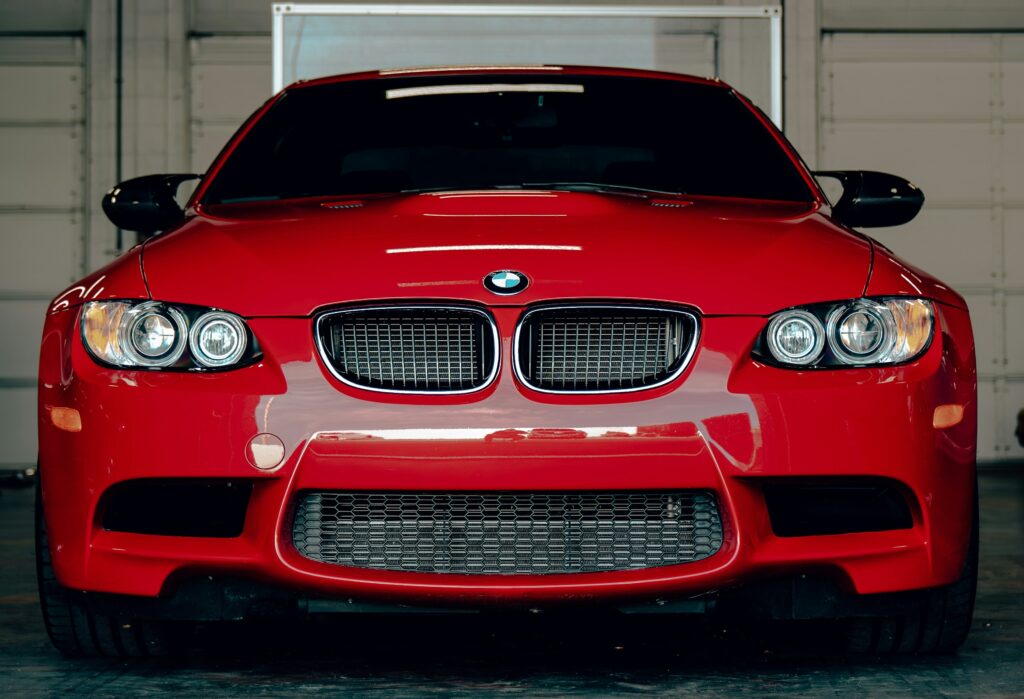
The E92 was engineered around greater stability and precision. Its wider track, stiffer chassis, quicker steering rack, and more sophisticated suspension give it a level of composure the E46 does not have. At the same time, this also makes the E92 feel potentially less special than the E46 because it works as a car a bit better.
At roughly 3,700 lb, the E92 is the heavier car, but BMW did an impressive job disguising that mass. The front end feels sharp, the body remains remarkably controlled under load. The difference between the two comes down to where they deliver their thrills. The E46 feels more playful and communicative at everyday speeds, thanks to its lower weight and more approachable limits.
From a pure performance standpoint, the E92 is the more capable platform. However, the reason why many enthusiasts prefer the E46 is that its lower limits, lighter feel, and greater sense of movement make it more interactive on public roads. The Fitzroy Motor comparison, after extended time in both, described it precisely: the E46 is “the katana” — “only ever unsheathed with intent to kill.” The E92 is “the broadsword” — more planted, more stable at speed, more forgiving when things go sideways.
Daily Driving, Rear Seats, and Comfort
Both cars are based on the 3 Series and are genuinely usable. The E46 is the lighter, comfortable at motorway speeds, equipped with practical rear seats, and compact enough to feel effortless in traffic and tighter urban environments.
Its only drawback is that its engaging character can feel underutilized when you’re simply commuting. The E92, meanwhile, is the more complete all-rounder. Its cabin is quieter and more refined, the interior is noticeably roomier, and the technology and overall ergonomics feel closer to those of a modern car.
While neither demands significant compromises as a daily driver, the E92 is the easier car to live with. It offers a greater sense of comfort and refinement when you’re not looking for an engaging drive, yet still delivers when the road opens up.
BMW E46 M3 vs BMW E92 M3: Design Language
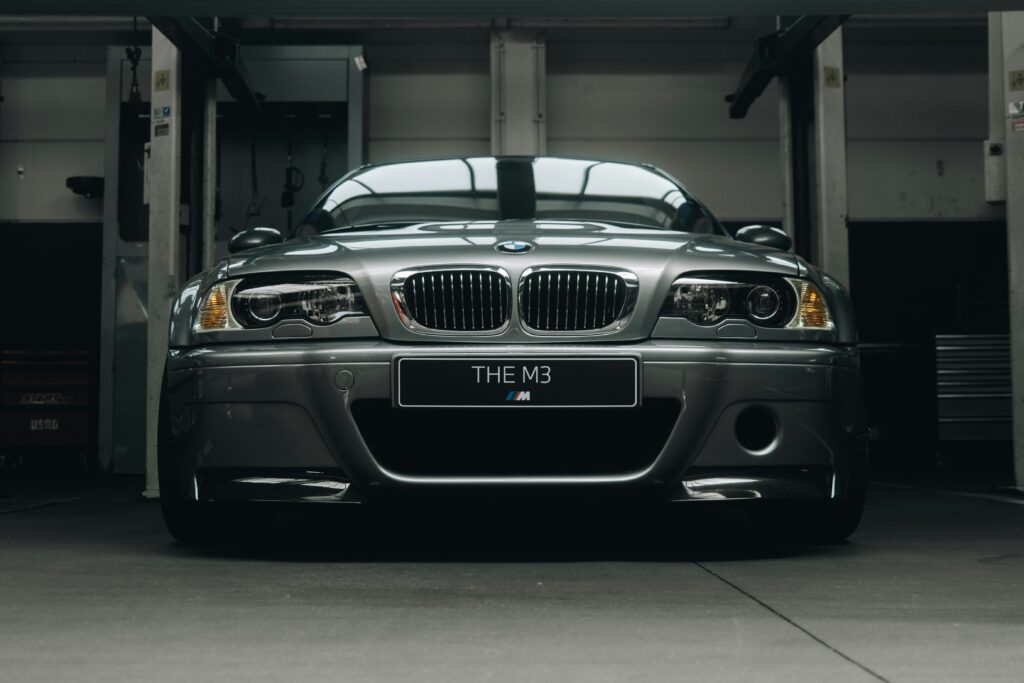
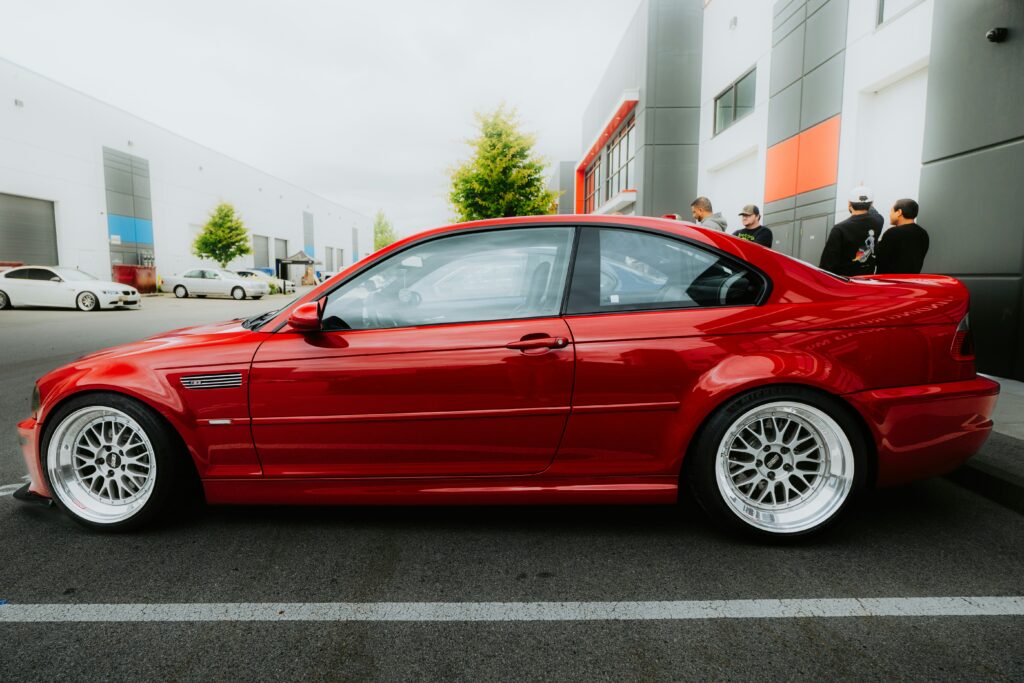
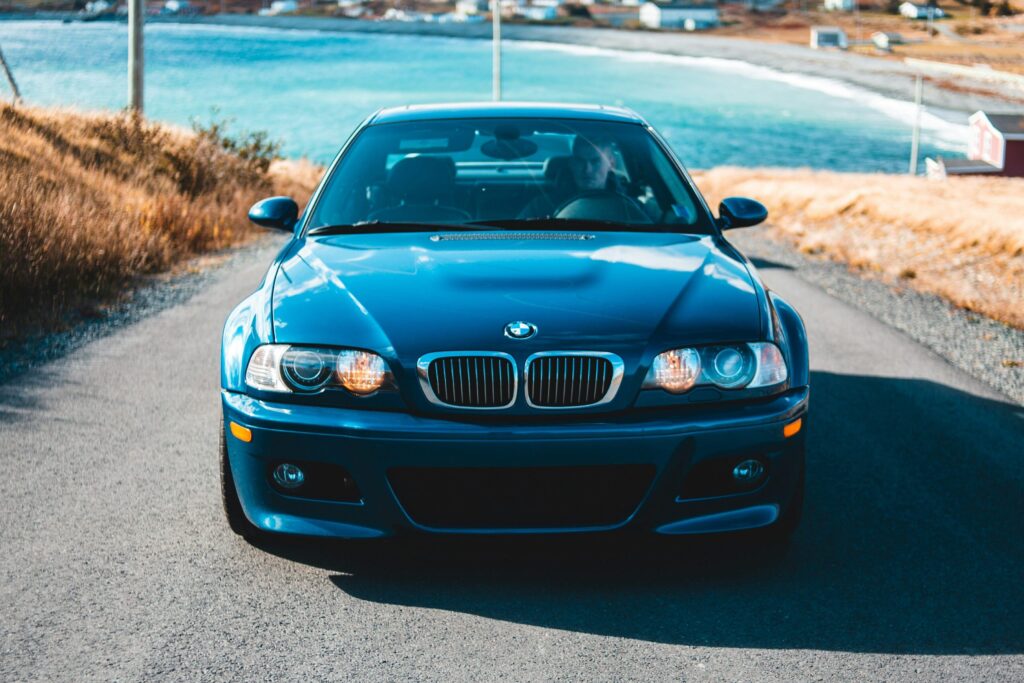
The E46 M3 has aged the way restrained performance cars tend to — into something that looks increasingly deliberate. The flared arches, quad exhausts, and hood bulge are there, but they take a moment to register. Two decades on, it reads as elegant rather than aggressive.
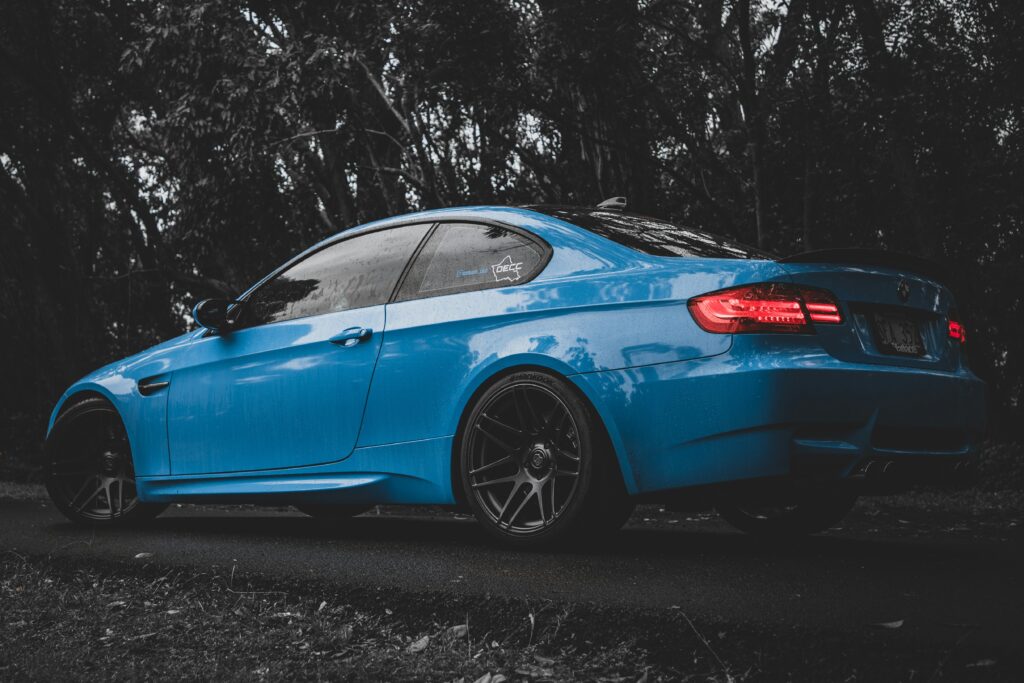
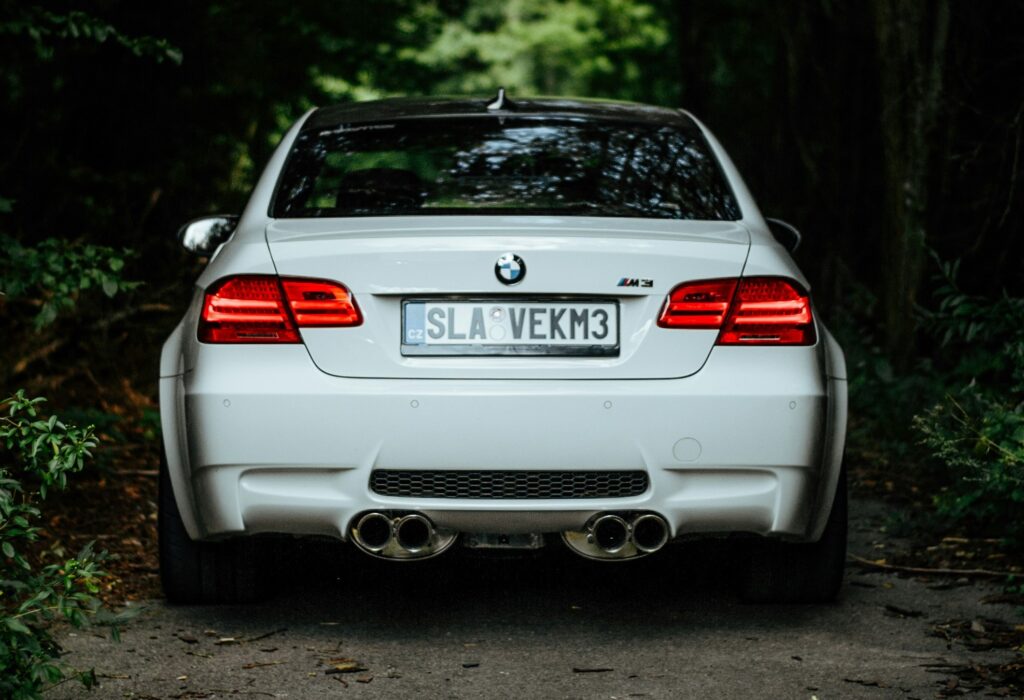
The E92 is wider, more muscular, with a standard carbon fiber roof option that lowers the center of gravity and a powerdome that leaves no ambiguity about what’s underneath. Doug DeMuro, reviewing a slicktop Competition, called the carbon roof a feature that “just plain looks cool,” and pointed out the fender vent with its integrated turn signal and “subtle little M logo” as a detail that “gave it a little bit more specialness than the regular 3 Series.”
When looking at the two, you can see a time when BMW didn’t try too hard. The F80 generation of the BMW M3/M4 was considerably more aggressive in its styling, while the G80 generation has pushed that approach even further. The E46 is arguably the golden era of BMW design, incorporating nearly every element we now associate with the brand: angel eyes, compact kidney grilles, quad exhausts, a power dome, and the signature amber-lit interior.
The E92 took those same elements and adapted them for a newer generation, introducing smoother lines and a more modern silhouette. Both cars remain understated compared to modern BMW M models, and that restraint is part of their appeal. The E92 looks like the faster, more sophisticated machine, while the E46 looks like the car most people picture when they think of an M3.
Inside, the E46 is classic BMW — analog, driver-focused, orange-lit dials, excellent visibility. Still, not many people would call it luxurious by modern standards. The E92 interior was a substantial step up. It also does not feel overly luxurious, but it gets iDrive and more technology in an interior that does not look too different from the F80 series.
BMW E46 M3 vs BMW E92 M3: Reliability and Maintenance
Cars break, and these are no different. However, since both are enthusiast cars with a huge community, most of these problems are well known and documented. Therefore, there is absolutely no reason for you to not know about them if you want to buy either.
On the E46 M3, the two non-negotiables are the rod bearings and the rear subframe. Rod-bearing wear is a well-documented S54 concern, particularly on higher-mileage cars, and ignoring it can lead to catastrophic engine damage. Budget roughly $1,200–$3,500 for preventative replacement if there is no documented history. The rear subframe can crack around its four mounting points under load, making reinforcement one of the most important structural upgrades, typically costing $1,500–$3,500. On higher-mileage examples, VANOS refurbishment is another common expense, ranging from roughly $600–$2,500 depending on the scope of work.
On the E92 M3, the S65’s rod bearings are the headline concern. Their wear appears to be related to a combination of tight factory clearances, high engine speeds, and operating conditions, making preventative replacement common. Budget roughly $2,500–$5,000 depending on the shop and scope of the work. Throttle actuators are the second major item: when the plastic gears wear out, the car can enter limp mode, with replacement typically costing around $1,200–$2,000. Fuel injectors are another known weak point. While injector failures are less common than bearing or actuator issues, a stuck-open injector can cause severe engine damage if left unchecked, making preventative replacement a sensible precaution on higher-mileage cars.
Neither should go near a general mechanic. A fully sorted E92 with rod bearings, actuators, and injectors documented is arguably more predictable going forward than a sorted E46, which still carries structural risk in the subframe and boot floor as it ages.
BMW E46 M3 vs BMW E92 M3: Investment Value
This is where the two cars sit in genuinely different places — and the data is clear about which direction each is moving.
The E46 M3 is the established collector car. According to Classic.com auction data, the average sale price of a manual E46 M3 coupe currently sits at $34,771, with the highest recorded sale reaching $122,500 for a 2001 example in April 2025. The Competition Package manual averages $41,984, with the highest recorded sale hitting $120,000 in February 2026. According to the Hagerty Price Guide, the E46 M3 saw an average value increase of 30% heading into 2026, with the best examples pushing toward $90,000 in #1 condition.
The E92 M3 is earlier in its appreciation curve. According to Classic.com auction data, the average sale price of a manual E92 M3 coupe sits around $41,500, with the ZCP manual averaging $52,302 and the highest recorded sale reaching $205,392 for a 2011 Competition in April 2026. The Lime Rock Park Edition averages $79,776 with a high of $263,200. Hagerty data shows all M3s from 1986 to 2013 have appreciated 21% over five years, from an average of $36,600 to $44,400 — with the E92 included in that cohort. As one Reddit user noted: “prices on the E46 M3 didn’t really go up until 2020 — 14 years after production stopped. The E92 ended in 2013. The math writes itself.”
Still, the E46 is the stronger near-term investment play. The E92 might be the longer-term one. Both are natural beneficiaries of BMW’s move toward turbocharged and eventually electric M cars — two cars that represent something BMW will not build again. If any BMW M car is going to go up in the coming years, it is going to be one of these two or potentially even the BMW E39 M5. The E30 is already really expensive, the E60 M5 is expensive to own, and anything from the F-Series is still too common.
Either way, if you’re looking to maximize your investment potential, be sure to check out our complete BMW E46 M3 Investment Guide and BMW E92 M3 Investment Guide.
BMW E46 M3 vs BMW E92 M3: Which One Should You Buy?
Buy the BMW E46 M3 if:
- You want the purer, rawer driving experience. The S54, the lighter platform, the 50:50 balance — the E46 is built specifically around the act of driving and it shows at every speed.
- You are buying partly to hold value. The collector market is already moving, documented, and accelerating. The right manual coupe in a rare color with full paperwork is not getting cheaper.
- You drive solo most of the time. The rear seats are not as usable. If passengers are a regular consideration, the E92 is better.
- You want to keep it original. The E46 M3’s premium lives entirely in unmodified cars. Originality is what separates the $30,000 example from the $65,000 one.
Buy the BMW E92 M3 if:
- The V8 is the point. There will never be another naturally aspirated V8 in a production M3. If that matters to you — and it should — the E92 is the only answer.
- You want a complete car. Daily commute, long trip, spirited back road, track day — the E92 handles all of it without asking you to commit to any one.
- You are buying for the long game. The E92’s appreciation curve is earlier, which means more long-term upside if you are patient.
- Reliability predictability matters. A fully sorted E92 with documented preventative work is a known quantity. The aging E46 carries more structural unknowns as the years stack up.
BMW E46 M3 vs BMW E92 M3: The Verdict
Now, the difficult part, choosing which one of these two is “better.” The Bimmerpost thread that ran for 13 pages couldn’t agree. Doug DeMuro called the E92 Competition manual possibly “the most desirable high watermark point of the entire BMW M3 lineage.” Nobody agrees. That is exactly the point.
These two cars represent the same BMW M philosophy, but in two different platforms. The E46 is more focused — lighter, sharper, more demanding, more rewarding when the road is right. The E92 is the complete one — more power, more exotic engine, more usable, and the only M3 that will ever have a naturally aspirated V8.
On pure driving engagement on the right road, the E46 wins. It asks more, gives more, and makes you feel more like the reason the car exists. For everything else — the V8 soundtrack, the daily flexibility, the long-term investment upside, and the irreplaceable character of the S65 — the E92 makes the stronger case.
Buy the E46 M3 if you want a traditional sporty driver’s car. Buy the E92 M3 if you want everything else and you can’t imagine living without the V8.
Classic Car Gang covers the modern classics market with no editorial filters. If you found this useful, check out our other articles.
Get notified when we publish new articles. No spam.

Marko Mikulic is a classic and modern classic car writer with over a decade of hands-on enthusiasm. He has published more than 10,000 automotive articles with bylines at Jalopnik, SlashGear, The Driver Advisor, and CarArac. He owns a Mercedes R129 SL — having previously owned an R107 and a BMW E30 M3. He founded Classic Car Gang to cover the cars worth buying, owning, and investing in, without editorial filters.