
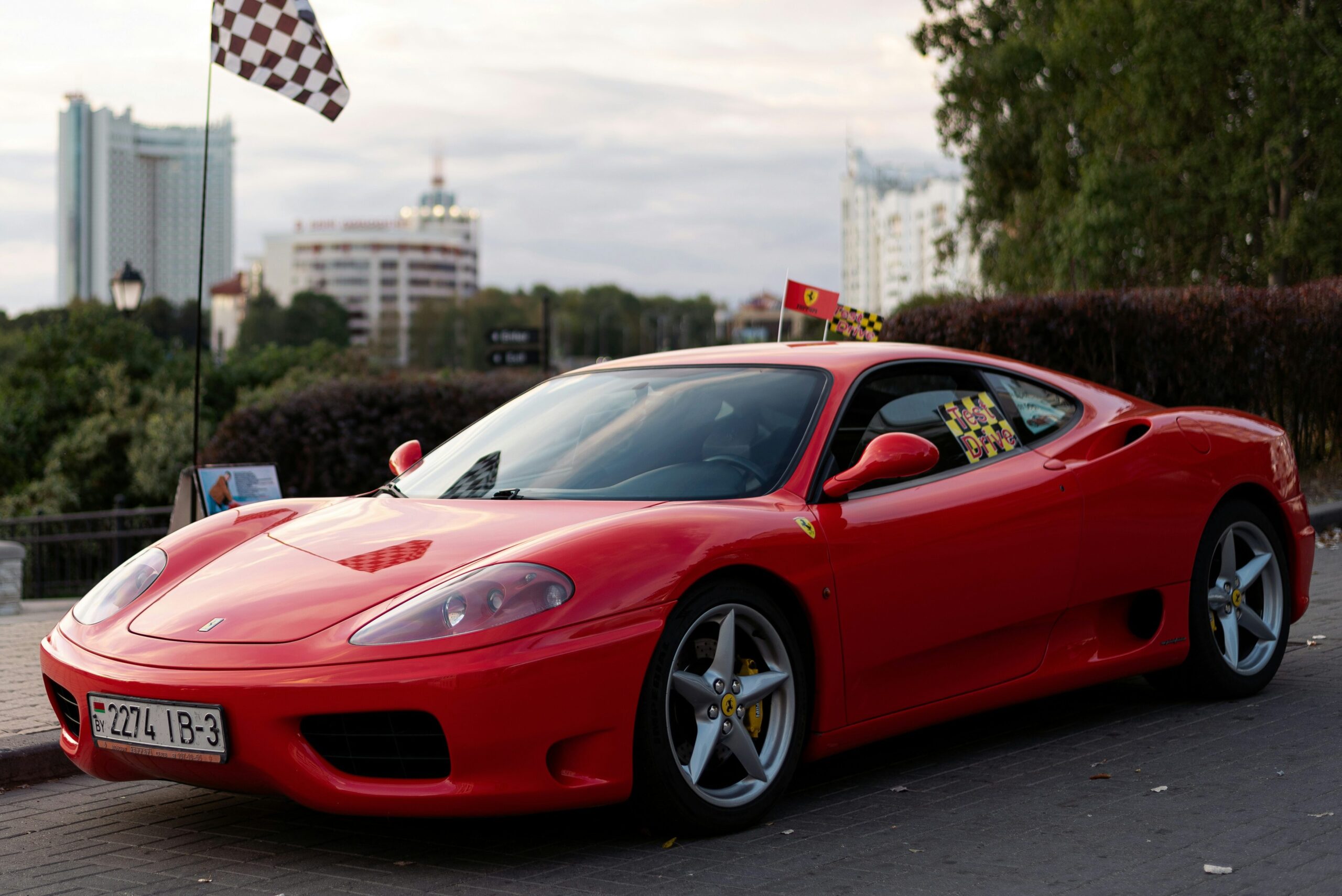
Every late 90s and early 2000s Ferrari conversation eventually arrives at the same place: the gearbox. Three pedals and an open metal gate, or two pedals and paddles. It is the single question that decides how a modern classic Ferrari drives, what it costs, and what it will be worth in ten years.
On the 360, that question was answered differently than it is today. The six-speed manual was the standard fitment. The F1 automated manual was the extra-cost option — in Germany it added roughly €8,000 to the price of a Modena — and buyers paid that money specifically to remove the clutch pedal. Roughly 70% of them did exactly that.
Two decades later the market has inverted completely, and the 360 sits in an unusual spot because of it. It is the last mid-engined Ferrari at which a gated manual is still reachable on a “normal” budget. Manual F355s and manual F430s have both moved into six figures and stayed there. The manual 360 has moved too, but it started lower and there are simply more of them, which means the ladder still has a rung on it.
That will not be true indefinitely. The 360 is also the car that Ferrari built more of than anything before it — nearly 17,000 across all body styles — and that volume is the only reason it has stayed accessible. Volume is a gift. Attrition, restoration costs, and the steady conversion of tired F1 cars into project cars are quietly eating into it every year.
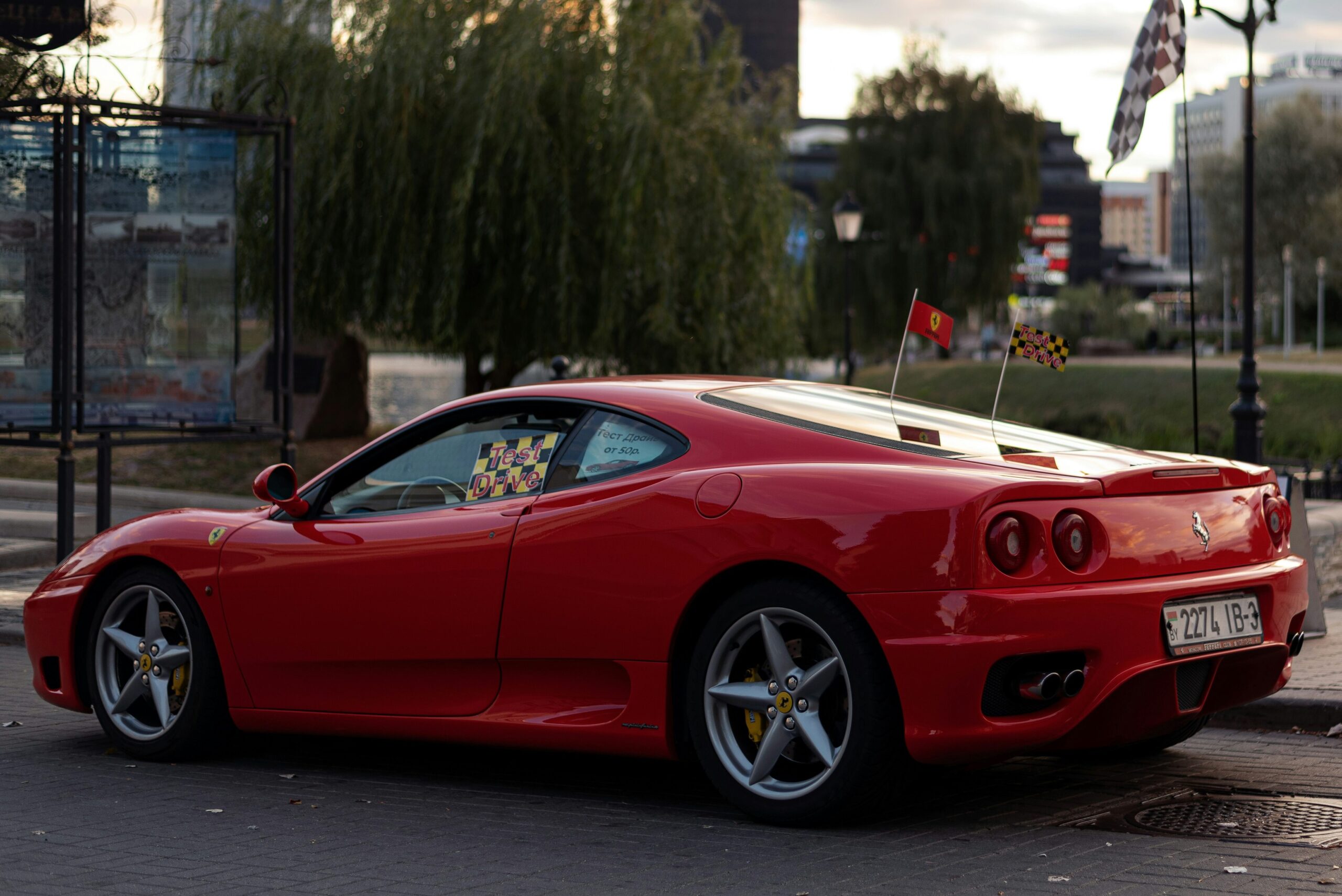
Table of Contents
Meet the Ferrari 360
The 360 Modena was shown at the Geneva Motor Show in March 1999, replacing the Ferrari F355 after five years. Replacing the F355 was not a small assignment. The 355 had rescued Ferrari’s reputation after the 348, and it remains one of the most admired shapes the company ever built. Ferrari’s response was not to evolve it but to break from it entirely.
The most significant change was structural rather than visual. The 360 was Ferrari’s first volume-production car built around an all-aluminum spaceframe, developed with Alcoa, and it replaced the steel chassis that had underpinned every mid-engined V8 Ferrari before it. The result was a car that was both stiffer and lighter than the F355 — Ferrari claimed a 60 kg (130 lb) reduction — despite carrying considerably more technology.
The engine was a development rather than a clean sheet. The 3.6-liter Tipo F131 V8 grew from the F355’s 3.5-liter unit, kept the flat-plane crankshaft and titanium connecting rods, and produced 400 PS (395 hp) at 8,500 rpm alongside 275 lb-ft of torque. Ferrari quoted 0-62 mph in 4.5 seconds and a top speed of 183 mph. Those numbers were competitive rather than dominant in 1999, and they are not the point. The point is where the power arrives: peak output sits within a few hundred rpm of the redline, which means the entire character of the car lives in the top third of the tachometer.
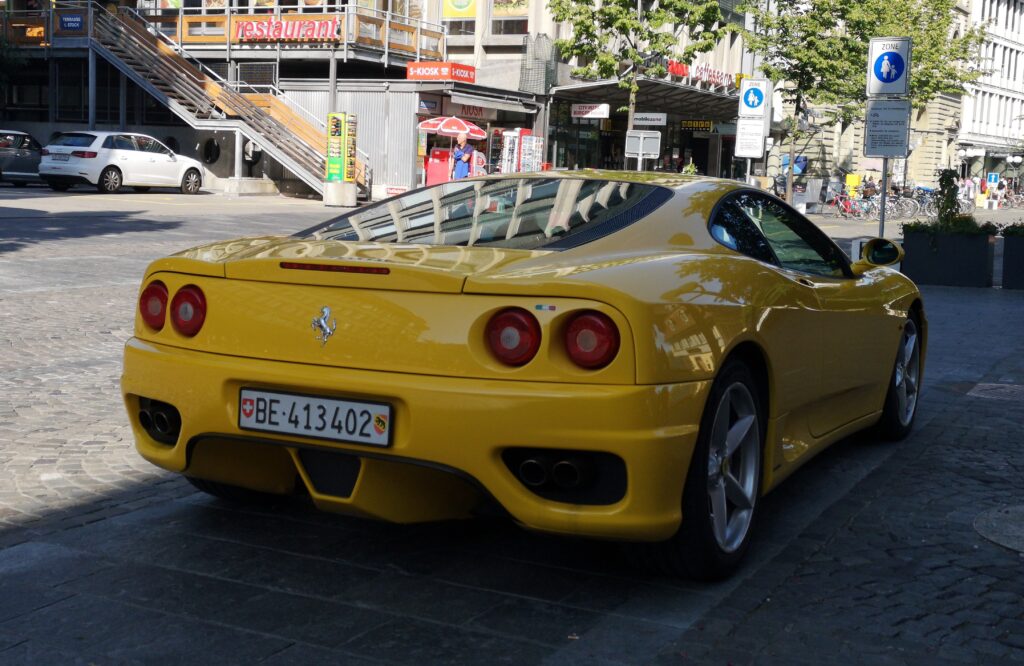
Pininfarina’s bodywork was the part that divided people. Pop-up headlights were gone, killed by safety and aerodynamics, and in their place were fixed units set into a nose that curved where the previous generation had creased. The reception at Geneva was cooler than Ferrari would have liked, and the word “jelly mould” followed the car around for a few years. It has aged in the opposite direction to almost every supercar of its era.
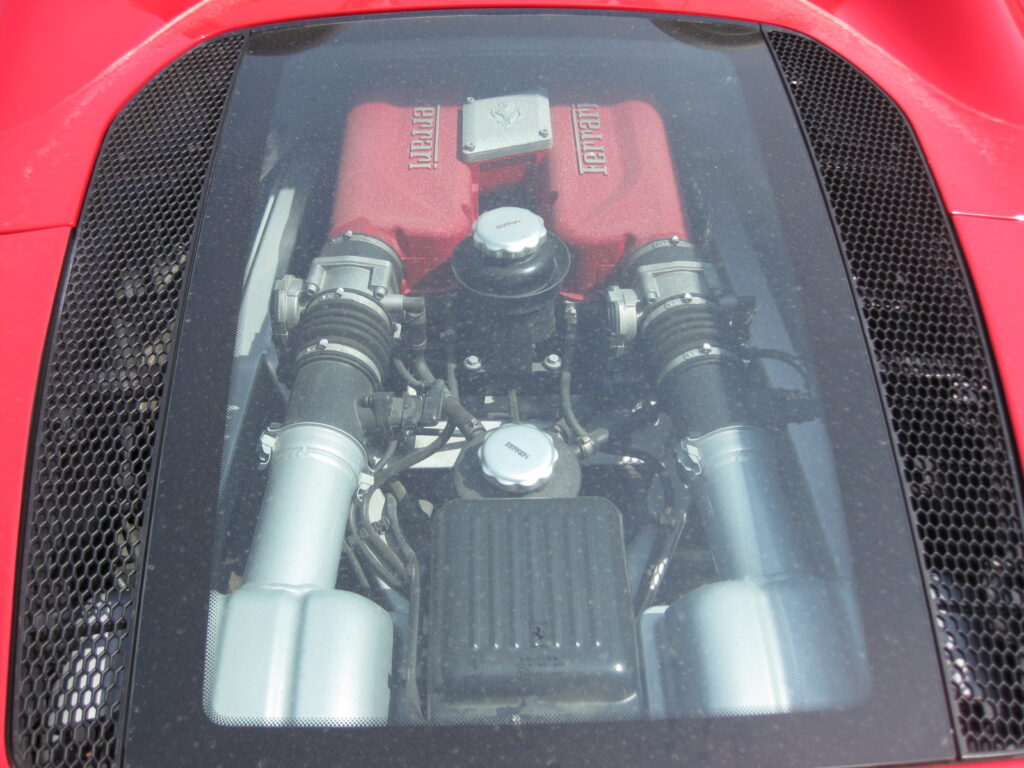
Underneath the curves was a wind-tunnel-developed shape generating genuine downforce rather than decorative aggression, and the 360 introduced the glass engine cover that put the red crackle-finish intake plenums on display — a detail Ferrari has returned to repeatedly since. Ferrari’s own recently revealed electric car, the Luce, uses circular twin taillights that read as a direct callback to the 360’s rear end, which tells you something about how the design is now regarded inside Maranello.
The other thing the 360 introduced was usability. Where the F355 demanded commitment, the 360 could be driven to work. Visibility was good, the ride was tolerable, the cabin was cleanly laid out, and the maintenance schedule no longer required the engine to come out of the car for a belt service. Mileages on surviving 360s tend to run higher than on earlier Ferraris for exactly this reason — people actually used them. It became the best-selling Ferrari the company had built to that point, and it comfortably outsold the F355 it replaced.
The Full 360 Variant Lineup
Body styles:
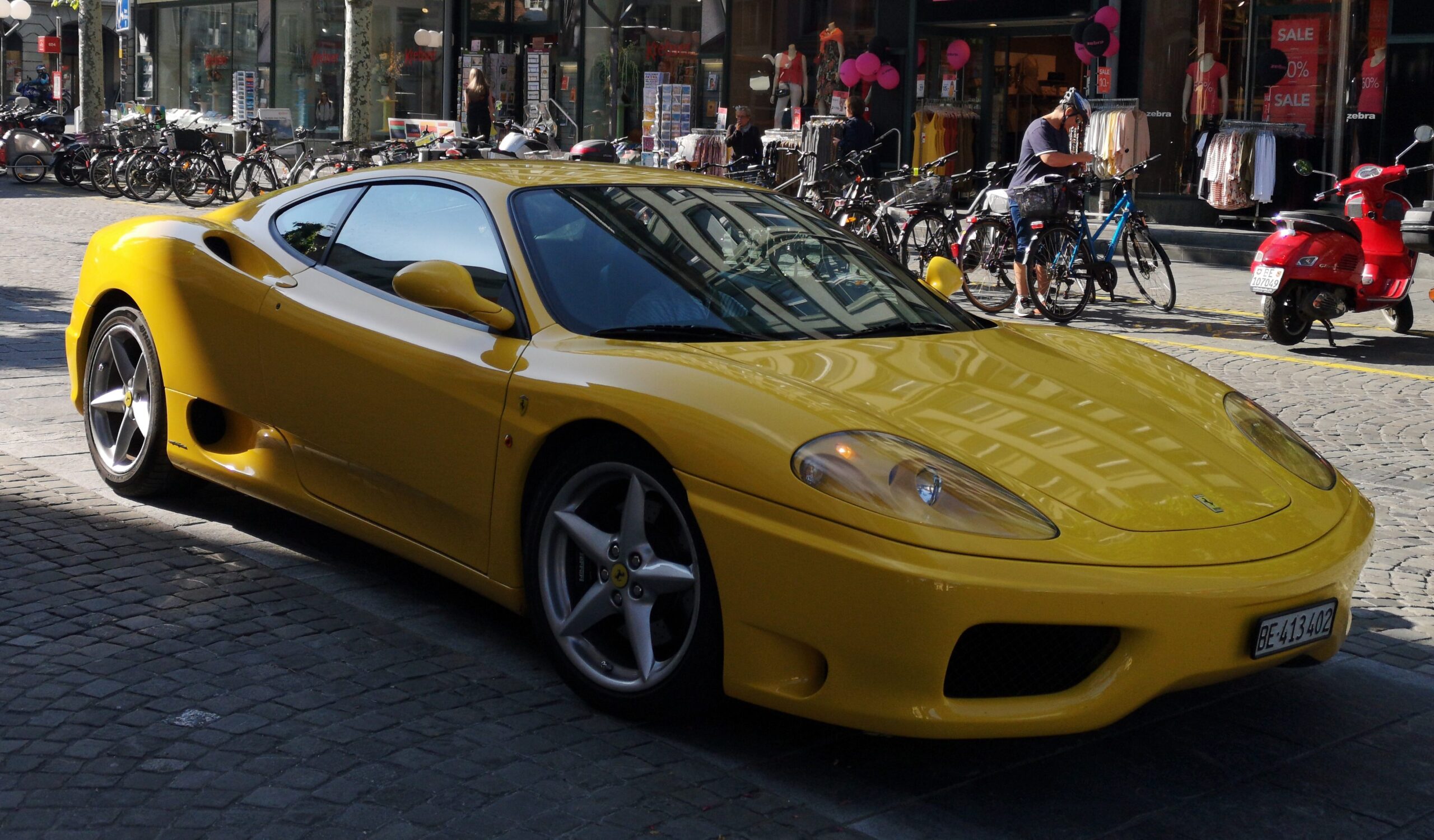
- Modena (Coupe) — The fixed-roof coupe and the first body style to launch, at Geneva in March 1999. 8,800 were built worldwide. The purist’s choice and the version most people picture when they hear the model name.
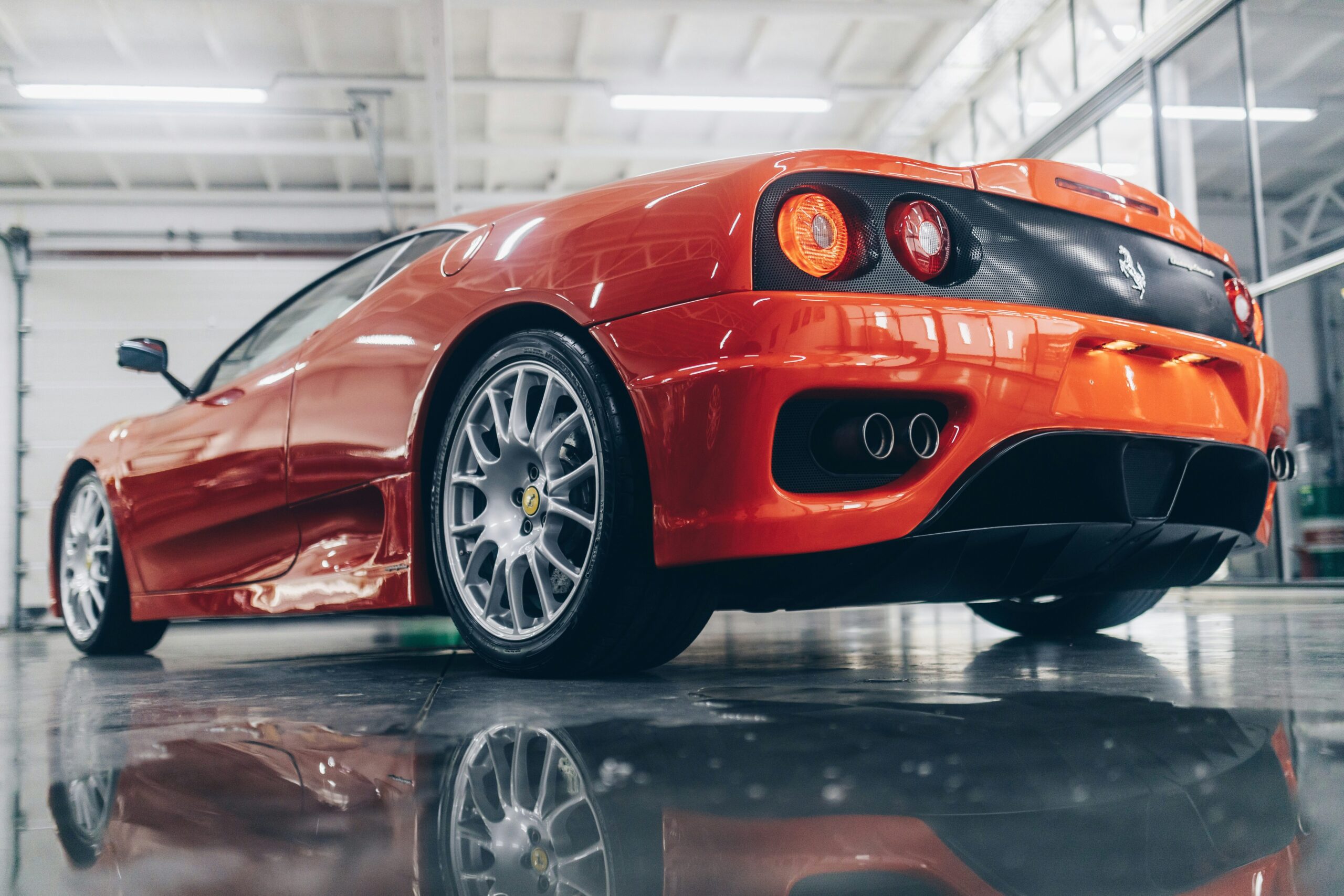
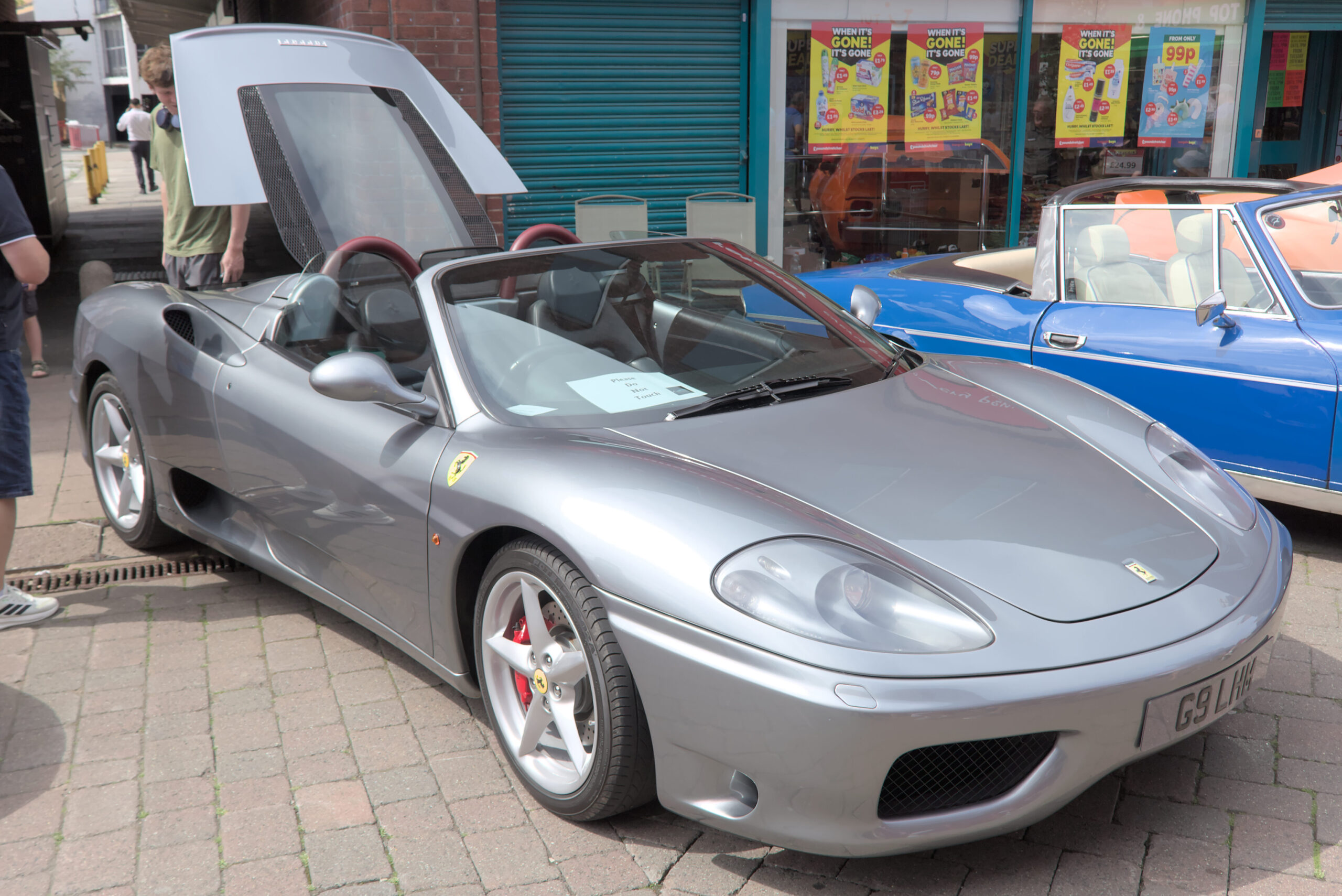
- Spider — Full convertible, introduced in 2000. 7,565 were built worldwide, making the split with the coupe closer to even than on any previous mid-engined Ferrari. Critically, Ferrari engineered the Spider alongside the coupe from the start rather than cutting the roof off a finished car, and the aluminum structure meant torsional rigidity stayed high and scuttle shake stayed low. The fabric roof is fully automated and stows beneath a solid tonneau. No targa option was offered — the F355 GTS had no successor.
Transmission options:
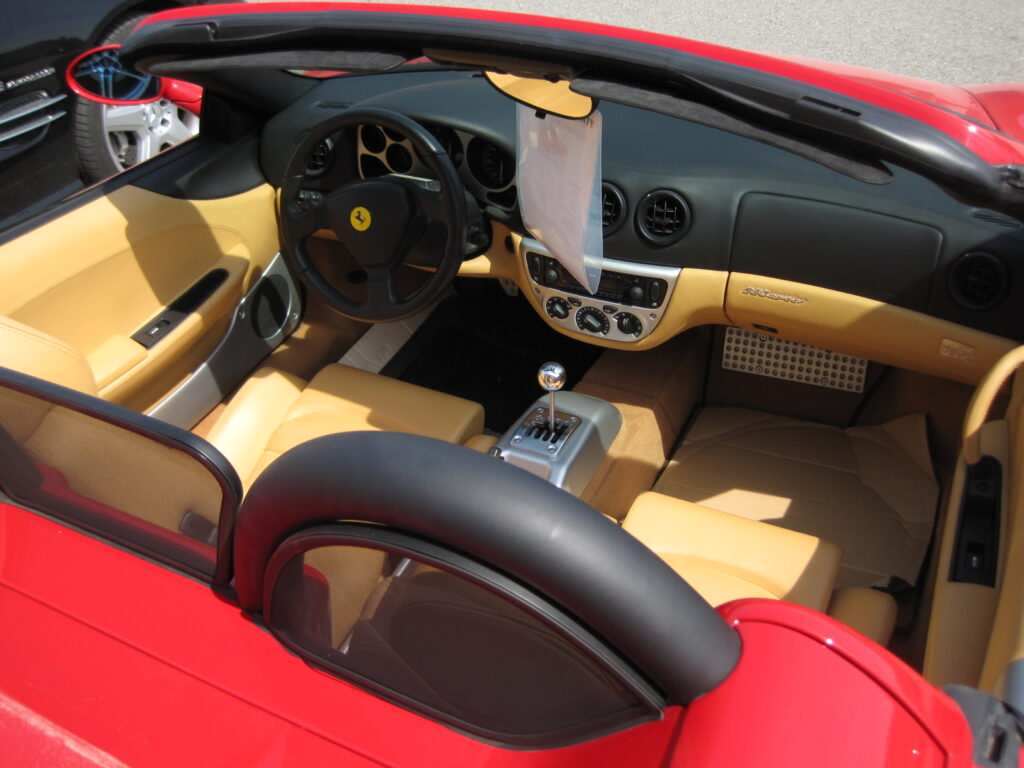
- Six-speed manual — Open metal gate, the standard fitment across the range. Of the 8,800 Modenas built, 2,630 left the factory with it; of the Spiders, 2,119 did. In the US market the numbers are smaller still: 469 manual Modenas and 670 manual Spiders out of 4,199 cars delivered. Roughly 30% of global production, and a materially smaller slice of the American pool.
- F1 automated manual — A six-speed single-clutch paddle-shift box, hydraulically actuated, evolved from the system first offered on the F355. This was the extra-cost option and the one the clear majority of original buyers chose. It shifts quickly enough when driven hard and is at its worst in stop-start traffic, where it is both jerky and hard on clutches.
Special and racing editions:
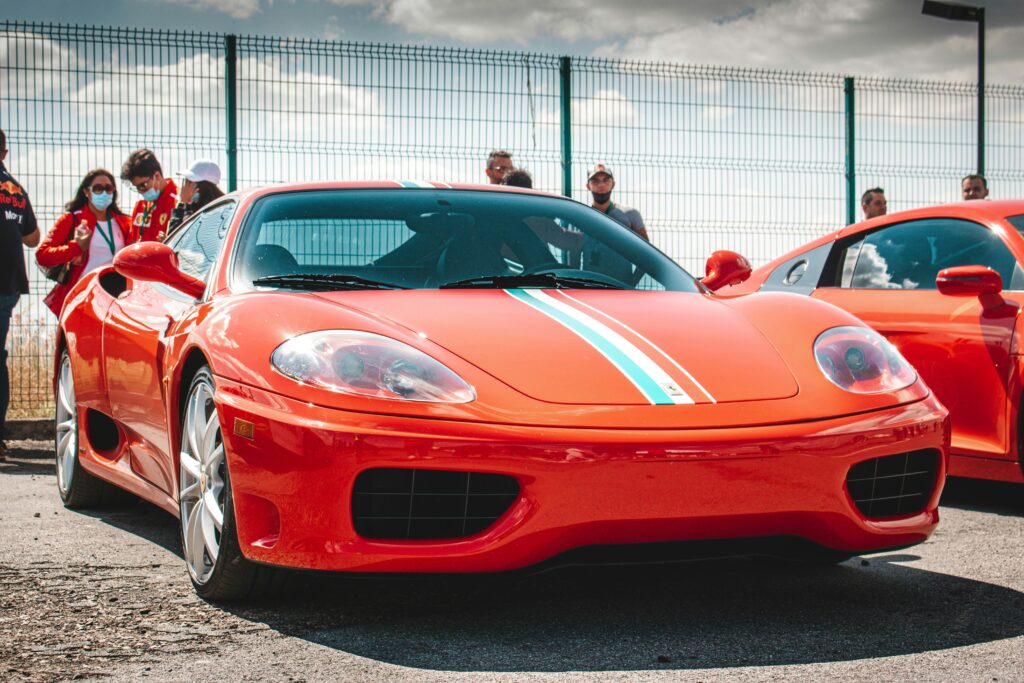
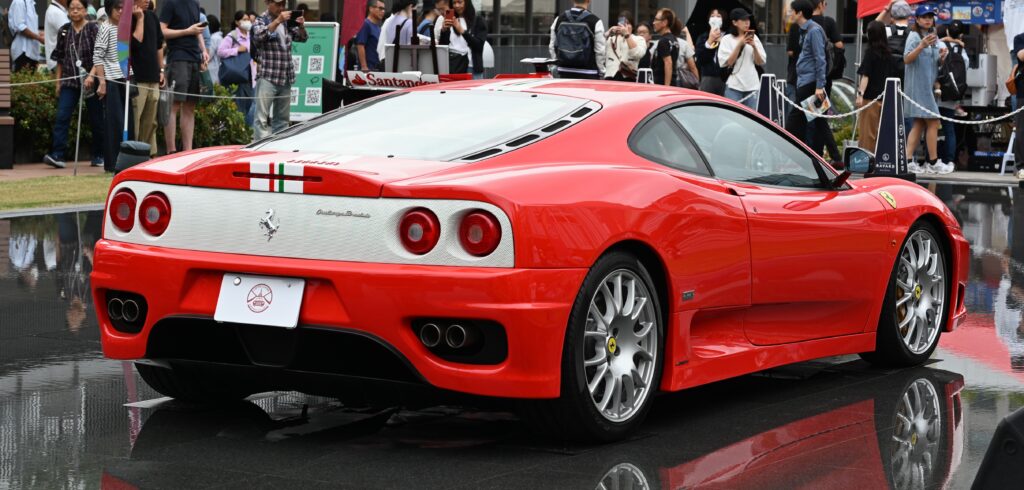
- 360 Challenge Stradale (2003–2005) — The road-legal distillation of the Challenge race car and the founding member of the track-focused V8 berlinetta line that later produced the 430 Scuderia and the 458 Speciale. Power rose by roughly 25 hp to 425 PS (419 hp), and up to 110 kg (240 lb) came out if every lightweight option was specified: Lexan side windows with sliding racing openings, Alcantara in place of leather, carbon-fiber body and cabin parts, and carbon-ceramic brake discs derived from the Enzo. Ferrari also revised the F1 software for faster shifts. 1,288 were built, and the Challenge Stradale was never offered with a manual gearbox from the factory.
- 360 Modena Challenge (from 2000) — The one-make series race car, built as a distinct model rather than a retrofit kit for the first time in Ferrari’s Challenge history, and prepared by official tuner Michelotto.
- 360 N-GT (2001–2004) — A further evolution of the Challenge car developed by Michelotto for the FIA N-GT class, racing against the Porsches and Vipers of the period.
One-off curiosity worth knowing about: a single 360 Barchetta was commissioned by Gianni Agnelli as a wedding gift for Luca di Montezemolo. It has never been for sale and never will be.
Across every road variant, Ferrari built 17,653 360s between 1999 and 2005. That number is the reason this car is still relatively affordable (at least was when the article was written), and the reason its ceiling is lower than the F355’s or the F430’s for anything other than a Challenge Stradale.
The Ferrari 360 Investment Market
The 360 market splits along one line above all others, and it is not body style. It is the gearbox. According to Classic.com US auction data, the average sale price across every 360 variant is around $190,000, with recorded sales running from a low of $36,800 for a 2003 Spider in September 2022 up to $1,870,000 for a 2004 Challenge Stradale in January 2026 — a spread of more than fifty to one within a single model line.
Break it down by configuration and the pattern is immediate. The Modena with the F1 gearbox averages roughly $89,577, with a recorded low of $38,669. The Spider with the F1 gearbox averages roughly $94,227. Both remain within reach of a first-time Ferrari buyer with a realistic maintenance budget behind them.
The manual cars sit in a different bracket entirely. The manual Modena averages roughly $195,809 — a significant premium over an equivalent F1 coupe — and the manual Spider averages roughly $176,859. Asking prices at specialist dealers for low-mileage manual cars have pushed past $350,000 in 2026, which is a long way ahead of where the averages sit and a useful signal of where the top of the market thinks this is going.
Worth flagging: the UK and US markets do not agree on the size of that premium. Specialists quoted in Magneto’s 360 piece put the manual hard-top premium at up to 30% and openly question whether the gap is justified. American auction results show roughly double that. If you are buying, that divergence is worth understanding before you decide which side of the Atlantic to shop on.
The Challenge Stradale occupies its own tier. It averages roughly $760,000+ against a recorded low of $115,100 from March 2022. Recent public results tell the story better than the average does: $971,000 at auction in February 2026, $775,000 twice in the first half of 2026, and £326,500 through Collecting Cars in February 2026. The bargain window on this car closed several years ago.
A secondary market for manual-converted 360s also exists, where specialists retrofit a gated shifter into a car that left the factory with the F1 box. Classic.com tracks these separately and benchmarks them at $267,412. The market treats them as desirable but distinct, and prices them accordingly.
Ferrari 360 Investment Value Curve
Note: prices below reflect Classic.com US auction data at time of writing and will change over time.
| Variant | Entry | Average | High end |
|---|---|---|---|
| Modena, F1 | ~$52,000 | ~$90,000 | $170,000+ |
| Modena, manual | ~$60,000 | ~$195,000 | $440,000+ |
| Spider, F1 | ~$55,000 | ~$94,000 | $160,000+ |
| Spider, manual | ~$74,000 | ~$177,000 | $385,000 |
| Challenge Stradale | ~$262,000 | ~$764,000 | $1,870,000+ |
| Manual conversions | ~80,000 | ~$267,000 | $700,000+ |
Why It’s Going Up
The starting point is scarcity in the only configuration that matters. Around 30% of 360 production left the factory with the manual gearbox, and in the United States the figure is closer to a quarter. That is a much healthier ratio than the F430’s roughly 10%, which is precisely why the manual 360 is still buyable — but it is not an abundant car, and the pool only shrinks.
Ferrari has not built a manual road car of any kind since 2012, and has never offered one on a mid-engined model since the F430 ended production. There is no mechanism by which more of these appear. Every year a proportion of the surviving manual cars gets crashed, tracked into the ground, or stripped for a conversion donor, and the population steps down another notch.
The 360 has been on institutional radar for longer than most people realize. Hagerty put the 1999–2005 Ferrari 360 on its Bull Market List for 2020, noting at the time that the number of 360s moving from ordinary insurance policies onto Hagerty collector policies had climbed 211% in three years. That is the specific behavioral shift that precedes a price move: owners stop treating a car as a used exotic and start treating it as a collectible. Hagerty’s own guide to the model reaches the same conclusion from the other direction, describing the standard 360 as offering nearly all of the Challenge Stradale’s thrills for far less.
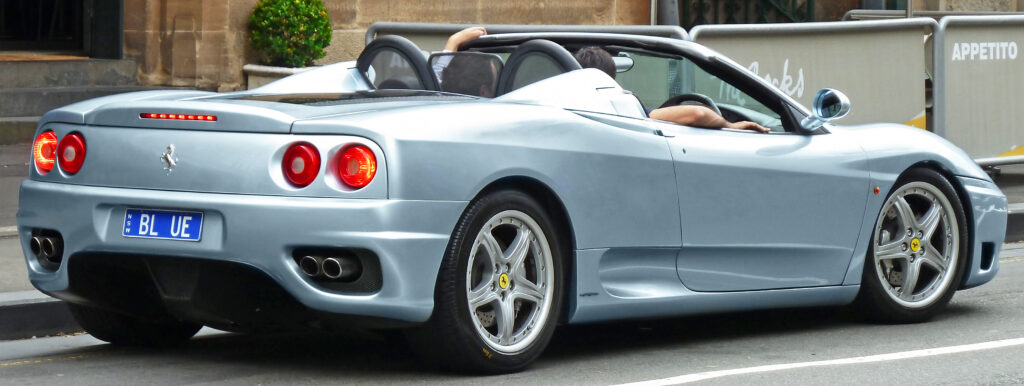
The maintenance argument matters more here than it does for most cars, because it directly addresses the thing that has suppressed F355 values for two decades. The F355 requires the engine to come out for its belt service. The 360 does not — an access hatch behind the seats lets a specialist reach the cam belts with the engine in place, which collapses the labor bill from five figures to something closer to a routine major service. For a buyer looking at naturally aspirated, gated-manual, mid-engined Ferraris and pricing the ownership risk, that single design decision moves the 360 from “brave” to “reasonable.”
The Challenge Stradale pulls from a different but related place. It is the first of Ferrari’s track-focused V8 specials, the direct ancestor of the 430 Scuderia and 458 Speciale, and it is widely regarded as one of the finest driving cars the company has produced in any era. With 1,288 built and F1-only from the factory, it has already completed the journey from used supercar to collector asset, and the results above show how far that journey went.
Finally, there is the position the 360 occupies in the lineage. The F355 is the beautiful one. The Ferrari F430 is the last manual one. The 360 has spent twenty years without a comparable one-line story, which is exactly why it has stayed cheap. Its story is being written now, and it is a straightforward one: this is where the analogue mid-engined Ferrari experience is still on sale.
A specialist quoted by Magneto put the buying advice more concisely than any market analysis can: “I’d go for a low-mileage, late, manual Modena”
Common Ferrari 360 Problems
The 360 has a genuinely better reliability reputation than the Ferraris either side of it, and that reputation is deserved. It is not, however, a cheap car to run badly. Every issue below is documented, understood, and fixable — the question on any specific car is whether it has been dealt with and whether there is paper to prove it.
- Exhaust manifolds and pre-cats. The single most important check on the car. The original manifolds house pre-catalytic converters, and sustained heat breaks down the ceramic substrate inside them. If that debris gets drawn back into the engine it scores the cylinder liners, and the repair is a full rebuild. Prioritize cars where the manifolds have already been replaced with aftermarket headers from a recognized manufacturer such as Capristo or Tubi — that swap eliminates the failure mode and is worth paying for.
- Cam belt service. Ferrari’s interval is every three years without exception, and the 360’s valvetrain is an interference design, so an overrun belt is not a maintenance question but an engine-replacement question. The good news is the access hatch behind the seats: the engine stays in the car. Collecting Cars puts the belt service at £1,500–£3,000 depending on what else gets done alongside it, with an annual service running £1,000–£1,500.
- Cam variators (pre-2001 cars). Early cars suffered failures in the variable valve timing units, which can result in valve-to-piston contact. Ferrari addressed this under service — Campaign 97 — and most cars were rectified at dealer level. On any pre-2001 example, look for the specific evidence in the history file rather than accepting an assurance.
- F1 pump relay. The factory relay is prone to sticking closed, which leaves the hydraulic pump running continuously until it burns itself out. Owners who know the car replace it preemptively with a heavy-duty 50-amp unit. If a car has not had this done, treat it as a same-week job rather than a maintenance item.
- F1 accumulator and pump. Opening the driver’s door should produce an audible priming whine from the pump. That is normal. What is not normal is the pump cycling every few seconds during driving, which points to a failing pressure accumulator. Actuators can also leak hydraulic fluid, so any inspection should include dropping the undertrays.
- Gearbox heat exchanger. The gearbox oil is cooled by a heat exchanger sitting in the V of the engine, and these corrode internally with age. When one lets go, coolant mixes with gearbox oil and produces the pink emulsion Ferrari specialists refer to as strawberry milkshake — at which point the clutch and transmission are finished. Many owners bypass the unit or fit an upgraded aftermarket part to remove the risk entirely.
- Clutch life. Both transmissions use a single-plate clutch, good for up to around 30,000 miles. F1 cars driven mostly in traffic will fall well short of that. Ask for a documented clutch wear reading on any F1 car before making an offer.
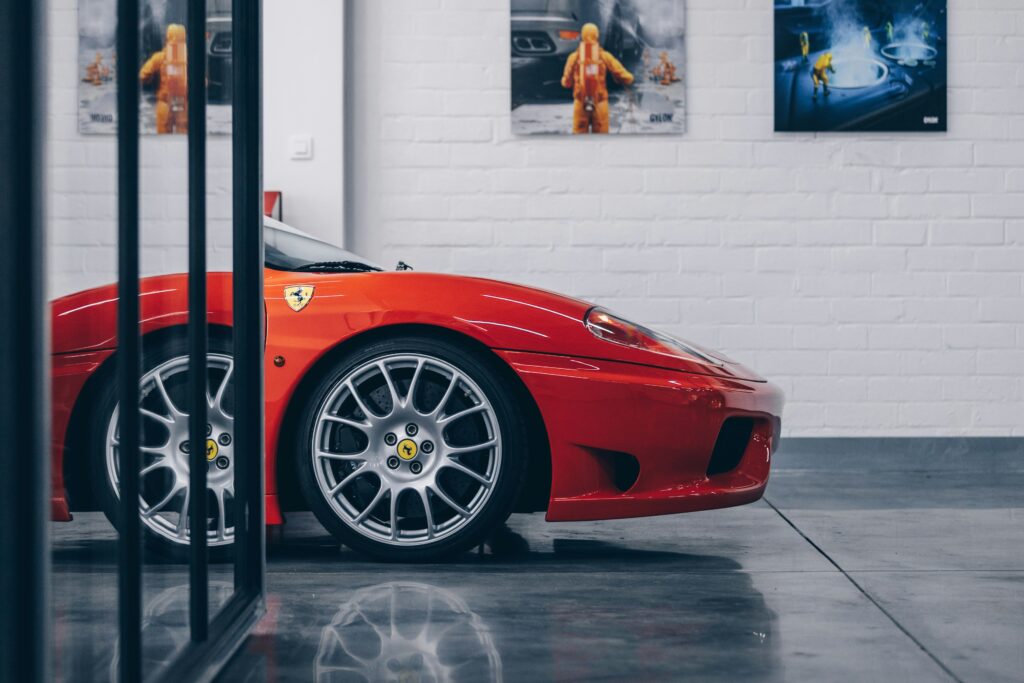
- Ball joints and rear tie rods. The 360’s most consistent chassis complaint. Upper and lower ball joints and rear tie rods develop play at intervals as short as 10,000–15,000 miles. Knocking or creaking over speed bumps on a test drive is the signature symptom. Upgraded aftermarket joints from Hill Engineering last considerably longer than the factory parts.
- Engine mounts. The hydraulic mounts perish over time, and the resulting vibration transmits straight into the exhaust headers — meaning tired mounts actively accelerate the manifold problem above. Worth addressing together rather than separately.
- Aluminum oxidation. The spaceframe cannot rust, but aluminum oxidizes, and it shows up as bubbling paint on the nose, around the mirror bases, and at the rear roof struts and buttresses. The more serious check involves removing the front undertray to inspect the chassis legs, where water pools and sits.
- Alarm siren battery. The factory siren contains an internal Ni-Cad cell that leaks acid onto its own circuit board as it ages. The damage does not stay local — it can blow fuses controlling other systems, including climate control. A solid red LED on the dash is the standard warning sign.
- Sticky switchgear. The soft-touch coating on interior buttons and dials degrades into a tacky residue that transfers onto your hands. It is cosmetic but it makes an otherwise good car feel neglected. Specialists strip and refinish the parts; SportsItalia quotes around £2,000 to do an entire interior.
- Spider roof mechanism. The electric roof relies on sensors and microswitches, and faults usually trace back to those rather than to the hydraulics. Roof elastics also fail with age, which allows the plastic rear screen to fold inward. Fabric stretches slightly over time as a matter of course, but tears and worn patches are a different conversation. Nothing about a faulty 360 roof is a quick fix.
What to Look for in a Good 360 Investment Car
No collector market rewards a formula, but a few factors consistently separate the 360s that will hold and build value from the ones that will drain it.
Service History
On a car whose main failure modes are all preventable, the file is the asset. What you specifically need to see: belt service dates and who performed them, manifold status or header replacement, variator recall evidence on pre-2001 cars, clutch wear readings on F1 cars, and any heat exchanger work. A 360 with a thin history is not a cheaper 360 — it is an unpriced liability, and it should be treated that way in negotiation or walked away from.
Cam Belt Status
Ask the date, not the mileage. Three years is the interval regardless of how far the car has been driven, and cars that sit are at more risk than cars that get used, because tensioners can release oil and let belts slacken during long storage. A recent, documented belt service from a recognized specialist changes the risk profile of the entire purchase. If it is overdue or undocumented, price it in as an immediate cost.
Transmission
Buy the manual. This is not a taste question on the 360 — it is the single largest determinant of both driving experience and resale value. Manual Modenas average roughly 42% more than F1 coupes and manual Spiders roughly 95% more than F1 Spiders, and both gaps have widened rather than narrowed over the past five years. Only about 30% of production was built this way, and no more will ever exist. If a factory manual is genuinely out of reach, a professionally executed conversion is a legitimate lower tier — the market values them well above F1 cars and well below factory originals, and that pricing is correct.
Body Style
The Modena is the purist’s pick and the one with the cleanest investment logic: it is the original body style, it is the one the Challenge Stradale is based on, and it appeals to the widest pool of future buyers. The Spider is unusually strong for a convertible because Ferrari engineered it in parallel with the coupe rather than as an afterthought, and the values reflect that — manual Spiders currently average slightly above manual Modenas. The Spider does carry the roof mechanism as an additional risk, so verify it works through a full cycle before committing.
Colors
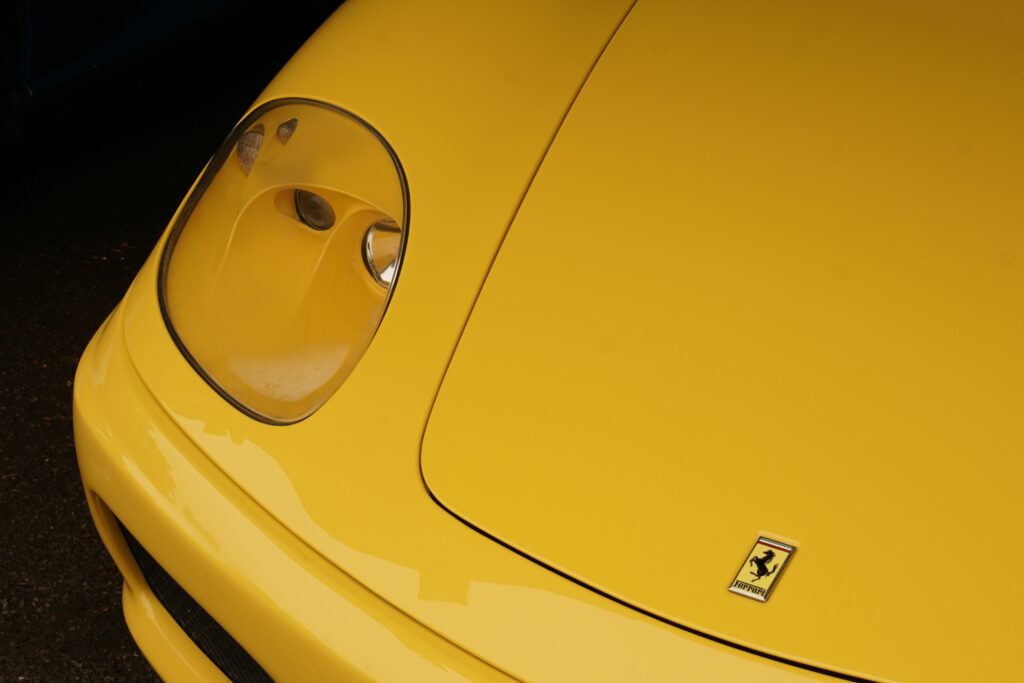
Rosso Corsa over Crema is the default specification and it draws reliable demand for good reason. But the standout individual results tend to come from the less common choices — Giallo Modena, Blu Tour de France, Grigio Titanio, and Nero Daytona have all produced strong money at auction, particularly with a contrasting interior. A rare factory color on a manual car is the strongest combination this market currently offers. Silver over black is the most common combination on the market and the least interesting from a value perspective.
Condition Integrity
Originality carries real weight at this price point. Confirm the toolkit, the owner’s books and service records, and the spare wheel or tire-repair kit are present, because they are frequently sold off separately and are expensive to replace. Check that any carbon-fiber trim or Challenge Stradale-style parts are genuine rather than aftermarket copies. Challenge Stradale wheels can be retrofitted to a standard Modena, which looks good but costs ride quality and requires the correct titanium bolts — know which car you are actually looking at.
Pre-Purchase Inspection
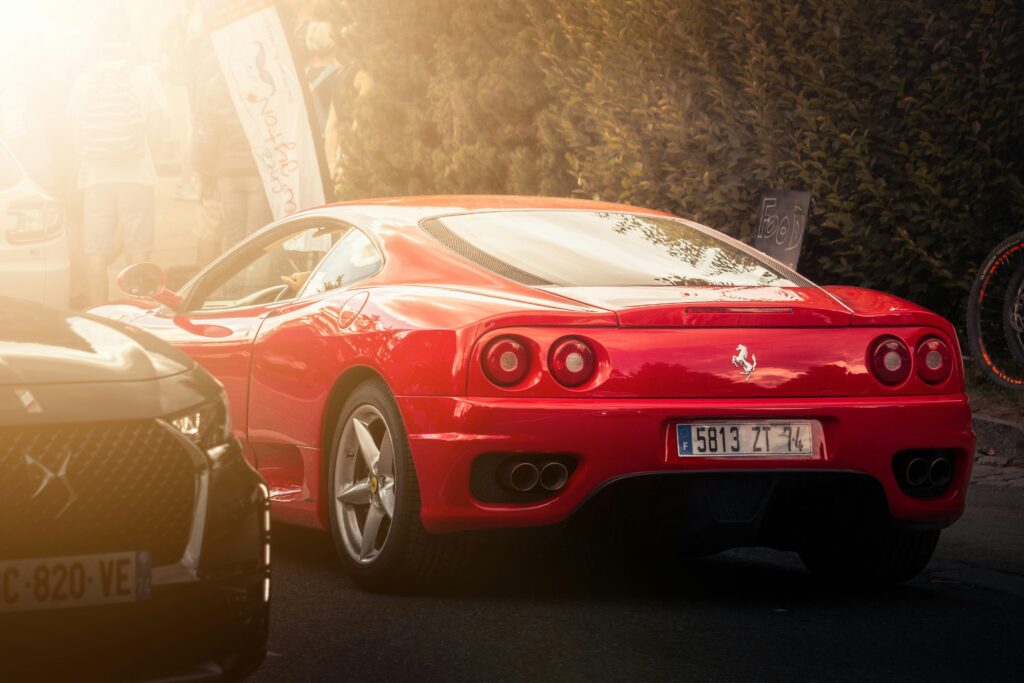
Use a specialist who works on 360s regularly rather than a general exotic shop. A proper inspection should include a borescope look at the exhaust manifolds and pre-cats, belt service verification, variator recall confirmation on early cars, a documented clutch wear reading and actuator leak check on F1 cars, heat exchanger condition, ball joint and tie rod play, an undertray-off look at the chassis legs, and a full cycle of the roof on a Spider. This is not a car to buy from photographs.
Best Ferrari 360 Investment Tiers
Tier 1
Challenge Stradale — 1,288 units, F1-only, the founding V8 special
The Challenge Stradale has already been repriced by the market and there is no argument left to win about it. It is the first of the track-focused V8 berlinettas, the direct ancestor of the 430 Scuderia and 458 Speciale, and it holds a reputation among people who have driven everything as one of the greatest road cars Ferrari has built. It was never offered with a manual, and its value has never depended on one. Public results between $775,000 and $971,000 through 2026 put it firmly in collector territory, and the entry point is now a multiple of what a good manual Modena costs. This is a hold, not a find.
Tier 2
Manual Modena, low mileage, late production, exceptional condition
The clearest investment-grade 360 available at a rational price. A late-production manual coupe avoids the early cam variator concern entirely, carries the strongest scarcity story in the standard range, and appeals to every buyer who will ever want a manual 360 — which is a growing group. With 2,630 built worldwide and only 469 delivered to the United States, supply is genuinely constrained. Verify the belt service, confirm the manifolds have been addressed, and buy the best-documented example you can find rather than the cheapest one that looks right.
Tier 3
Manual Spider in strong specification and documented condition
The manual Spider currently averages above the manual Modena, which is unusual and worth understanding: it reflects both the scarcity of the configuration and the fact that Ferrari engineered the Spider properly from the beginning rather than converting a coupe. Open-top, naturally aspirated, gated manual, mid-engined Ferrari is a specific and increasingly rare combination. The roof mechanism is the one meaningful additional risk, so a car with recent, documented roof work is worth a premium over one without.
Tier 4
Well-documented F1 Modena with headers and full history — the accessible entry
An F1 coupe is not where the appreciation story lives, and this guide is not going to pretend otherwise. But a properly sorted F1 Modena with aftermarket headers already fitted, a recent belt service, a healthy clutch reading, and a heat exchanger bypass is the cheapest legitimate route into naturally aspirated mid-engined Ferrari ownership that currently exists. It will not outperform the manual cars, but it will hold value better than most 20-year-old exotics, and it lets you own the car now rather than watching the manual market from outside.
Avoid
F1 cars with unknown clutch condition or no belt history regardless of how good the photographs look, any car still running original manifolds where the seller cannot document a recent borescope inspection, pre-2001 cars with no evidence of the variator recall, Spiders with a roof that has not been cycled in front of you, heavily modified examples that have moved away from factory specification, and manual conversions priced as though they were factory originals. That last one matters — the market has already separated converted cars from factory cars, and paying factory money for a conversion is simply overpaying.
The Ferrari 360 Investment Verdict
The 360’s investment case does not rest on a single dramatic fact the way the F430’s does. It rests on position. This is the cheapest surviving route into the combination that the collector market has decided it values above everything else in modern Ferraris: naturally aspirated, mid-engined, and shifted by hand through an open metal gate.
The volume that has kept the 360 affordable — nearly 17,000 cars — also caps its ceiling. Nobody should buy a manual Modena expecting Challenge Stradale returns. What they should expect is a car with a documented floor under it, a maintenance profile that is genuinely manageable compared to the F355, a scarcity story in the manual configuration that only gets stronger, and a design that has aged into wide admiration after a cool reception.
The Challenge Stradale is already priced as the collector car it is. The manual Modena and manual Spider are the actionable positions, and the F1 cars are the honest way to own one now if the manual money is not there.
Buy the manual if you can. Check the manifolds before anything else. Get the belt service documented. Confirm the variator recall on early cars. Then drive it, because the whole argument for this car falls apart if it sits in a garage — and unlike most of the Ferraris it is compared with, the 360 was built to be used.
Classic Car Gang covers the modern classics market with no editorial filters. If you found this useful, check out our other articles.

Marko Mikulic is a classic and modern classic car writer with over a decade of hands-on enthusiasm. He has published more than 10,000 automotive articles with bylines at Jalopnik, SlashGear, The Driver Advisor, and CarArac. He owns a Mercedes R129 SL — having previously owned an R107 and a BMW E30 M3. He founded Classic Car Gang to cover the cars worth buying, owning, and investing in, without editorial filters.