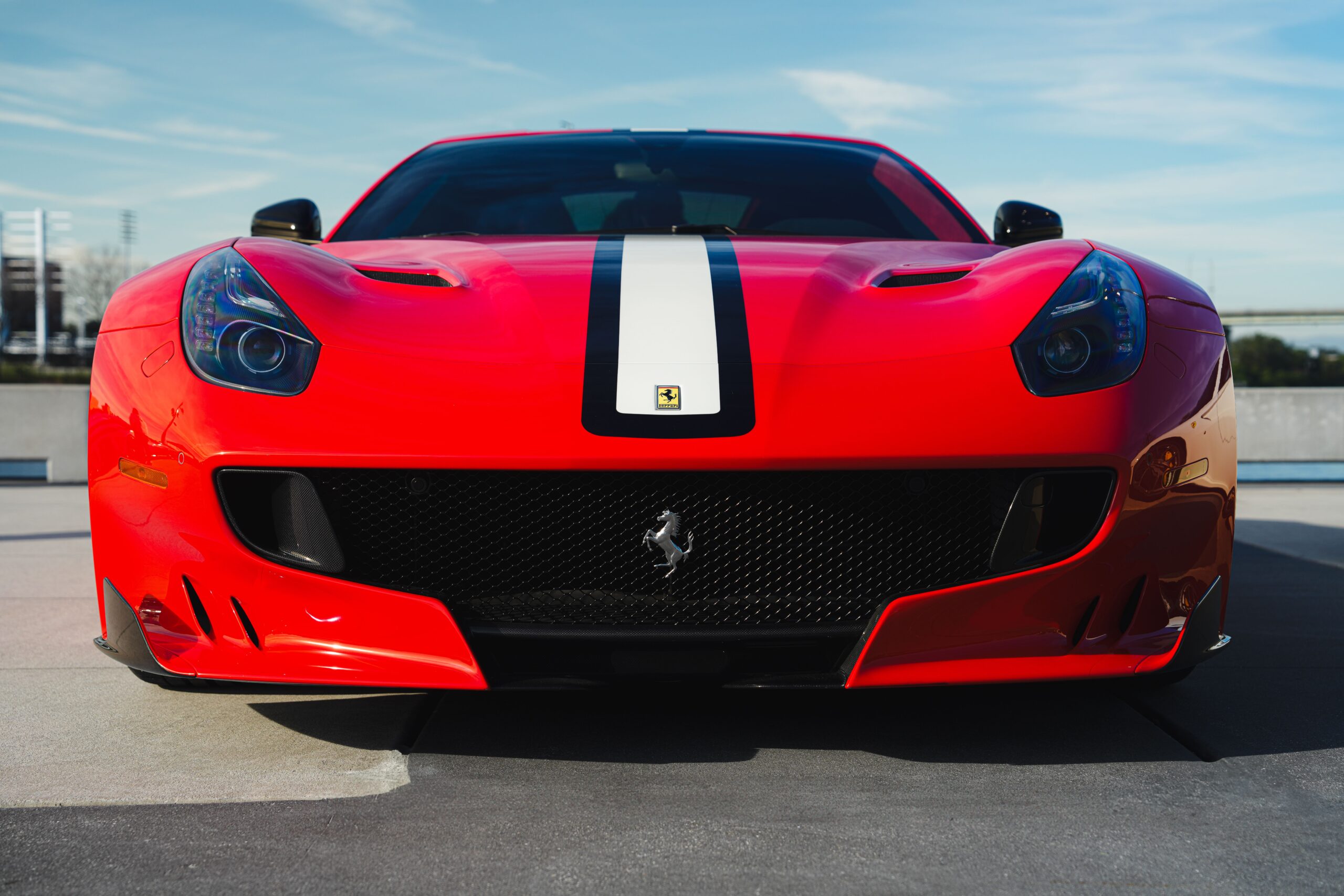

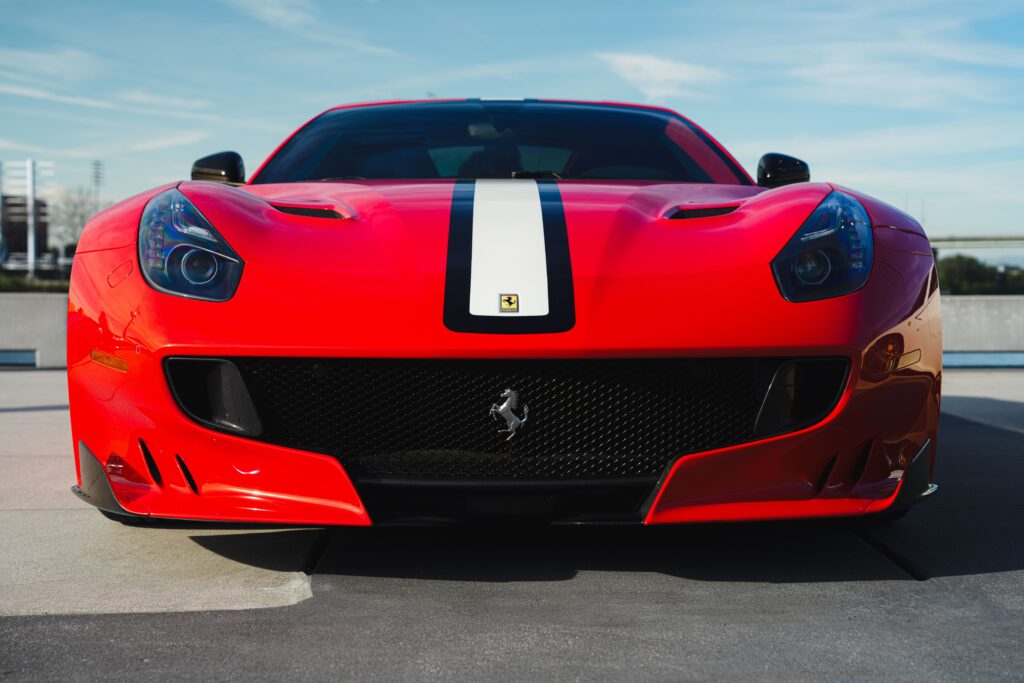
The Ferrari F12 replaced the Ferrari 599 GTB Fiorano in 2012 as Ferrari’s flagship front-engined V12 GT, and it holds a distinction none of Ferrari’s mid-engined V8s from this era can claim: it’s the last Ferrari penned by Pininfarina, the coachbuilder Ferrari leaned on for its entire road car catalog going back to 1951, before the company handed the next car in this line, the 812 Superfast, to its own in-house studio.
In many people’s eyes, the F12 is the scary V12, the Ferrari that turned the traditional front-engined grand tourer into something genuinely intimidating. With 730 horsepower, razor-sharp steering, and a rear end that always feels ready to move, it demands more respect than its elegant shape suggests. That tension between grand-touring refinement and barely contained aggression is what gives the F12 so much of its character, and it is a big part of why enthusiasts still can’t get enough of it.
The F355, F360, F430, and 458 guides on this site all cover Ferrari’s mid-engined V8 line, but this Ferrari F12 investment guide turns to something very different. Here, we look at the full F12 range, what buyers are paying today, the problems worth knowing about, and which versions make the strongest case as modern collectible Ferraris.
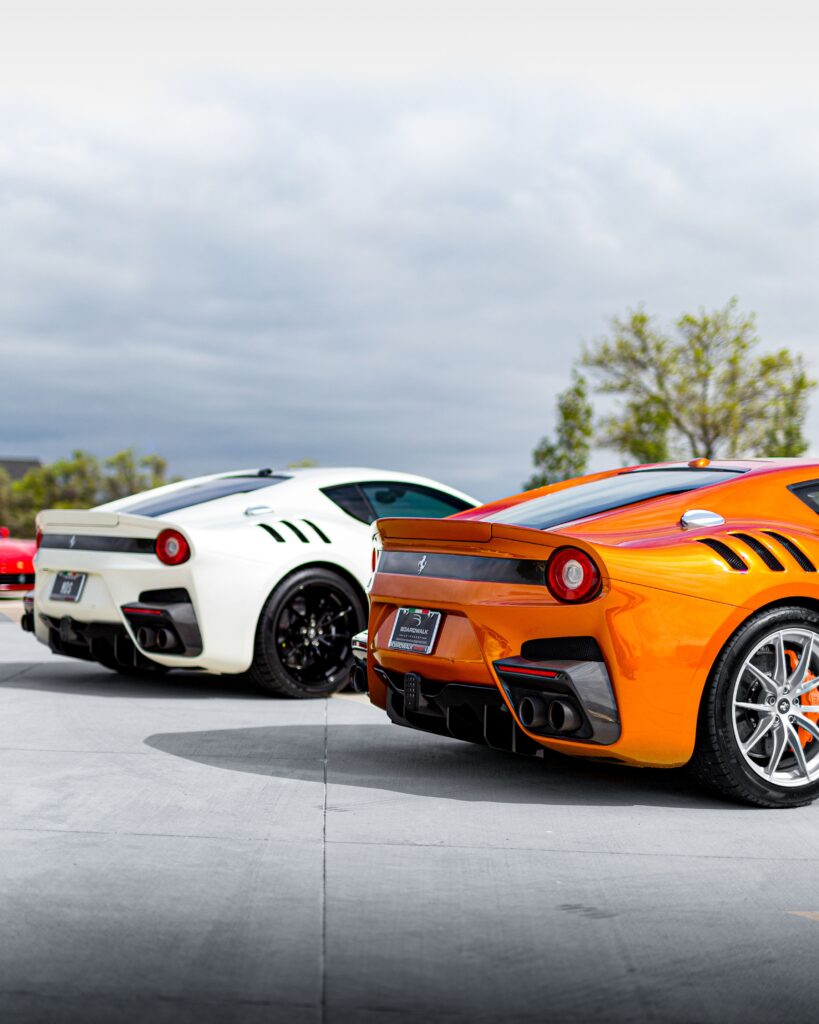
Table of Contents
Meet the Ferrari F12
Ferrari unveiled the F12berlinetta at the 2012 Geneva Motor Show as the replacement for the 599 GTB Fiorano, with US deliveries beginning for the 2013 model year. The body was a joint effort between Ferrari’s own Styling Centre, under design chief Flavio Manzoni, and Pininfarina, and it turned out to be their final full collaboration: when it came time to design the F12’s successor, Ferrari’s management picked Manzoni’s in-house pitch over a competing Pininfarina proposal, ending a design partnership that had run since 1951.
Under the hood is a 6.3-liter naturally aspirated V12, the F140 FC, producing 730 horsepower at 8,250 rpm and 509 lb-ft of torque at 6,000 rpm — at launch, the most powerful road-going Ferrari ever built. It’s paired exclusively to a seven-speed Magna dual-clutch transmission; Ferrari never offered a manual F12. The result is 0-60 mph in 3.1 seconds and a top speed over 211 mph, delivered through a chassis roughly 155 lbs lighter than the 599 it replaced and with 76 percent more downforce, generated in part through the F12’s signature “aero-bridge” ducts cut into the front fenders.
Evo called the F12 “one of the best engines known to man,” and put its Fiorano lap time ahead of both the Enzo and the track-focused 599 GTO — a genuine leap over the car it replaced. Jeremy Clarkson’s Top Gear review of the F12, filmed in Hertfordshire for Series 20, landed on a similar verdict about the chassis underneath all that power: unlike Ferrari’s older big front-engined cars, this one was “light and nimble and sharp.”
The F12’s V12 went on to win the 2013 International Engine of the Year award for Best Performance and Best Engine above 4.0 liters, and the car itself was named Top Gear’s Supercar of the Year for 2012.
Hagerty pegs the F12berlinetta’s original US sticker at $319,638 when it launched — a number that barely moved over the car’s five-year run; by the final 2017 models it had only crept up to $319,995. Every F12 also came with Ferrari’s complimentary seven-year maintenance program.
The Full F12 Variant Lineup
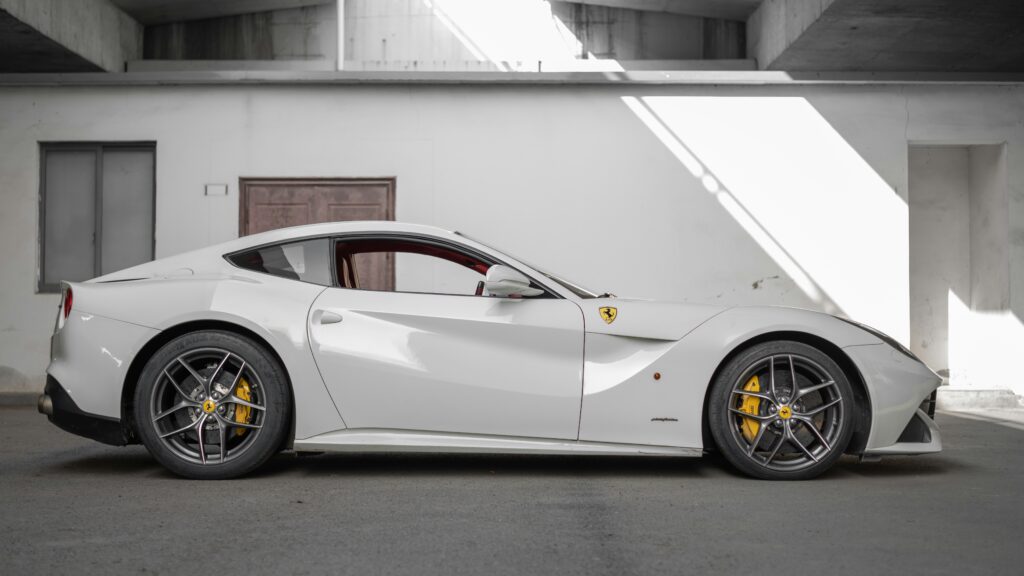
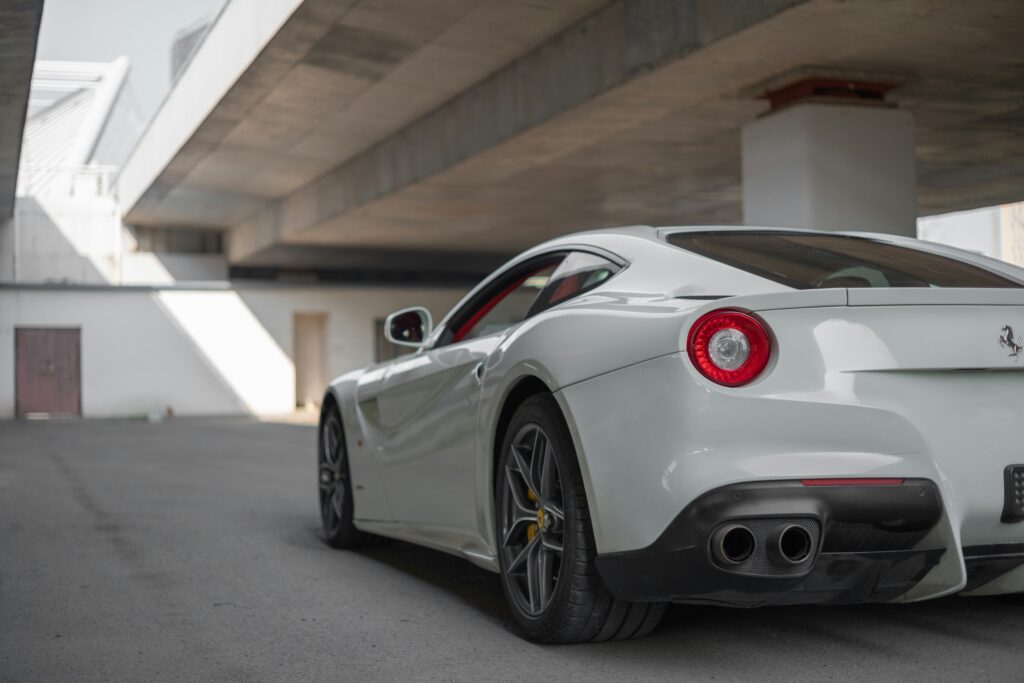
- F12berlinetta — The standard production car, sold in the US for model years 2013 through 2017. Ferrari has never published an exact production total, but the car was built in meaningfully greater numbers than any of the limited-run specials below it, which is the central fact any F12berlinetta investment case has to reckon with.
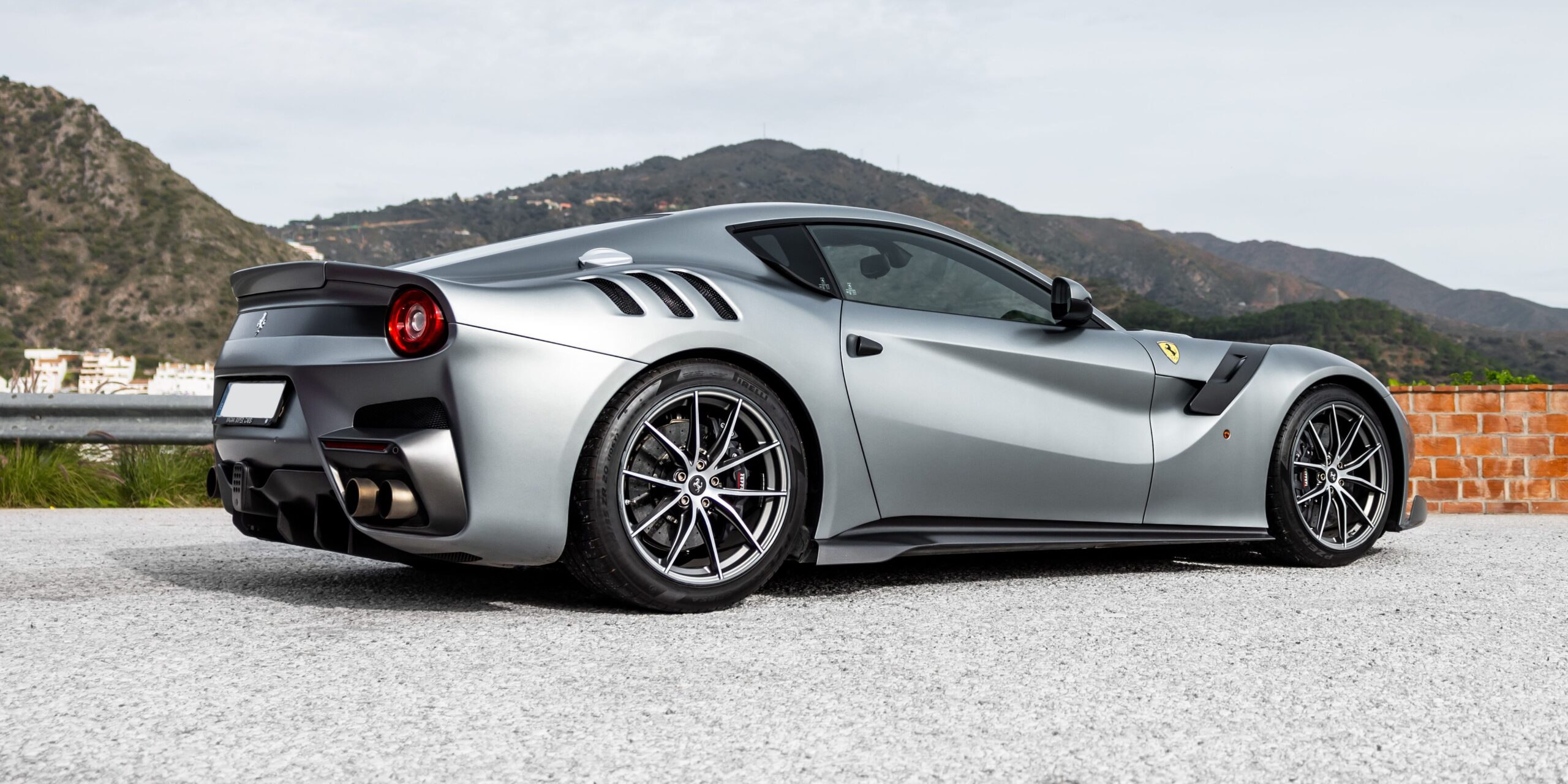
- F12 tdf — Ferrari pulled the covers off this track-focused variant in October 2015, and built it through 2017. The name (“Tour de France”) is a nod to the endurance road race Ferrari’s 250 GT Berlinetta dominated in the 1950s. Power rises to 769 hp at 8,500 rpm and torque to 520 lb-ft, while a 243-lb weight reduction brings curb weight down to roughly 3,351 lbs against the standard car’s 3,594 lbs. It was also the first Ferrari road car fitted with rear-wheel steering, a system Ferrari calls Virtual Short Wheelbase. Production was limited to 799 units worldwide, with duPont Registry putting the US allocation at roughly 230 cars, each one allotted to an existing Ferrari collector rather than sold on a first-come basis.
- F12berlinetta 70th Anniversary — For Ferrari’s 70th anniversary in 2017, the company’s Tailor Made program commissioned 70 heritage liveries applied across five models in the range, including the F12berlinetta, for a limited run of 350 celebratory cars total. That puts a ceiling of roughly 70 F12s finished in a unique 70th Anniversary livery, each one a genuine one-of-one within the model.
- F60 America — Built on the F12 platform with an open top and a lightweight removable soft top rather than a folding hardtop, this roadster was Ferrari’s tribute to its 60th year doing business in North America. Only 10 were built, and according to Ferrari, every one had a buyer lined up before the car’s October 2014 public debut. It trades almost exclusively in private collector-to-collector deals — Classic.com currently tracks zero active listings and no benchmark value for the model, which effectively removes it from any conventional investment discussion.
The Ferrari F12 Investment Market
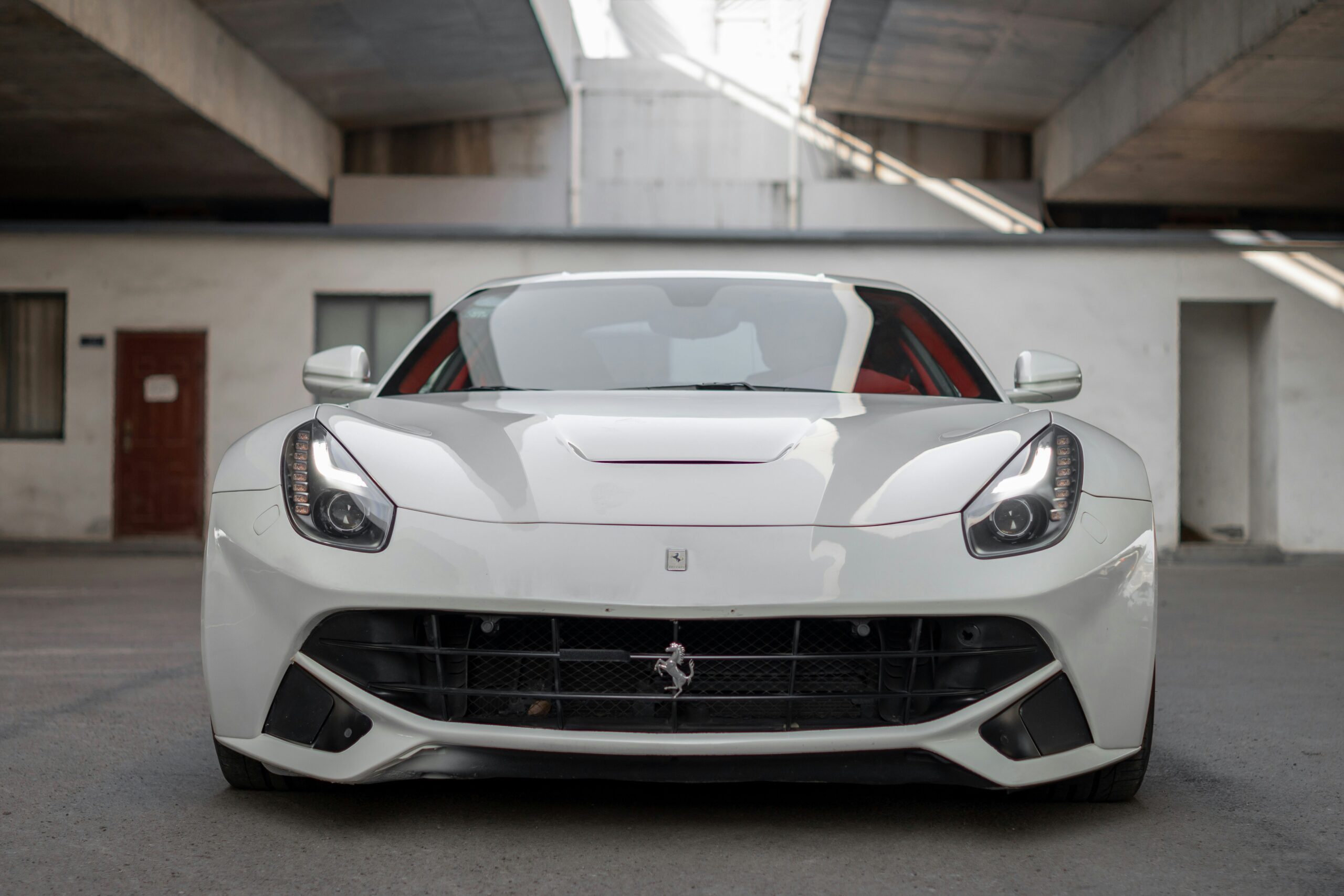
According to Classic.com US market data, the average sale price of a Ferrari F12berlinetta is $324,223, with the lowest recorded sale at $111,500 for a 2013 example on August 29, 2023. The current Market Benchmark for the F12berlinetta sits at $267,312. The F12berlinetta 70th Anniversary trades at a substantial premium, as its rarity would suggest: an average sale price of $654,540, a lowest recorded sale of $483,161, and a highest recorded sale of $770,000 on November 7, 2025.
The tdf market is where the real appreciation story lives. Classic.com puts the average tdf sale price at $2.6 million — a figure that blends the car’s entire trading history back to when tdfs first reached the secondary market. The single lowest recorded sale, $660,000 from August 2022, was a factory prototype rather than a standard production car and isn’t representative of what a genuine tdf actually costs today.
Recent verified US results tell the real story: Mecum sold a 799-mile 2017 tdf for $3,657,500 at Monterey in August 2026. Earlier in the year, on March 7, 2026, Broad Arrow sold a 2017 tdf for $4,185,000 — the highest confirmed price ever paid for any F12-family car.
Ferrari F12 Investment Value Curve
Note: prices below reflect Classic.com US market data at time of writing and will change over time. The tdf figures move quickly given how few of these cars trade in a given year, and the “Average” column for the tdf reflects its full trading history rather than current pricing — recent 2026 sales have run well above it.
| Variant | Entry | Average | High end |
|---|---|---|---|
| F12berlinetta | ~$190,000 | ~$324,000 | ~$690,000+ |
| F12berlinetta 70th Anniversary | ~$480,000 | ~$650,000 | $770,000+ |
| F12tdf | ~$1,100,000+ | ~$2,600,000 | $4,185,000+ |
Why It’s Going Up
The F12 sits at a genuine inflection point in Ferrari’s history, and that’s doing real work for its long-term case: it’s the last Ferrari Pininfarina had a hand in designing from the ground up, closing out a design partnership Ferrari relied on for essentially its entire road-going lineup for over six decades. That kind of clean, well-documented ending is exactly the sort of story collector markets tend to organize around.
It also helps that the F12 arrived right as Ferrari’s mid-engined line started going turbocharged — the 458 gave way to the 488 in 2015 — even though Ferrari’s own front-engined V12 flagships, including the F12’s own successors, have stayed naturally aspirated ever since. Ferrari’s V12 cars occupy a specific place in the collector hierarchy that’s held up better than the rest of the market, and the F12 is where that hierarchy starts.
The tdf is the clearest illustration of what that shift is worth in dollars. Hagerty puts the tdf’s original sticker at roughly $490,000 before options — and with a typical Tailor Made spec adding meaningfully more on top of that, real-world window prices commonly landed north of $600,000. By 2016, Hagerty’s own average quoted value for a tdf had already climbed to $532,250.
Two years later, that figure had reached $957,114. Today, per Classic.com, verified 2026 sales are landing between $3.6 million and $4.185 million — a car that started life around half a million dollars now regularly changes hands for eight times that.
The standard F12berlinetta hasn’t seen anything close to that trajectory, and that’s precisely the case for it as the accessible entry point into this era of Ferrari. Ferrari specialist dealer Ferrari FL says F12berlinetta values have “stabilized rather than depreciated,” and its own condition-based pricing splits the car into three bands: driver-grade cars at $210,000 to $260,000, well-specified cars at $260,000 to $360,000, and collector-grade, sub-5,000-mile examples at $300,000 to $650,000.
Those bands track closely with the Classic.com averages above, with the real daylight opening up only at the very top of the range — the same pattern this site has tracked across the F430 and 458 markets.
Common Ferrari F12 Problems
The F12 has a reputation as one of the more usable modern Ferraris — Autocar noted the car came close to winning its 2013 Best Driver’s Car title while still functioning as genuine daily transportation. That doesn’t mean it’s without known issues, and several are specific enough to the F12 that they’re worth checking on any car under consideration.
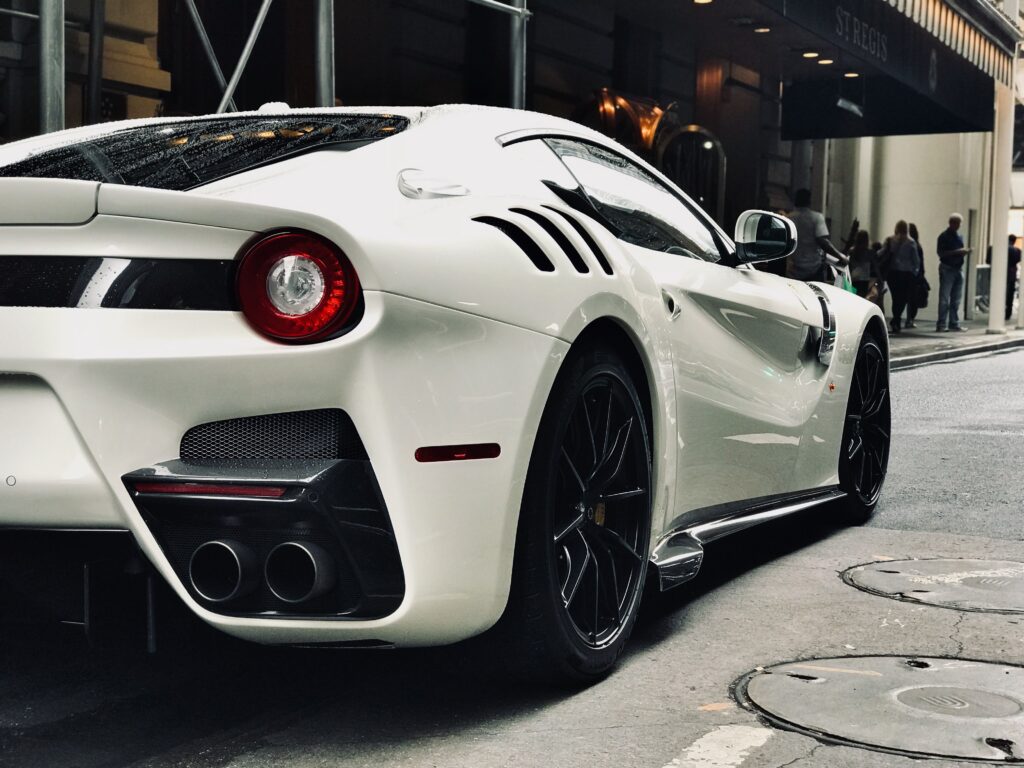
- Galvanic corrosion at the rear mesh vents. The most commonly cited F12-specific issue. Multiple owner and specialist sources, including Go-Parts and a PistonHeads ownership thread, trace it to a reaction between the vent’s steel mesh and the surrounding aluminum bodywork, one that accelerates once moisture gets trapped between the two metals. Fixes vary: some owners have gone through Ferrari for a warranty repair, while others have added a small nylon spacer between the mesh and the panel so the two metals never actually touch.
- DCT oil seal failure. Evo flags a known weak point in the seven-speed dual-clutch gearbox: an oil seal that isn’t easy to diagnose from a test drive alone, so it’s worth having a specialist put the gearbox on a lift rather than take a clean drive as proof of health.
- SCM-E magnetorheological damper leaks. Supercars.net points to the F12’s adaptive SCM-E dampers as another item worth a close look on any car that’s covered real miles or seen track time, since the fluid inside them can start to weep with age and change how the car rides.
- Minor engine and cooling seeps. Owners on PistonHeads describe occasional leaking seals and gaskets, plus the combined water/oil pump developing leaks over time — none catastrophic, none covered under warranty once it’s expired, but worth budgeting for on an older example.
- Water intrusion at the tailgate. A leaking third brake light seal has been reported to let water into the tailgate area; check for dampness or staining back there.
- Leather shrinkage. Evo notes the leather up top of the dash can shrink after enough time baking in direct sun — a cosmetic issue, but one worth factoring into any car that’s spent its life somewhere hot.
- Brake fluid reservoir cap recall. NHTSA Campaign 22V-536 covers every model-year 2013-2017 F12berlinetta and the model-year 2017 F12tdf for a brake fluid reservoir cap that could fail to vent properly and lead to a brake fluid leak. The fix — a new cap plus a software update — was performed free of charge at any Ferrari dealer. Confirm it’s been done.
- Airbag ECU recall. NHTSA Campaign 19V-411 covered 2015-2017 F12berlinettas and 2016 F12tdfs for an airbag control module that could malfunction and fail to deploy the airbags or seatbelt pretensioners correctly. Also a free dealer fix, and also worth confirming on the car’s VIN history.
Real-world ownership costs back up the F12’s reputation for relative usability within the segment. In a long-term ownership account published on Ferrarista.club, one European owner covered roughly 8,700 miles over several years with no major issues, reporting a post-warranty service around €1,740 (roughly $1,850), a new battery around €440 (roughly $470), a full set of four Michelin Pilot Sport 4S tires around €3,784 (roughly $4,000), and annual insurance around €1,600 (roughly $1,700) with track-day coverage included.
What to Look for in a Good F12 Investment Car
Colors and Specification
Color matters enormously at the top end of the F12 market, but Ferrari never published production totals by paint shade. The rarest documented cars are the Tailor Made and Extra Campionario examples, including one-off F12tdfs in Blu Krawczyk and Rosso Adam, while RM Sotheby’s has documented only five F12tdfs in Blu Scozia. Rarer still in specification terms are the 70th Anniversary F12berlinettas, since each of Ferrari’s 70 heritage liveries was applied to just one F12, making every individual color-and-livery combination effectively one of one.
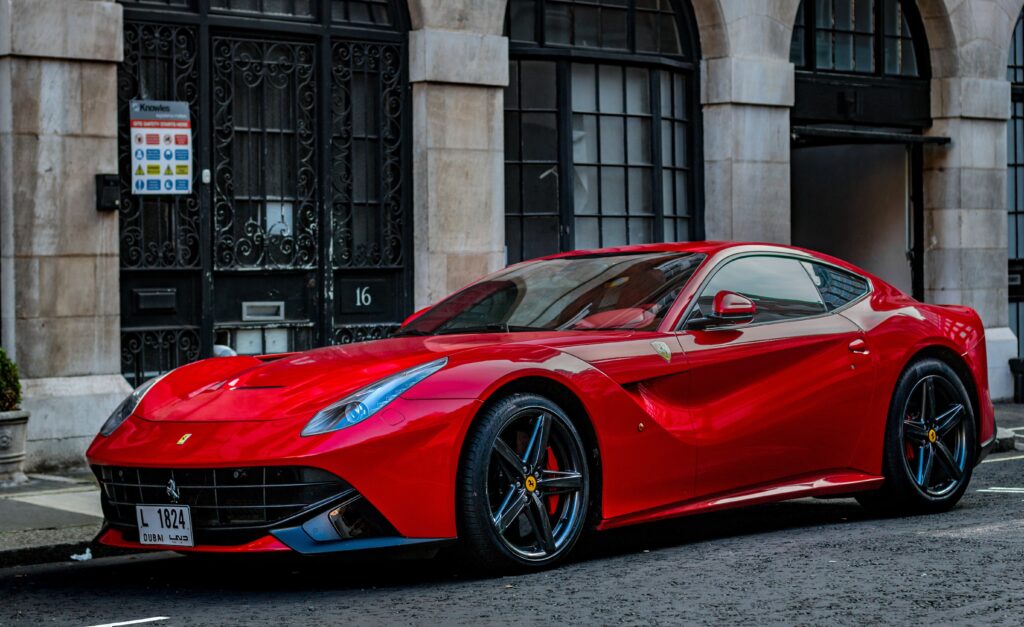
Ferrari’s good old “resale red,” Rosso Corsa, has long been one of the safest colors in terms of sellability, with broad buyer appeal and strong demand on the secondary market. So, if you want to play it safe, you can do that as well. Inside, Nero and Cuoio are typically the safest choices for resale, with broad buyer appeal and easy compatibility with most exterior colors.
More adventurous leather colors can add rarity and character, but they also make the car more specification-dependent when it comes time to sell.
Factory Options
Carbon-fiber trim packages, Daytona-style upholstery, and the factory front-axle lift are all desirable options worth looking for on the window sticker or build sheet. Carbon-fiber racing seats, the carbon-fiber driver zone with LED shift lights, forged wheels, Scuderia Ferrari fender shields, and the passenger display also help distinguish a well-specified F12.
The strongest cars tend to combine the right options with a cohesive color specification rather than simply having the longest possible options list.
Condition Integrity
Confirm the leather on the dash top and door uppers hasn’t shrunk from heat exposure, check behind each wheel for damper fluid leaks, and inspect the tailgate area for signs of past water intrusion. Paint originality matters as well, so look for mismatched panels, overspray, unusual panel gaps, or paint-depth readings that suggest previous bodywork.
Stone chips are normal on a driven F12, but poorly matched repainting, repaired carbon-fiber trim, or evidence of accident damage can materially hurt collector appeal. Check the wheels for curb damage, the front splitter and underbody for scrapes, and any paint-protection film for yellowing, lifting edges, or damage hidden underneath.
Pre-Purchase Inspection
A proper inspection should include a borescope or visual check of the rear vent mesh for corrosion, a documented DCT inspection, confirmation both recalls were completed, a full cycle test of the adaptive dampers, and a diagnostics scan for any stored electrical faults.
Best Ferrari F12 Investment Tiers
Tier 1
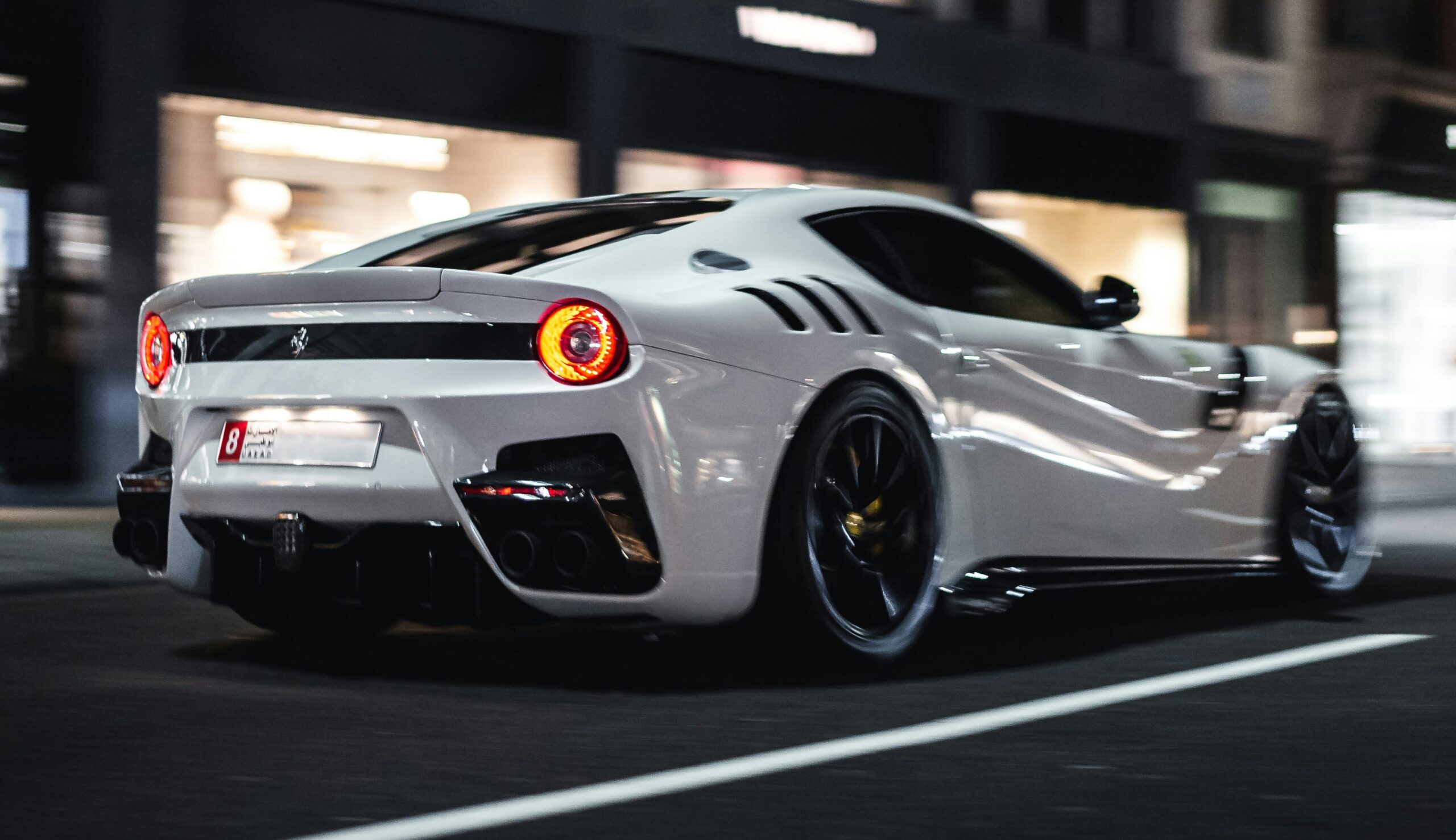
F12tdf — 799 units, the definitive F12
The tdf sits alone at the top of this market, and the numbers back that up: recent US sales have run from roughly $3.6 million to a record $4.185 million, against an original sticker that started around $490,000. It combines the most power of any standard-production F12, the lightest weight, and the first rear-wheel steering system Ferrari ever put on a road car. This tier isn’t a relative bargain anymore — it’s the established blue-chip of the F12 family, and it’s priced like one.
Tier 2
F12berlinetta 70th Anniversary — as many as 70 units, one-of-one livery within the model
With an average sale price over $650,000 and a recorded high of $770,000, the 70th Anniversary cars occupy a genuinely rare middle ground: meaningfully scarcer than a standard F12berlinetta, without the seven-figure jump into tdf territory. Each car is functionally one-of-one within the model, which gives this tier a collector story the standard car simply can’t match.
Tier 3
F12berlinetta, rare color or documented low mileage
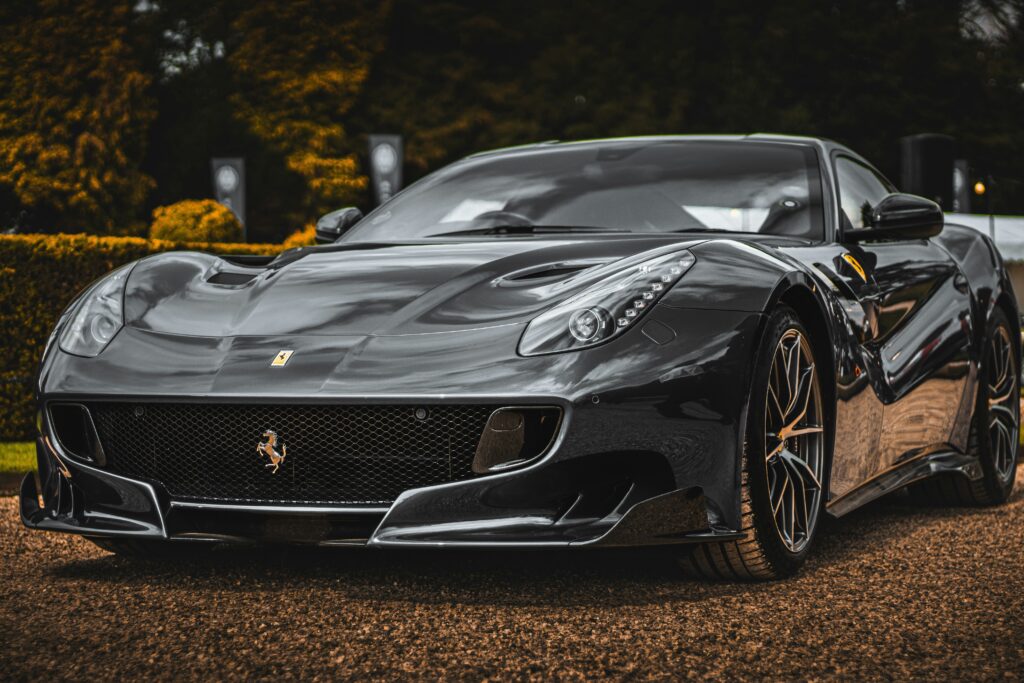
A standard F12berlinetta with a distinctive factory color, strong original specification, and genuinely low, documented mileage sits above the broader market average and should hold that premium as the wider F12berlinetta market — per Ferrari FL’s read on the segment — continues to sort good cars from merely available ones.
Tier 4
Resale red F12berlinetta, documented service history
A well-maintained and driven Rosso Corsa coupe with a Ferrari service history, both recalls confirmed, and no corrosion at the rear vents is the clearest way into F12 ownership without stretching for something more limited. It’s also the most common configuration on the market, which means better liquidity than the rarer tiers above it whenever it’s time to sell.
Avoid
Cars without documented proof either the brake fluid reservoir cap recall or the airbag ECU recall was completed, any F12 with unaddressed corrosion around the rear mesh vents, cars with an undocumented or unknown DCT condition, and any 70th Anniversary or tdf represented as more heavily optioned or rarer than its actual build sheet supports.
The Ferrari F12 Investment Verdict
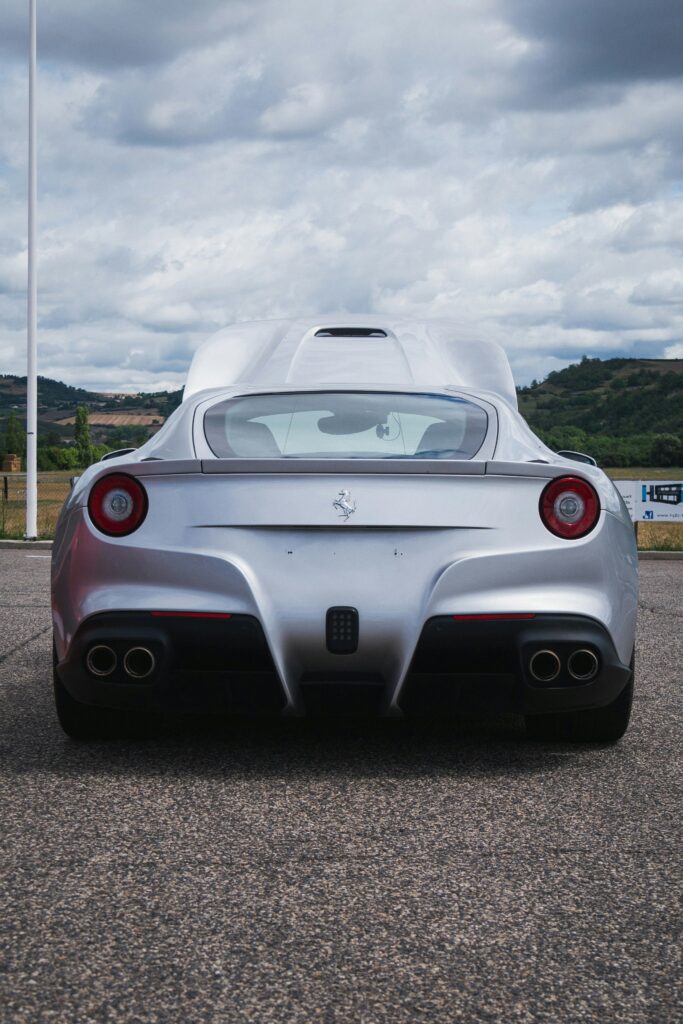
The F12 occupies a spot in Ferrari’s history that none of the mid-engined V8s on this site can claim: it’s the last car to come out of a Ferrari-Pininfarina design partnership that had stood since 1951. That kind of clean, well-documented ending is exactly the sort of story collector markets tend to reward over time, and the tdf’s run from a roughly $490,000 sticker to a $4.185 million sale is the clearest evidence yet that the market already agrees.
The standard F12berlinetta is a different, more patient case. It was built in far greater numbers than the tdf, and Ferrari never published a figure for exactly how many — the honest read is that this is the F12 market’s biggest headwind, the same way volume has weighed on the entry tier of the F355, F430, and 458 markets covered elsewhere on this site. But a well-documented example, free of corrosion and with both recalls completed, remains the most straightforward way into ownership of the last Ferrari Pininfarina ever built — and at a fraction of what the 799-unit halo car above it now costs.
Classic Car Gang covers the modern classics market with no editorial filters. If you found this useful, check out our other articles.

Marko Mikulic is a classic and modern classic car writer with over a decade of hands-on enthusiasm. He has published more than 10,000 automotive articles with bylines at Jalopnik, SlashGear, The Driver Advisor, and CarArac. He owns a Mercedes R129 SL — having previously owned an R107 and a BMW E30 M3. He founded Classic Car Gang to cover the cars worth buying, owning, and investing in, without editorial filters.